
Detecting Depression in the Thai Facebook Community: A Digital Biomarker Approach
Facebook Social Media for Depression Detection in the Thai Community
This paper presents a Thai-language depression detection framework that leverages Natural Language Processing (NLP) to analyze Facebook user behavior. By extracting 30 behavioral attributes from microblogs, the study employs Machine Learning models—specifically Deep Learning and Random Forest—to achieve a high classification accuracy of up to 85% in identifying depressed individuals.
TL;DR
With depression affecting over 1.5 million Thais and many remaining undiagnosed, researchers have turned to the country’s most popular social network: Facebook. This study proposes an NLP-driven framework that analyzes user behaviors—ranging from post timing to privacy settings—to predict depression levels. By combining sentiment analysis with Deep Learning, the system achieved a remarkable 85% accuracy, proving that our digital footprints can serve as early warning signals for mental health crises.
Background & Motivation: The Silent Burden
In Thailand, depression is the leading cause of "Years of Life Lost due to disability" (YLD). Despite its severity, social stigma and a lack of professional resources prevent many from seeking help. The researchers identified a critical gap: traditional self-report questionnaires like the TMHQ are prone to Social Desirability Bias, where patients intentionally or unintentionally mask their symptoms to appear healthier.
The insight? Social media behavior is "passive" and "longitudinal." It captures daily life choices that are harder to fake, such as late-night posting habits, increased use of first-person pronouns, and social withdrawal marked by stricter privacy settings.
Methodology: Translating Emotions
The system architecture (Fig. 1) follows a rigorous pipeline:
- Data Collection: 35 volunteers provided a month's worth of Facebook microblogs and completed professional psychological screenings (TMHQ) to establish a "Gold Standard" label.
- Attribute Extraction: The team defined 30 specific attributes across four dimensions: Content (emoticons, sentiment), Interactions (tags, shares), Privacy Settings, and Online Behaviors (timing of posts).
- The Thai Language Challenge: At the time of research, Thai NLP tools were limited. The authors circumvented this by translating Thai posts into English via the Google Cloud Translation API, allowing them to use the robust NLTK library for sentiment analysis.
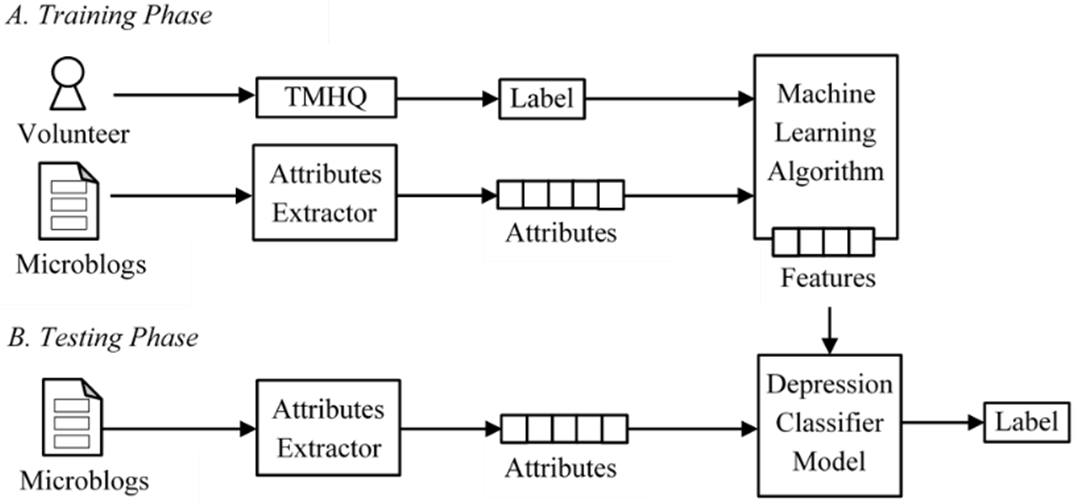 Figure 1: The overall workflow from Facebook Graph API to the Classifier Model.
Key Behavioral Indicators
The study unearthed fascinating (and somber) correlations between Facebook use and mental state:
- The "Only Me" Isolation: Depressed users were more likely to set their privacy to "Myself" (Only Me), reflecting a desire to use the platform as a private diary rather than a social tool.
- Negative Sentiment & Missing Smileys: The Deep Learning model highlighted that negative sentiment combined with a lack of emoticons was a primary predictor for depression.
- The Monday Blue: Random Forest models identified that frequent, neutral-sentiment posting on Mondays was a specific behavioral cluster for depressed individuals.
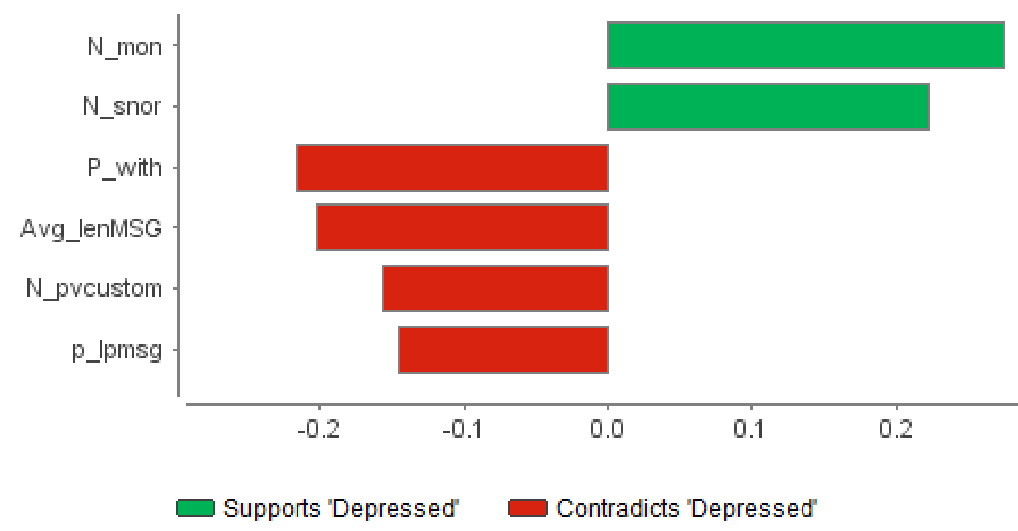 Figure 2: Key factors recognized by the Deep Learning model to distinguish between depressed and non-depressed users.
Experimental Performance
The researchers tested three main algorithms: SVM, Random Forest, and Deep Learning. While the SVM performed slightly above the baseline, the advanced models showed significant gains:
| Method | Accuracy | Precision | Recall (Depressed) |
|---|---|---|---|
| Baseline (Majority Vote) | 62.85% | - | - |
| Random Forest | 84.6% | 84.6% | 88.9% |
| Deep Learning | 85.0% | 80.0% | 100% |
The 100% Recall in the Deep Learning model is particularly vital for a screening tool—it means the model caught every single depressed case in the sample, even if it had a few false positives.
Critical Insights & Limitations
While the results are promising, the study acknowledges two major hurdles:
- The Translation Gap: Translating from Thai to English can strip away cultural nuances and "sentiment polar words" unique to the Thai language.
- Sample Size: With only 35 users, the model risks overfitting. However, as a proof-of-concept for the Thai community, it establishes a clear path forward for larger-scale "Health Tech" interventions.
Conclusion
This research moves us closer to a world where AI doesn't just recommend products, but proactively monitors our well-being. By identifying "Digital Biomarkers" on Facebook, we can potentially reach the 50% of Thais who currently suffer in silence, offering them a bridge to professional psychiatric care before a crisis occurs.