
Facial Alignment: The Unsung Hero of Gender Classification Accuracy
Comparison of Facial Alignment Techniques: With Test Results on Gender Classification Task
This paper presents a comparative analysis of facial alignment techniques—including feature-point-based and machine learning-based methods—evaluated on a gender classification task using the Labeled Faces in the Wild (LFW) database. The study identifies Active Shape Models (ASM) combined with Delaunay triangulation as the superior approach for normalizing spatial facial features.
TL;DR
While most researchers obsess over improving classifiers (SVMs, Random Forests), this paper argues that the secret to high-accuracy facial analysis lies in Facial Alignment. By comparing several techniques on the LFW dataset, the authors demonstrate that Active Shape Models (ASM) with Delaunay warping provide the best "good data" for gender classification, boosting performance by over 16% compared to raw face detection.
Problem & Motivation: Why Alignment Matters
In the pipeline of video analytics—covering demographics like age, gender, and expression—there is a standard flow: Face Detection → Alignment → Representation → Classification.
The authors point out that while detection is largely solved by cascaded classifiers, the Alignment phase is often underestimated. Without it, discriminative features (like the distance between eyes or the shape of the jaw) appear at different spatial coordinates for every sample. This "spatial noise" forces machine learning models to waste capacity learning pose variations rather than biological differences. "Good data," as defined here, is data decontaminated from illumination and rotation effects.
Methodology: Comparing the Contenders
The study breaks down four distinct philosophies of alignment:
- Two-Point Based: Uses eye centers (detected via ASEF filters). It only handles in-plane rotation and fails when face proportions vary (e.g., someone with wider eyes).
- Three or More Points: Uses 7 landmarks (eyes, nose, mouth corners) to apply similarity transformations. This can handle some out-of-plane rotation.
- Active Shape Model (ASM): A statistical approach. It identifies many facial points, creates a mesh via Delaunay Triangulation, and warps each triangle to match an average reference face.
- Deep Funneling: A machine learning approach that doesn't use landmarks. Instead, it minimizes pixel-wise variance across a set of images to "align" them through entropy reduction.
 Figure 1: The standard classification pipeline used in the study.
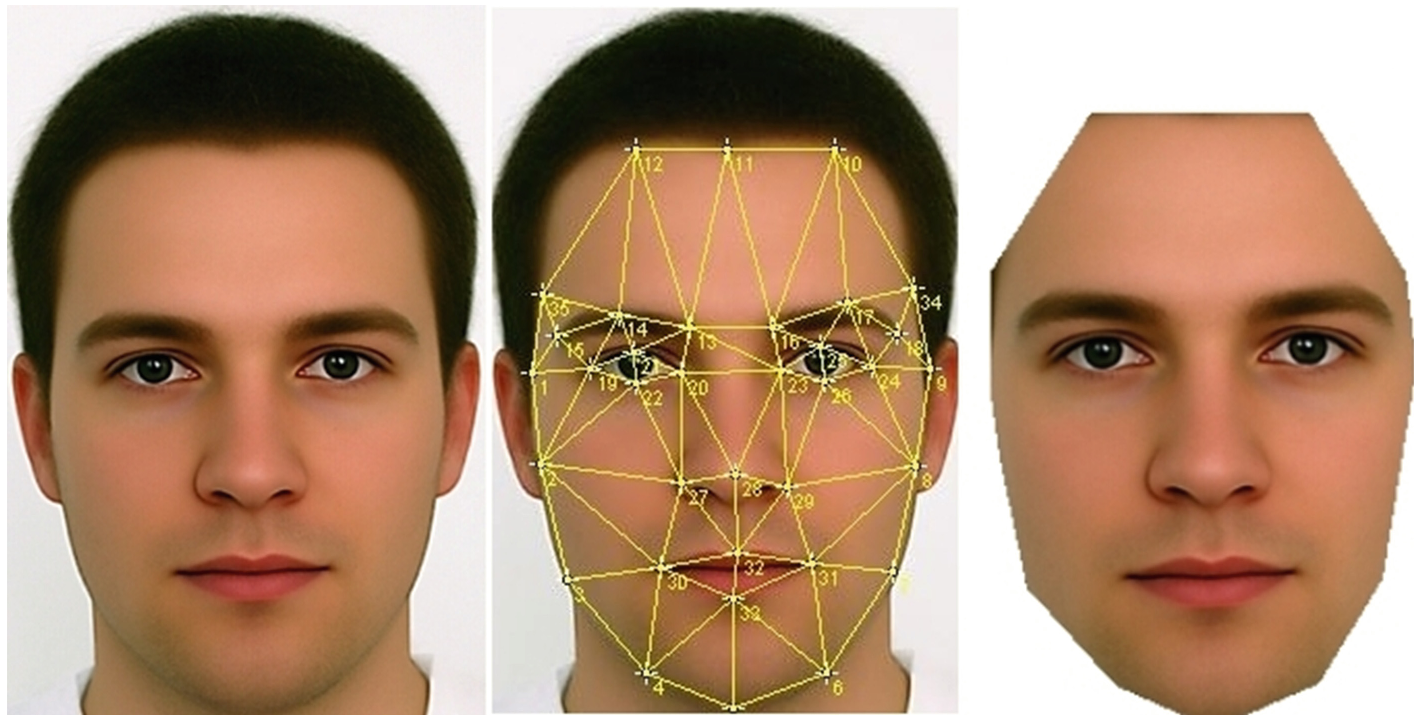 Figure 2: The Reference Model and Delaunay Triangles used to warp faces into a normalized space.
Experiments & Results
The authors tested these methods using Local Binary Patterns (LBP) as features and two classifiers: Random Forests and AdaBoost. The benchmark was the "In the Wild" (LFW) database, which is notoriously difficult due to lighting and pose variety.
Key Findings:
- The Baseline Trap: Simply using the output of a face detector yielded only ~67-74% accuracy.
- The ASM Advantage: ASM-based alignment reached 91.63% in 10-fold cross-validation.
- Landmarks vs. Pixel Statistics: Interestingly, feature-point-based methods (ASM and 7-point) generally outperformed the unsupervised Deep Funneling in this specific gender task.
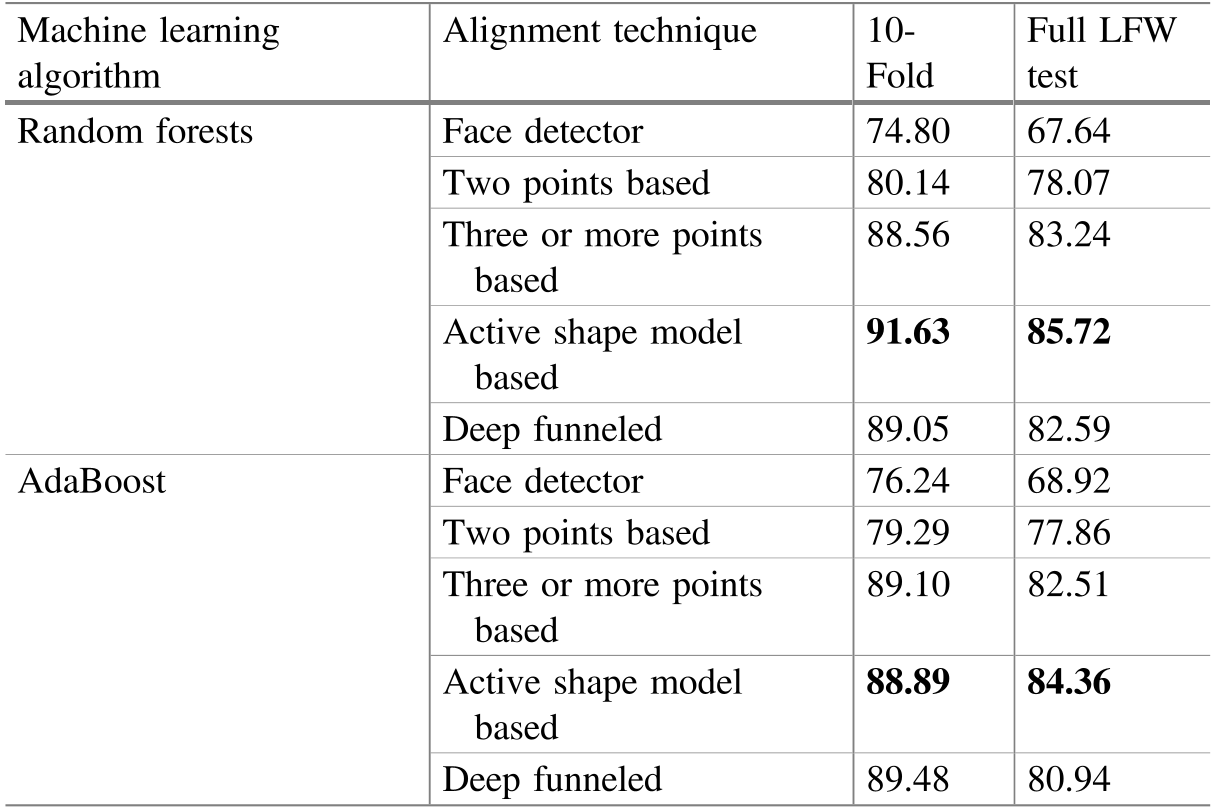 Figure 3: Comparative results showing ASM consistently outperforming other techniques across different classifiers.
Critical Analysis & Conclusion
The core takeaway is that Active Shape Models provide a "tighter" normalization. Because they use a mesh rather than just a few points, they can correct for subtle out-of-plane head tilts that simpler methods miss.
Limitations: One minor drawback is the computational cost; ASM and Delaunay warping are more intensive than simple eye-based rotation. Furthermore, the study focused on frontal/near-frontal faces; profile face alignment remains a separate, more complex challenge.
Future Outlook: This work reinforces the "Garbage In, Garbage Out" principle. As we move toward more complex Deep Learning architectures, the pre-processing phase of spatial normalization remains a vital lever for improving model robustness in unconstrained environments.