
Beyond Robotic Smiles: Integrating Emotional Intelligence and Muscle Dynamics in Virtual Agents
Facial expressions based in emotions for virtual agents
The paper proposes a novel computational model that integrates facial expressions with emotional behavior for virtual agents. Using the Ekman "Action Units" (AU) and an eXtended Classifier System (XCS), the authors achieve more realistic, regulated, and graduated facial animations in human-computer interaction contexts.
TL;DR
Researchers have developed a new architecture that bridges the gap between "feeling" and "showing" for virtual agents. By combining a muscle-based facial model with an eXtended Classifier System (XCS) for emotional regulation, they’ve solved the problem of agents getting "stuck" in extreme emotional states, creating a more nuanced and human-like interaction.
The "Emotional Saturation" Trap
In Human-Computer Interaction (HCI), creating a believable character is notoriously difficult. Most current systems suffer from two main flaws:
- Decoupling: The system decides "I am sad" and then triggers a "Sad.fbx" animation. There is no biological link between the internal state and the actual facial muscles.
- Asymptotic Behavior: Without a regulation mechanism, an agent exposed to repeated positive stimuli will hit a "maximum joy" value and stay there forever, failing to return to a neutral state or react naturally to new, subtle changes.
Methodology: From Muscles to Intelligence
The authors solve this by introducing a two-layered approach:
1. The Muscle-Action Mapping
Instead of pre-baked animations, they utilize the Facial Action Coding System (FACS). They map 11 core facial muscles (like the Zygomatic major for smiling or the Corrugator supercilii for frowning) to specific Action Units (AU). This allows for a granular control of expression intensity—an agent isn't just "angry"; it can be slightly annoyed or full-blown infuriated depending on the muscle tension applied.
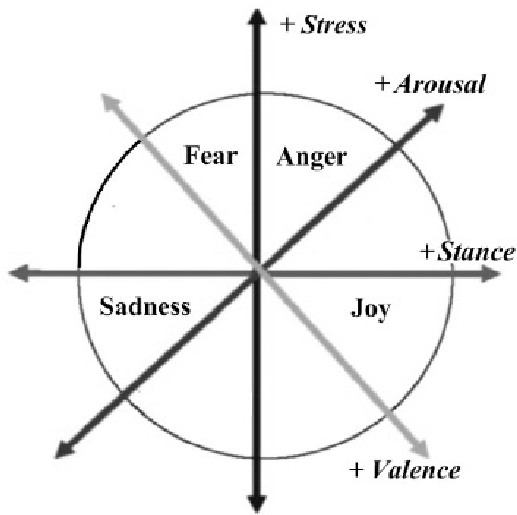 Fig 1: The general cognitive architecture linking environment perception to kinesics.
2. Affective Regulation via XCS
The breakthrough lies in using an eXtended Classifier System (XCS). Think of this as the agent's "Emotional Intelligence." It uses genetic algorithms to regulate the affective state. Instead of letting an emotion spiral to its numerical limit (1.0), the XCS provides a reward-based feedback loop that levels the emotional response.
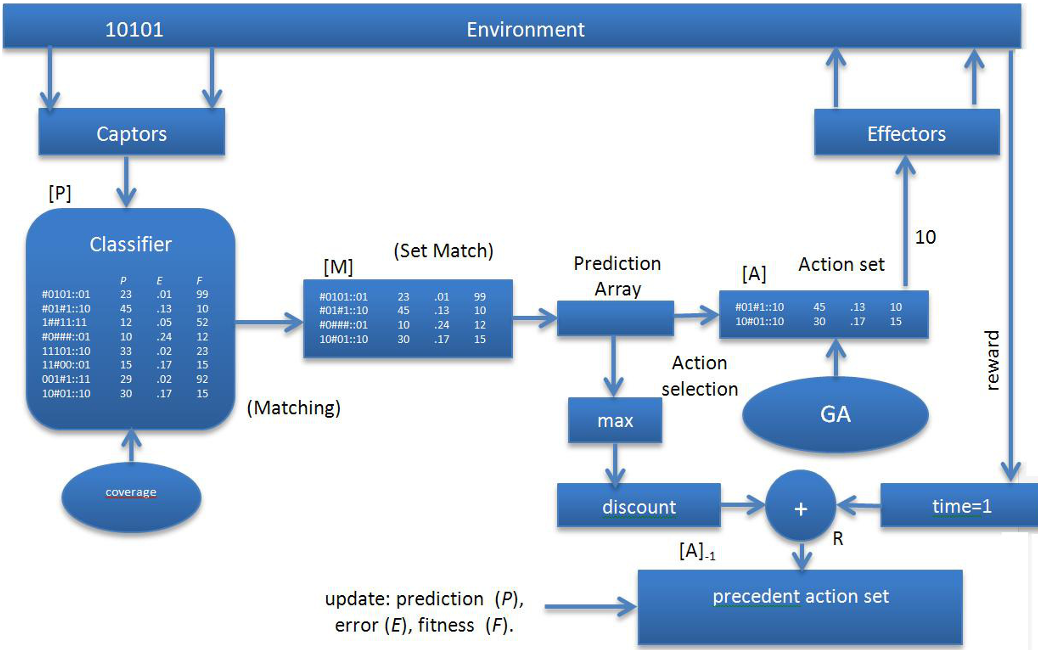 Fig 2: The XCS system used to prevent "uncontrolled" emotional escalation.
Experimental Evidence: Controlling the Pulse
The study compared an unregulated affective state update with a regulated one using the Alfred facial model.
- Without Regulation: Emotions reached an asymptotic peak. Once the agent became extremely happy or sad, it became "numb" to further changes, losing its ability to react realistically to the environment.
- With XCS Regulation: The emotional state showed "pulse-based leveling." This means the agent experiences the peak of the emotion but gradually self-regulates back toward a baseline, mirroring human psychological recovery.
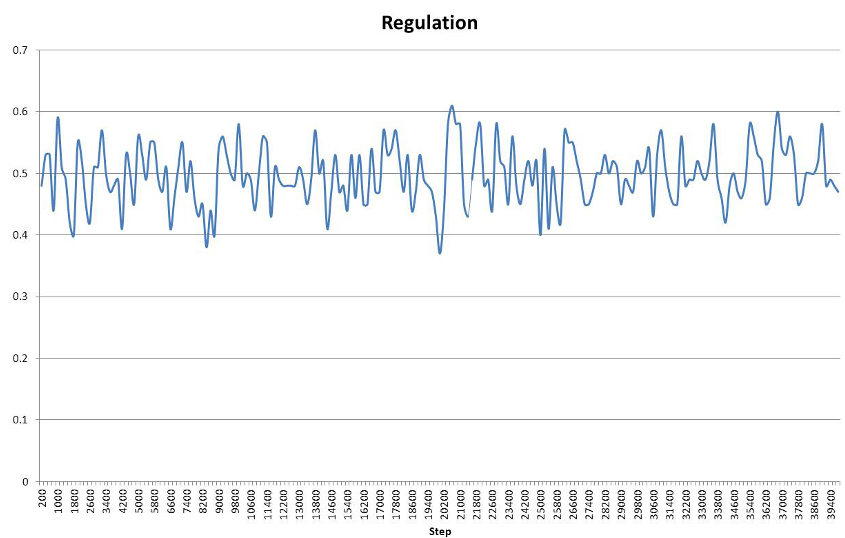 Fig 3: Comparison showing how regulation (right) prevents the "flatline" at extreme values seen in unregulated models (left).
Critical Insight & Future Work
The core takeaway is that realism is found in the recovery, not just the reaction. A virtual agent that stays angry forever after one bad interaction is a broken agent. By treating emotional regulation as a learning and classification problem (XCS), the authors provide a pathway for agents that can handle complex, spontaneous environments—like a virtual assistant staying calm despite a frustrated user.
Limitations: The current model focuses on the six basic Ekman emotions. Future work needs to map "Secondary Emotions" (like guilt or pride), which involve more complex cognitive appraisals and even more subtle muscle movements.