
Beyond the Water Cooler: Decoding Employee Engagement on Enterprise Social Media
Factors impacting employee engagement on enterprise social media
This research investigates the critical factors influencing employee engagement and knowledge sharing on Enterprise Social Media (ESM). By applying factor analysis to survey data from 122 professionals, the study identifies key drivers across individual, organizational, and technological dimensions, establishing a link between social media usage and organizational effectiveness.
TL;DR
In the knowledge-based economy, "knowing who knows what" is as critical as "knowing how." This paper explores why employees engage—or refuse to engage—on Enterprise Social Media (ESM). By analyzing 122 respondents through a socio-technical lens, the study identifies that while technology provides the platform, organizational culture and individual productivity gains are the true engines of knowledge sharing.
Academic Positioning: This work bridges the gap between Social Identity Theory and Knowledge Management Systems (KMS), positioning ESM as a "second-generation" tool that shifts the focus from static repositories to dynamic, communal conversations.
The Social Dilemma: Why Employees Hoard Knowledge
The researcher’s core motivation stems from a fundamental paradox: organizations need knowledge sharing to survive, but individuals often view knowledge as power. In academic terms, this is a Social Dilemma—where rational individual choices (hoarding knowledge to remain indispensable) lead to collective irrationality (an organization that cannot learn).
The authors highlight that the "costs" of sharing—time, fear of criticism, and loss of authority—often outweigh the perceived "rewards." To solve this, the study looks into how ESM's unique architecture can flip this equation.
Methodology: The Triad of Engagement
The study categorizes the factors impacting engagement into three distinct dimensions:
- Individual Factors: Driven by intrinsic motivation (enjoying helping others) and extrinsic rewards (career advancement).
- Organizational Factors: Defined by the invisible culture, mission, and the decentralized nature of power.
- Technological Factors: Focused on the "affordances" of the platform—visibility, editability, persistence, and association.
The Analytical Framework
The researchers used Factor Analysis to identify which specific attributes contribute most to "Effectiveness."
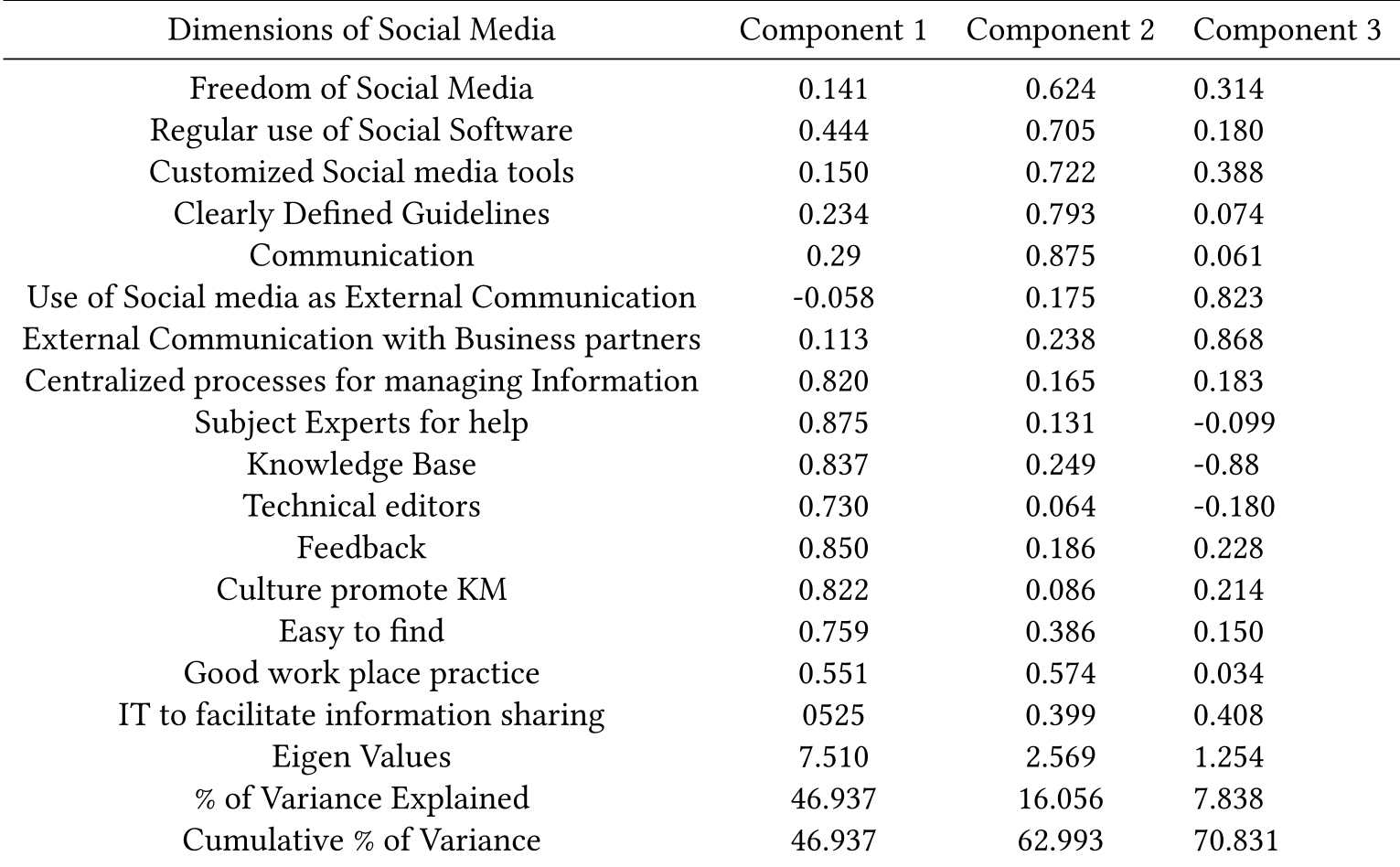 Table 6: Rotated Component Matrix highlighting key organizational drivers.
Key Insights: What Actually Drives Participation?
The results provide a rigorous quantitative backing for several technical and social intuitions:
1. Organizational Effectiveness (The Infrastructure)
The highest-loading factors for organizational success were not the "coolness" of the social app, but rather:
- Subject Experts for help (0.875): Knowing that experts are accessible encourages users to participate.
- Knowledge Base (0.837): Integration with existing information repositories.
- Feedback (0.850): A regular loop where user input actually updates the organizational knowledge base.
2. Individual Effectiveness (The "What's in it for me?")
For the individual, engagement is high when the tool directly impacts their "bottom line":
- Productivity (0.910): The strongest indicator. If the tool makes the job faster, they use it.
- Quality of Business Decisions (0.879): Social media isn't just for chatting; it's a decision-support tool.
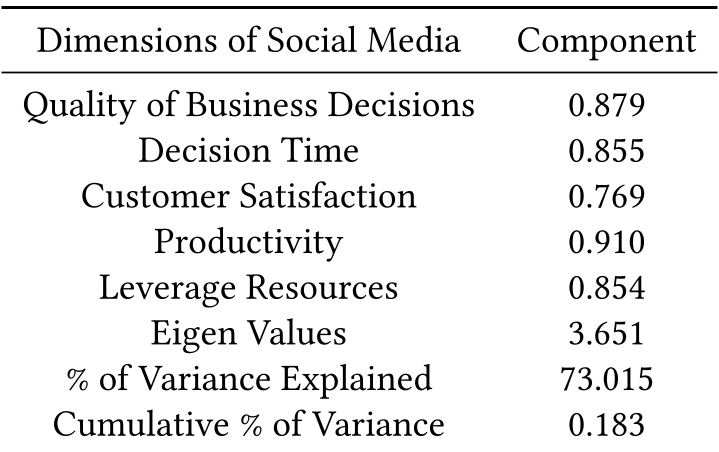 Table 7: Metrics showcasing the significant impact of ESM on individual performance.
Critical Analysis & Future Outlook
Takeaway for Tech Leaders: Technology is merely the "first line of defense." The success of an ESM implementation hinges on Socio-technical Design—aligning the work design (self-managed teams) with the tool's features.
Limitations: The study's sample is localized to Tamilnadu, India. Given that "National Culture" (as per Hofstede) significantly influences "Organizational Culture," the results might vary in more individualistic or highly hierarchical Western/East Asian contexts.
Future Work: As AI begins to automate "Meta-knowledge" (finding out who knows what), the next frontier of research will likely explore how ESM integrates with Large Language Models to lower the "contribution cost" even further, potentially solving the Social Dilemma once and for all.
Conclusion
Enterprise Social Media is unique because it makes knowledge persistent and visible. However, without a culture that discourages "free-riding" and rewards the "donation" of expertise, it remains a ghost town. The key to high engagement is proving to the employee that sharing knowledge doesn't just help the company—it makes the employee more productive and their decisions sharper.