
Beyond the Like Button: What Actually Drives SNS Donations in Asia?
Factors influencing intention to donate via social network site (SNS): From Asian’s perspective
This study investigates the extrinsic factors influencing the intention to donate money via Social Network Sites (SNS) among Asian donors. Using Structural Equation Modelling (SEM) on data from 258 respondents, the research identifies "Internet Technology Features" as the primary driver of general attitudes toward online donation, which subsequently dictates the "Intention to Donate via SNS."
Executive Summary
TL;DR: While non-profits often obsess over making their social media campaigns "viral" or "interactive," a study of Asian donors reveals a more pragmatic reality: Trust and Technology transcend the Trends. The research confirms that the intention to donate via SNS is primarily moderated by a donor's general attitude toward online safety, proving that security concerns are still the biggest hurdle for digital philanthropy.
Positioning: This work bridges the gap between traditional donor psychology (TPB) and the modern Web 2.0 landscape. It serves as a reality check for NGOs, moving the focus from "marketing fluff" to "infrastructure trust."
The Friction Point: Why Social Media Isn't a Magic Money Tree
Despite the massive growth of audiences on Facebook and Twitter, conversion remains elusive. Prior work suggests that people use SNS for information but rarely for the actual transaction. The authors argue that we don't yet understand which "extrinsic" triggers—the external factors like organizational reputation or the platform's features—actually move the needle for a user sitting in South Korea or Malaysia.
Methodology: Extending the Theory of Planned Behavior (TPB)
The researchers didn't just look at what people did; they looked at the belief systems behind the action. By adapting the TPB framework, they mapped four external drivers to a central "General Attitude":
- Charity Project: The cause itself (disaster relief vs. poverty).
- Charity Organization: The track record and transparency of the entity.
- Internet Tech Features: Security, privacy, and reliability of the connection.
- SNS Features: The "fun" stuff—photo sharing, games, and interactive walls.
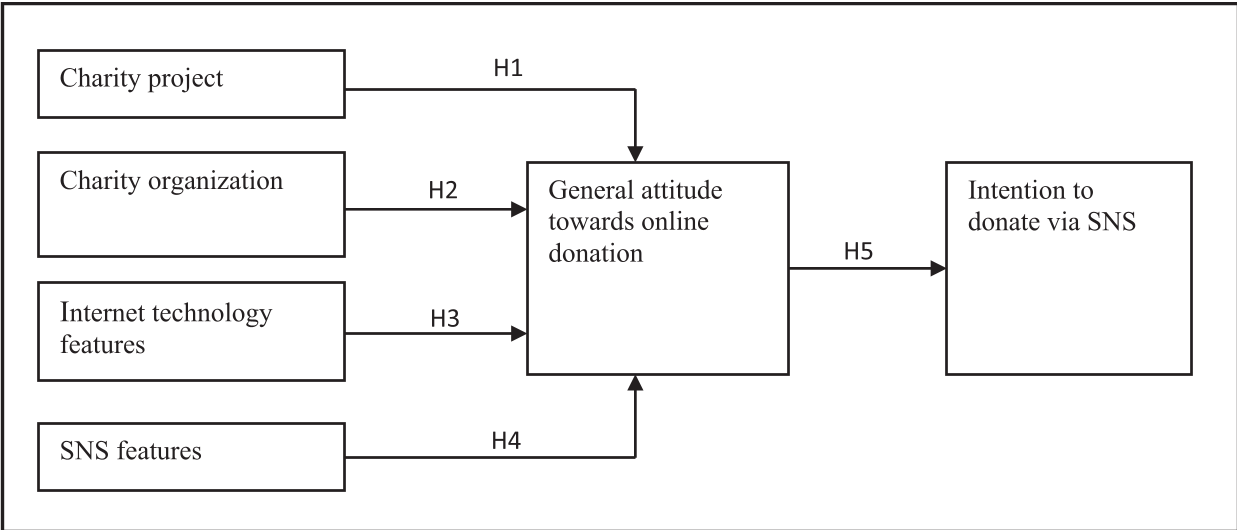 Figure 1: The hypothesized structural model linking external factors to Intention via General Attitude.
The "Security Paradox" and Key Results
The study utilized Structural Equation Modelling (SEM) to find the "path of least resistance" to a donation. The results were both enlightening and counter-intuitive:
- The Dominance of Tech-Trust: Only "Internet Technology Features" significantly predicted a donor's attitude. However, this relationship was negative. As users become more aware of/concerned with internet security and privacy, their general attitude toward donating online worsens.
- The "Bells and Whistles" Failure: Surprisingly, fancy SNS features and even the specific charity project were not significant drivers of attitude in this study.
- The Attitude Bridge: General attitude acts as a full mediator for technology features. If a donor doesn't feel the internet is safe, all the marketing in the world won't secure the donation.
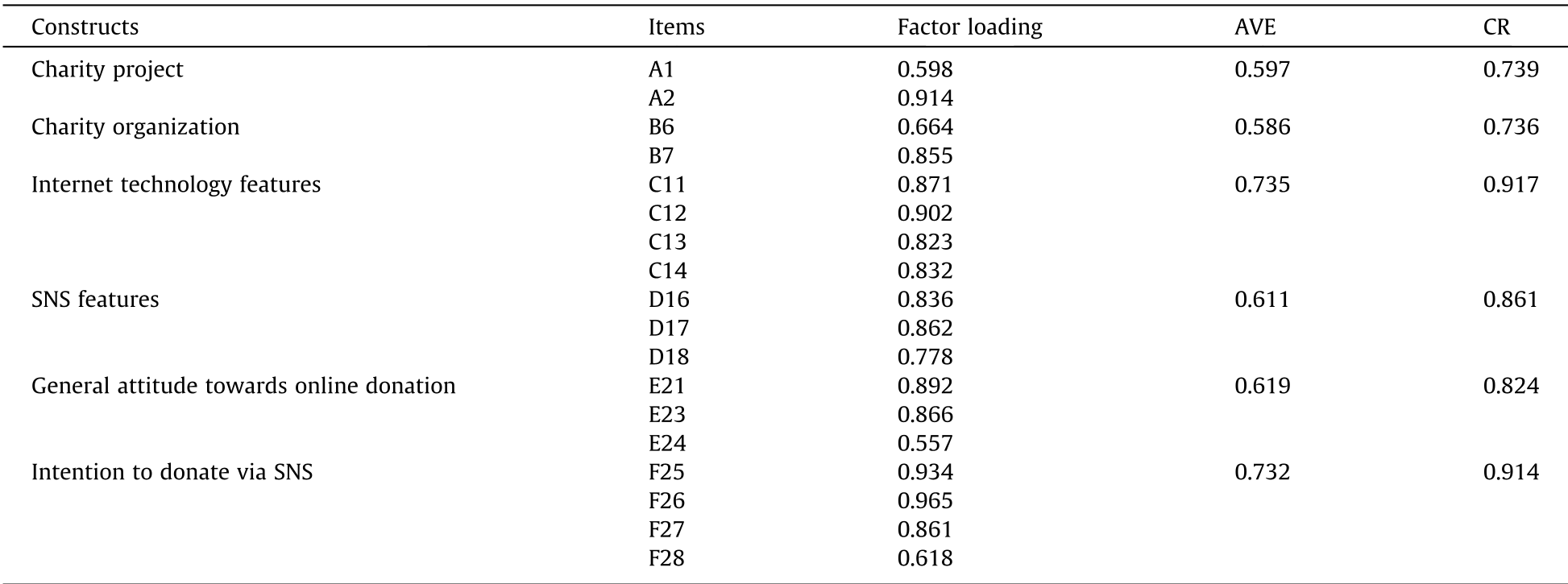 Table 1: Reliability and validity metrics for the constructs used in the SEM analysis.
Depth Analysis: The Asian Perspective
Why did Project and Organization profile fail to reach significance? The authors hypothesize a "Benefit > Cause" shift. In some Asian contexts, the immediate psychological benefit (recognition, satisfaction) or the practical aspects of the transaction might outweigh the specific details of the charity project itself.
More importantly, the Full Mediation of Internet features suggests that for an Asian donor, the SNS platform is merely a window; the "door" that must be unlocked is the security of the payment gateway behind it.
Strategic Takeaways & Conclusion
For Researchers:
The study highlights a regional specific. The lack of significance in "Subjective Norms" (often excluded in extended TPB for donation) suggests that donation is becoming an increasingly personal, tech-evaluated act rather than a purely social one.
For Practitioners:
- Prioritize Privacy: Don't just post about the cause; post about your security protocols. Use "Trust Seals" and transparent transaction logs.
- Attitude is the Gateway: Efforts should focus on strengthening the general perception of online donation through success stories and transparency reports.
- Mind the Sample: This was an Asian-centric study (South Korea and Malaysia). Western audiences might respond more to "social pressure" (Subjective Norms), which was less emphasized here.
Final Thought: In the world of SNS philanthropy, a secure "Donate" button is more powerful than a viral "Share" count.