
Deciphering the Social DNA: Dimensions of Online Interactions in India
Factors Influencing Online Social Interactions
The paper investigates factors influencing online social interactions within the Indian urban context across seven popular platforms (e.g., Facebook, LinkedIn, Twitter). It employs a "Focused Unstructured Interview" technique combined with "Triadic Sorting" to propose a multidimensional scale for user motivation and behavior.
TL;DR
Online social interaction is more than just clicking "Like" or "Share." This research explores the deep-seated motivations of urban Indian users across platforms like Facebook and LinkedIn. By using a specialized psychological interview technique, the study uncovers six critical dimensions—ranging from self-image orientation to object-centeredness—that determine why we stay engaged in digital spaces.
Background Positioning: This work bridges the gap between traditional usability metrics and social psychology, proposing a "Dimensional Scale" that acts as a blueprint for designing social user experiences (UX) rather than just functional interfaces.
The Problem: Why "Usability" Isn't Enough
Existing research typically analyzes social networks through the lens of privacy, network density, or social capital. However, these metrics miss the subjective experience—the "why" behind the click. Developers often treat social features as a generic layer on top of business logic, ignoring that a user's behavior changes drastically depending on whether they are interacting with a family member versus a co-worker, or a status update versus a shared video.
Methodology: The Power of Triadic Sorting
To dig beneath surface-level answers, the author used Triadic Sorting (adapted from George Kelly’s Personal Construct Theory). Instead of asking "Do you like this feature?", users are presented with three concepts—for example: Searching for People, Searching for Media, and Searching for Comments.
By identifying how two are similar and different from the third, users reveal their internal "constructs" (e.g., "Personal Trust" vs. "Public Information").
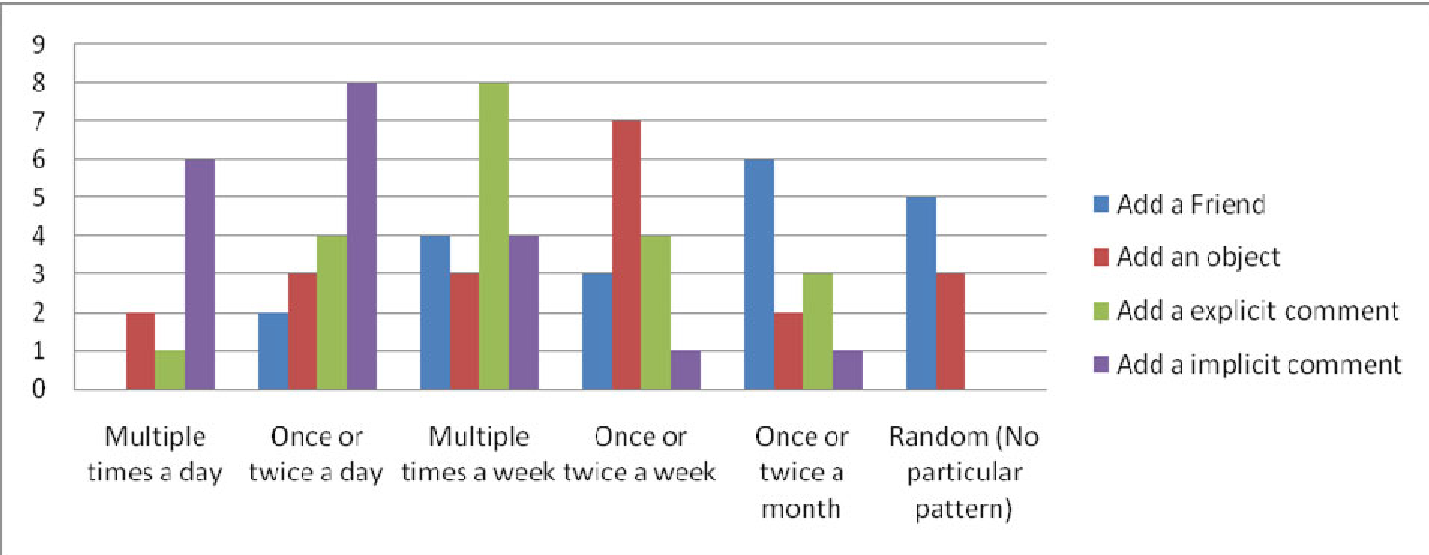 Fig 1: A visualization of interaction frequencies that served as the baseline for user interviews.
The 6 Dimensions of Social Interaction
The analysis distilled user behavior into six binary or scale-based factors:
- Self-Orientation vs. Others-Oriented: Is the user posting to reflect their own personality and gain pride, or are they there to observe and validate others?
- Relationship vs. Object Centered: Some users interact because they care about who posted (the person), while others care solely about what was posted (the content).
- Spatial Presence vs. Low Presence: The impact of knowing someone in "real life" (Face-to-Face) versus purely digital acquaintances.
- Compete vs. Collaborative Engagement: Is the user looking for recognition via ratings (competition) or providing help via feedback (collaboration)?
- Short-term vs. Long-term Orientation: The lifecycle of an interaction, specifically how users value self-created content longer than curated content.
- Openness vs. Closedness: How environmental settings (context) dictate the level of trust and privacy in a conversation.
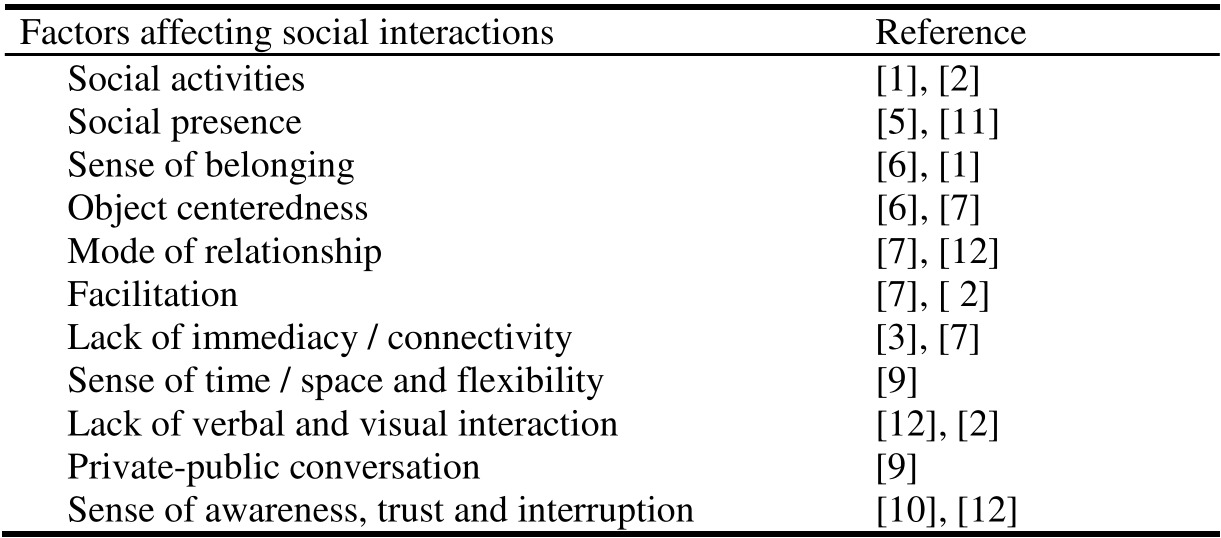 Table 1: Historical literature review of social interaction factors used to ground the study.
Critical Insight: The "Object" as a Mirror
One of the most profound takeaways is that users view their interactions with "Objects" (videos, links, posts) as reflections of their own identity. A review left on a movie or a testimonial written for a friend isn't just about the subject; it's a tool for self-presentation. Users seek recognition and validation through their "like-ability" and the perceived credibility of their digital trail.
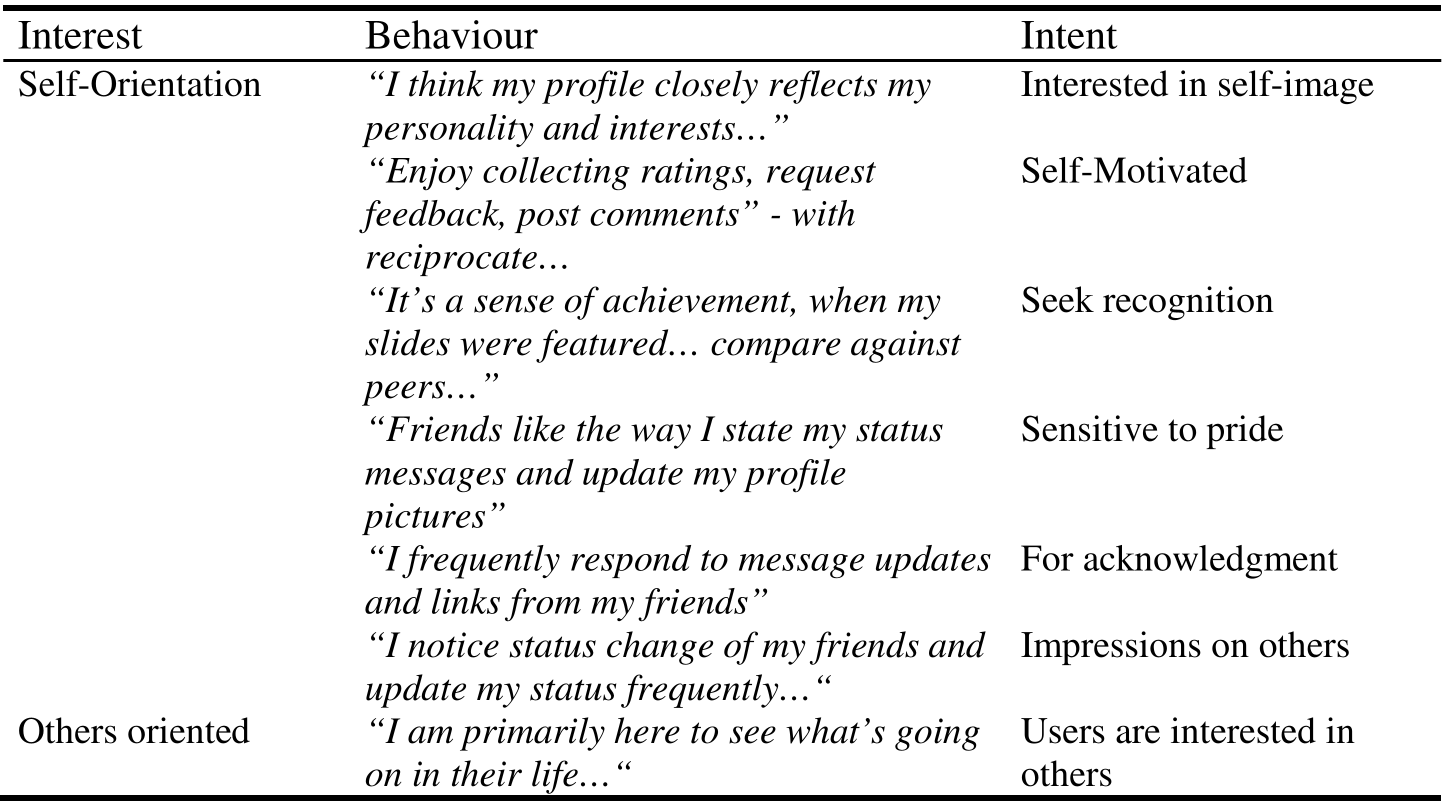 Table 2: Mapping user behavior to internal intent—highlighting the drive for self-image and recognition.
Conclusion and Future Outlook
The study successfully moves social interaction from a "vague feeling" to a "structured scale." While the sample was focused on the urban Indian population, the derived dimensions provide a framework for any developer or UX researcher.
Limitations: The study is qualitative and convenience-sampled, meaning it lacks the "hard numbers" of a large-scale quantitative survey. However, its value lies in the depth of insight—providing the "Social DNA" that future platforms must decode to build truly engaging environments.
Future Work: The next step is validating this multidimensional scale across larger, more diverse demographics and applying it to AI-driven social agents to see if they can mimic these human social nuances.