
MRuleSN: Balancing Copyright and Freedom via Multi-Party Authorization in Social Networks
Research on Fair Use of Digital Content in Social Network
The paper proposes a fair use mechanism for social networks based on the MRuleSN multi-party authorization model. It utilizes extended "w-Datalog" rules to balance the rights of owners, users, and the legal requirements of fair use in digital content sharing.
TL;DR
In the digital age, the tension between strict Digital Rights Management (DRM) and the legal right to "Fair Use" (teaching, commentary, etc.) remains a critical bottleneck. This paper introduces a mechanism based on the MRuleSN model, using weighted logic (w-Datalog) to create a flexible, multi-party authorization system. It allows social networks to move beyond rigid binary locks toward a nuanced "voting" system for content rights.
The "AI-Hard" Problem of Fair Use
Most current DRM technologies excel at one thing: restriction. However, copyright law is not absolute; it contains exceptions—known as Fair Use in the US or Copyright Exceptions in Europe. Implementing these in code is notoriously difficult—often called an "AI-hard problem" because it requires understanding the purpose and context of content usage.
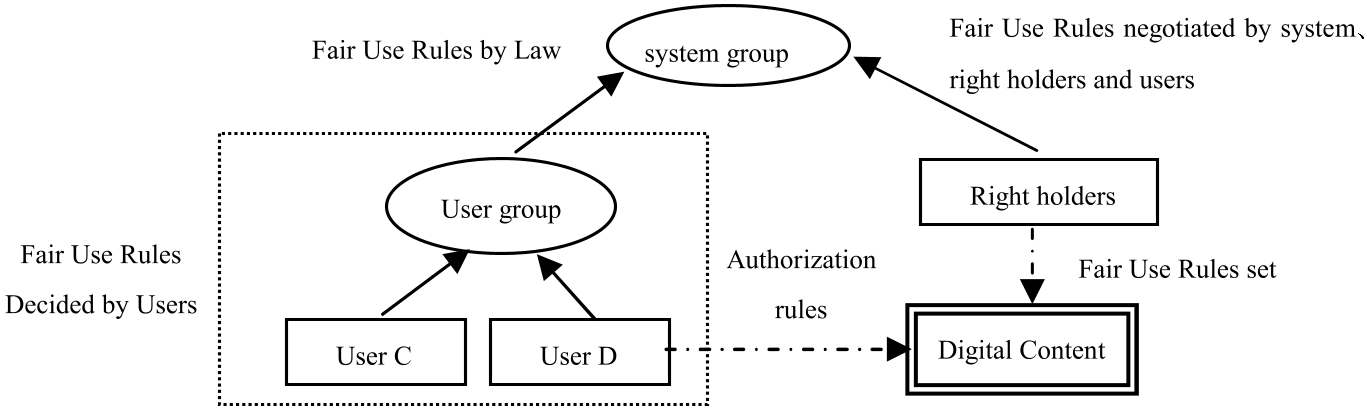
The authors argue that existing systems fail because they ignore the social nature of content sharing. In a social network, rights shouldn't just be dictated by the owner, but negotiated between the Law, the System, the Owner, and the User.
Methodology: The MRuleSN Model and w-Datalog
The core of this research is the MRuleSN model, which treats authorization as a weighted logic problem.
1. Subject Hierarchy
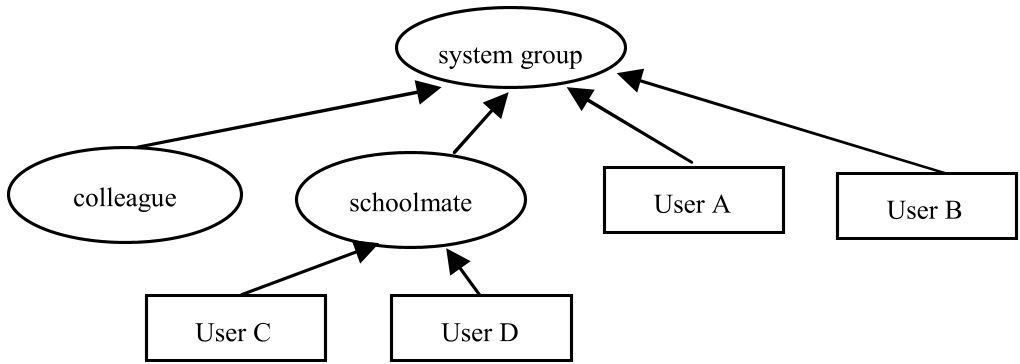
The model organizes the social network into three levels:
- Users (U)
- User Groups (UG)
- System Group (SG) (The overarching authority)
2. Weighted Logic (w-Datalog)
Instead of a simple "Yes/No" rule, the authors use an extended Datalog formula:
w0: P ← w1: L1, ..., wk: Lk, [wk+1: Lk+1], ..., [wm: Lm]
In this system, different parties (User, Owner, System) contribute weights to a request. If the sum of weights from the mandatory and optional literals satisfies a threshold (), the action is permitted.
How Fair Use is Triggered
The paper defines three paths to achieving "Fair Use":
- AuthbyLaw: Mandatory rules (e.g., teaching) that override all other restrictions.
- AuthbySystem/Owner/User: Use cases where weights are aggregated. For example, a system might allow sharing a file only if the owner’s weight (0.6) and the system’s weight (0.5) both support it, perhaps under the condition that the original is deleted.
- User Assertion: Similar to the "offline world," a user can "assert" a right. This doesn't block the action initially but triggers an audit logging and warning mechanism to prevent misuse.
Experimental Insight: The "David" Case Study
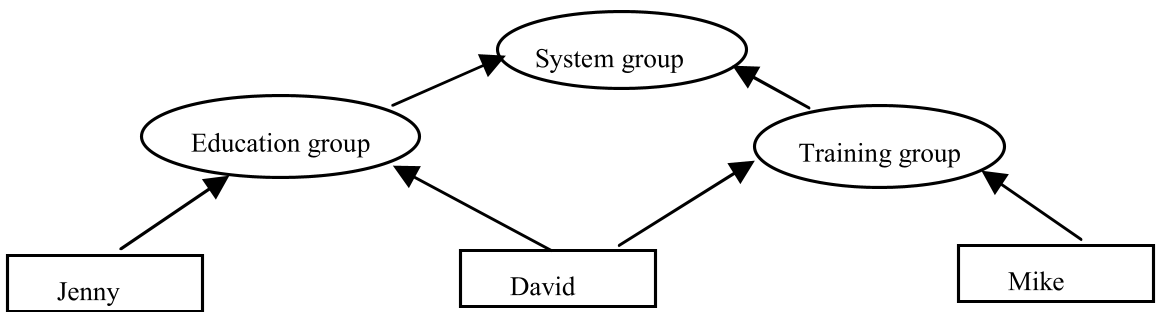
The authors illustrate the flexibility of MRuleSN through a scenario involving a teacher named David:
- Scenario A (Pure Fair Use): David shares a book with a student for a class. The system recognizes the "Teaching" purpose and grants
AuthbyLawimmediately. - Scenario B (Negotiated Use): David wants to give a copy to a friend. The Owner's rule stipulates that this is okay only if David deletes his own copy. The weights (0.5 system + 0.6 owner) exceed the threshold of 1.0, enabling the transfer.
Critical Analysis & Conclusion
Takeaway
The major contribution of this work is the shift from centralized enforcement to multi-party negotiation. By treating the social network system as a "neutral third party" (similar to a licensing authority), it creates a framework where copyright protection does not have to come at the expense of user liberty.
Limitations
- Context Discovery: The model assumes the system can accurately identify the "purpose" (e.g., is this really for news reporting?). In practice, determining intent still requires sophisticated metadata or AI.
- Computational Overhead: Evaluating complex w-Datalog rules for every share in a massive social network could introduce latency.
Future Outlook
As decentralized social networks grow, the MRuleSN approach could be integrated into Smart Contracts, where the weights and rules are transparent and immutably enforced by the community rather than a central server.