
One For All: Scaling Truth with Blockchain and Octalysis Gamification
12454_Development of a fake news checking crowdsourcing platform consisting of smart contracts combined with gamification.
The paper introduces "One For All," a decentralized crowdsourcing platform designed to combat fake news by integrating Ethereum smart contracts with the Octalysis gamification framework. It aims to solve manpower shortages in fact-checking through 1) transparent reward distribution and 2) intrinsic/extrinsic motivational game mechanics.
TL;DR
The "One For All" platform addresses the scaling crisis of fake news verification by incentivizing the public through a combination of Ethereum smart contracts and the Octalysis gamification framework. By transforming the tedious task of fact-checking into a rewarding, competitive, and transparent game, the authors aim to overcome the manpower bottlenecks that plague existing crowdsourced efforts.
The Scaling Crisis of Fact-Checking
In the era of "infodemics" (exemplified by COVID-19 misinformation), fake news spreads with viral velocity. Traditional crowdsourced solutions, such as Taiwan's Cofacts, rely on a small group of dedicated volunteers. The math simply doesn't add up: 200+ suspicious messages per week processed by only 10 people creates a massive backlog.
The root problem isn't just a lack of interest; it's a lack of structural incentive and trust. Why should a user spend 20 minutes verifying a claim? And how can they be sure the platform's verification process is fair?
Methodology: Human-Centric Design Meets Web3
The core innovation of this paper lies at the intersection of behavioral psychology and decentralized technology.
1. The Octalysis Framework
Instead of simple "points and badges," the authors used the Octalysis framework to tap into deeper human motivations:
- Development & Accomplishment: Membership grading and achievement windows (titles) provide a sense of progression.
- Social Influence: Leaderboards and public voting mechanisms leverage communal peer pressure and credibility.
- Ownership & Possession: Reviewers receive Ether (cryptocurrency) and permanent reputation markers, giving them a "stake" in the system.
2. Smart Contract Governance
To ensure that the "game" isn't rigged, all platform rules—voting, reward distribution, and activity logs—are written into smart contracts. This removes the "trusted central authority" requirement, allowing users to verify the code that governs their rewards.
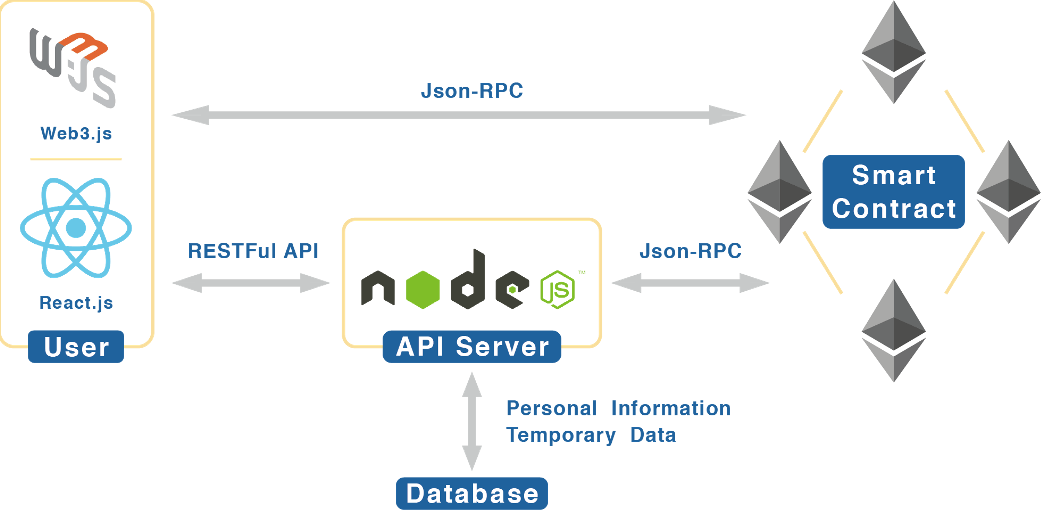 Fig 1. The Hybrid System Architecture: Using Web3.js for contract interaction and an API server for performance optimization.
Experiments and Results
The authors developed a hybrid architecture to solve the "Blockchain Latency Problem." By storing immediate actions in an API server while recording final states on the blockchain, the platform maintains a smooth user experience without sacrificing decentralization.
Key Roles in the Ecosystem:
- Publishers: Must pay a deposit (Ether) to post, which is forfeited if the news is proven fake—a classic "Skin in the Game" strategy.
- Reviewers: The frontline verifiers who gain XP and Ether for high-quality audits.
- Viewers: The broader public who provide evidence and participate in the democratic voting process.
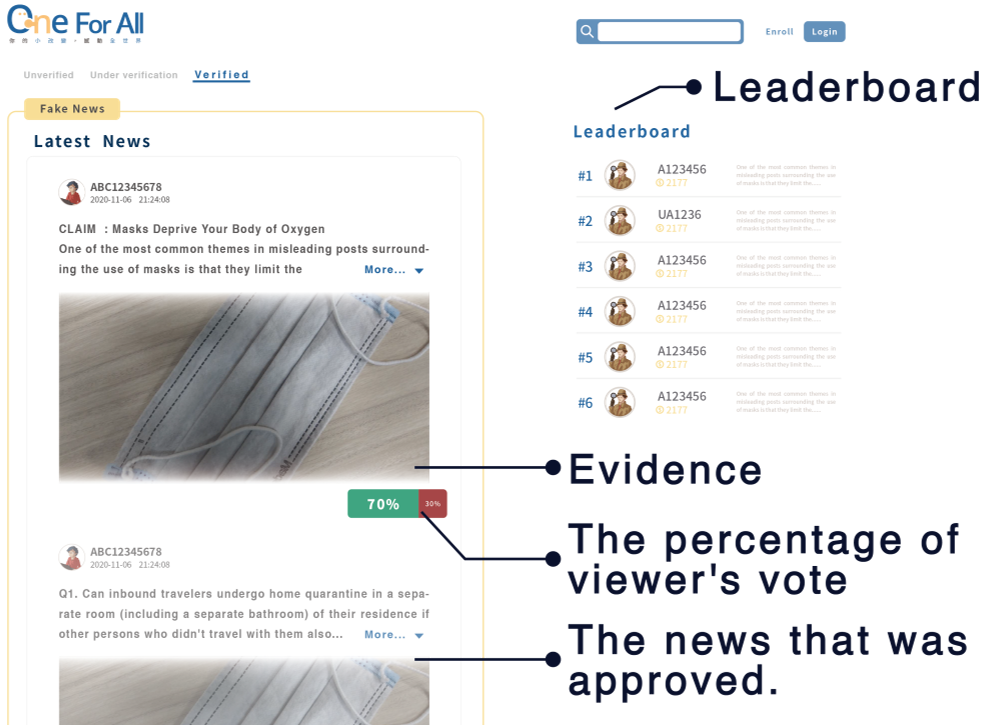 Fig 2. The "One For All" Interface showing the Leaderboard and Voting percentages.
Critical Insight: Beyond the Hype
While many "Blockchain + AI" projects are buzzword-heavy, this paper focuses on the Inductive Bias of human participation. It acknowledges that the bottleneck isn't the algorithm, but the human motivation.
Potential Challenges (Limitations):
- The "Rich Get Richer" Effect: Strong rewards based on current reputation might discourage new, high-quality reviewers from entering the system.
- Sybil Attacks: Can a group of users collude to "verify" fake news to earn rewards? The paper mentions voting but will need robust defense mechanisms against coordinated manipulation in future iterations.
Conclusion
"One For All" represents a shift from passive fact-checking to active participation. By aligning financial incentives (Ether) with psychological drivers (Octalysis), the platform provides a blueprint for how future decentralized societies might police information quality without a "Ministry of Truth."