
Unmasking the Deception: A Comprehensive Review of Fake Profile Detection on Social Media
4290_Fake Profile Detection on Social Networking Websites A Comprehensive Review.
This article presents a comprehensive review of fake profile detection methodologies on Online Social Networks (OSNs) like Twitter, Facebook, and LinkedIn. It categorizes existing research into account-based, text-based, and hybrid feature approaches, highlighting the transition from traditional Machine Learning (ML) to Deep Learning (DL) architectures.
TL;DR
Social Networking Websites (OSNs) are currently battling a "fake account pandemic" where billions of profiles are used to manipulate public opinion and spread malware. This review systematically categorizes how researchers use Machine Learning (ML) and Deep Learning (DL) to filter these accounts based on account metadata, textual content, or a combination of both.
Background Positioning: This is a seminal survey that shifts the focus from simple spam filtering to a holistic structural and behavioral analysis of digital identities.
The Core Problem: Why is Detection So Hard?
The barrier to entry for creating OSN accounts is virtually zero. While Facebook and Twitter delete millions of accounts monthly, spammers have evolved. They now:
- Clone Real Identities: Stealing photos and bios from legitimate users to bypass simple verification.
- Mimic Human Behavior: Injecting time-delays in posts to avoid "activity-based" detection.
- Utilize Botnets: Operating in clusters that exhibit collective "honest" behavior while performing coordinated attacks.
Methodology: The Three Pillars of Detection
The paper categorizes the detection techniques based on the "Information Source" used:
1. Account-Based Features (The Digital ID)
This involves looking at metadata such as "Follower-to-Following" ratios, account age, and profile completeness.
- Insight: Fake accounts often exhibit "aggressive following" behavior to gain visibility.
2. Text-Based Features (The Digital Voice)
This analyzes hashtags, URLs, and linguistic patterns.
- Insight: Spammers use a significantly higher ratio of external links compared to human users.
3. Hybrid Models (The Holistic View)
By combining both, researchers achieve SOTA results. The survey points to the transition toward Deep Learning models that can handle the volume and complexity of this data.
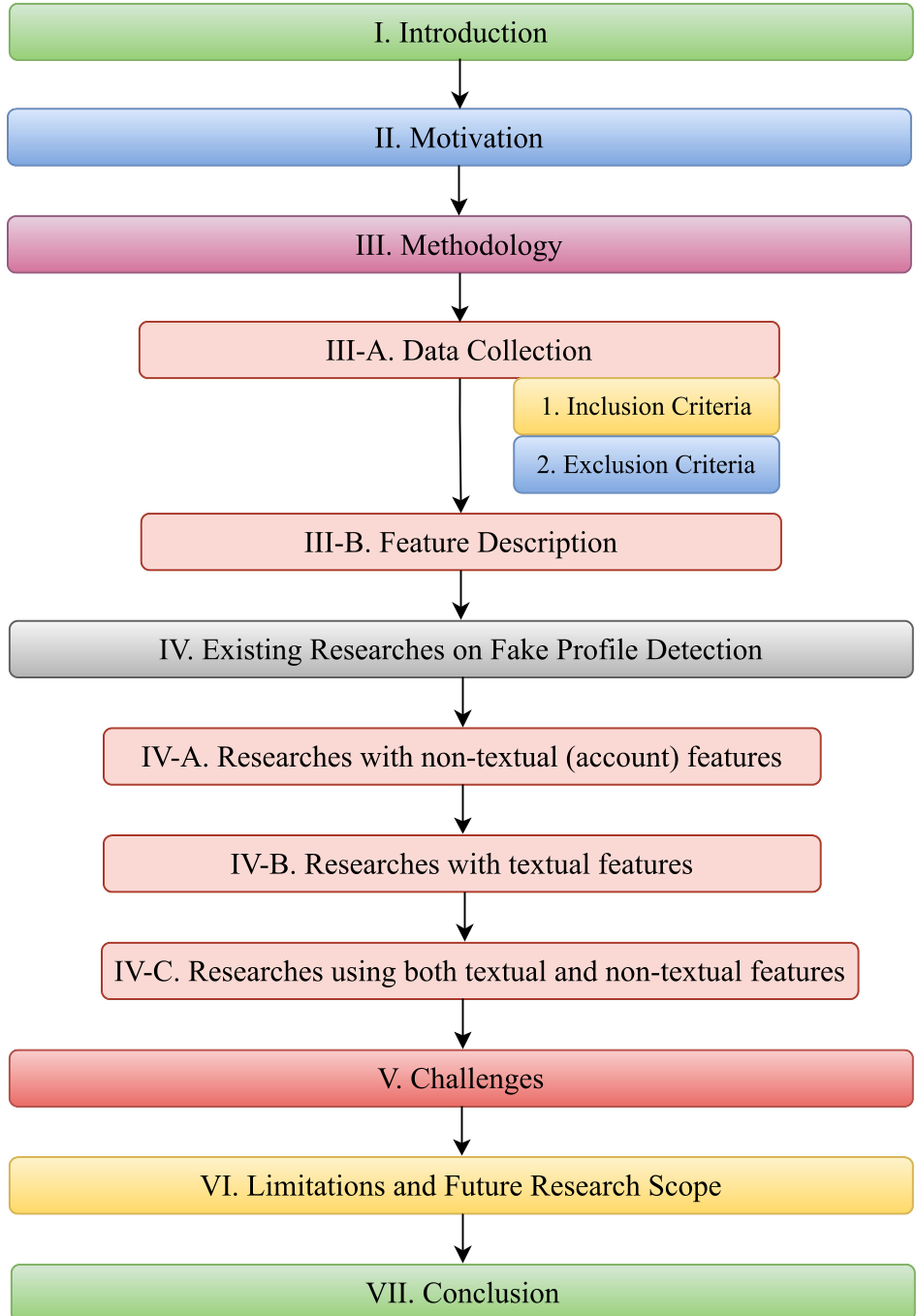 Fig 1: The hierarchical structure of fake profile detection research.
Battle of the Algorithms: SOTA Performance
The review compares various models across diverse datasets (Twitter, Facebook, LinkedIn).
| Author | Core Method | Accuracy | Key Strength |
|---|---|---|---|
| Singh et al. | Random Forest (RF) | 99.80% | Best performance on Twitter datasets |
| Wanda & Jie | DeepProfile (Dynamic CNN) | 93.42% (F1) | Handles complex behavioral sequences |
| Alom et al. | Hybrid ML (XGBoost/RF) | 91.00% | Effective spammer identification |
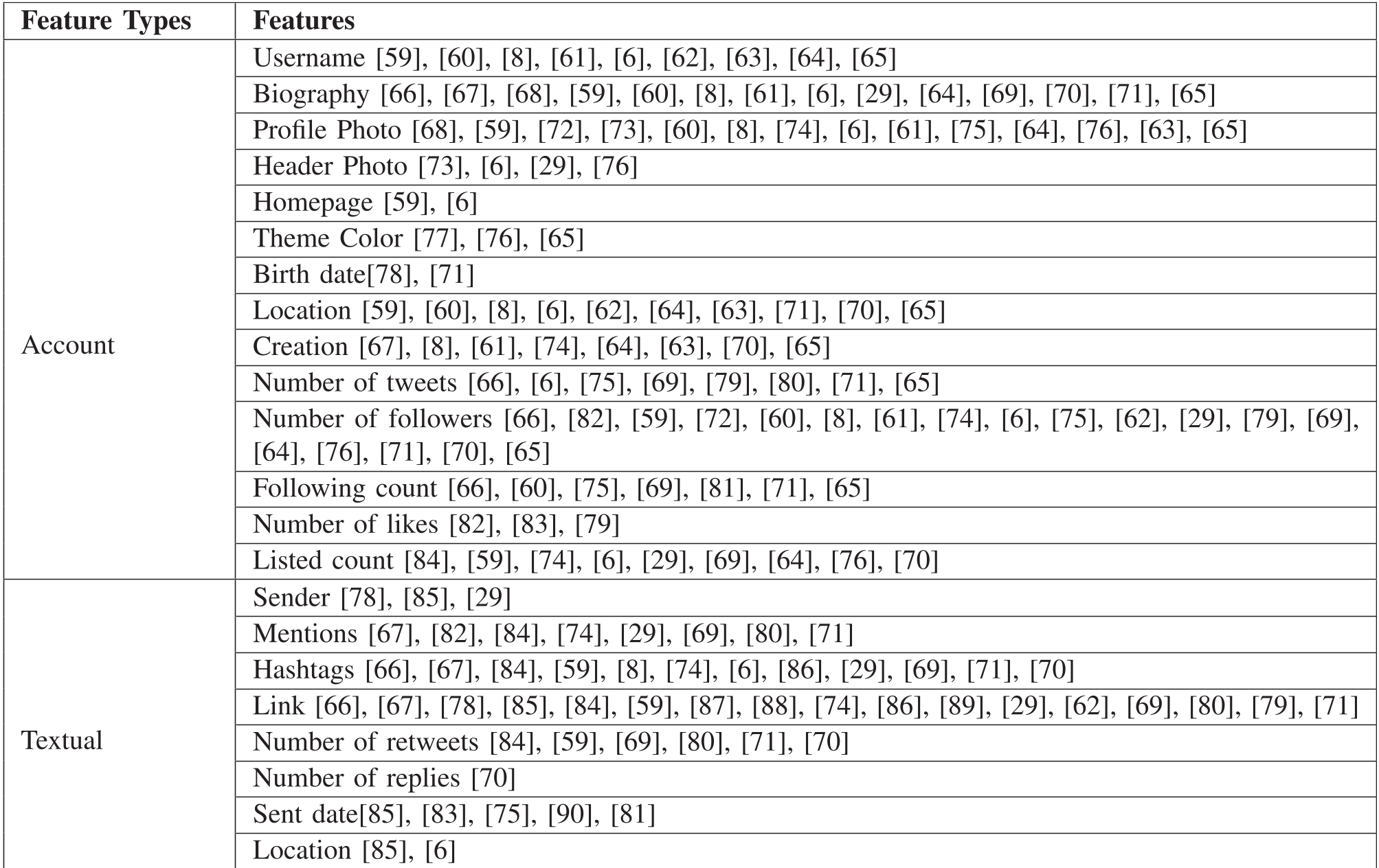 Table 1: Exhaustive list of account and textual features used in current SOTA.
Critical Insight: The "Zero-Hour" Detection Gap
The authors highlight a critical limitation: most current models are reactive. They detect fakes after they have already posted dozens of links or sent hundreds of friend requests. The "Holy Grail" of this field is Registration-Time Detection—stopping the bot before it even enters the network.
Challenges & The Path Ahead
The paper identifies several high-frontier challenges:
- Code-Mixed Data: Current models struggle with users who mix languages (e.g., Hinglish), which is common in global botnets.
- Impersonation of Public Figures: Instagram bots mimicking politicians require advanced image-text consistency checks.
- Scalability: Processing billions of daily tweets in real-time requires more than just high accuracy; it requires computational efficiency.
Final Summary
Fake profile detection is no longer just about identifying "spammy" text; it is an arms race involving behavioral psychology, graph theory, and deep neural networks. As fakes become more "human-like" through GenAI, our detection frameworks must evolve from static feature checking to dynamic, intent-based analysis.