
LEGIT+: Securing Recommendations Against the "Sockpuppet" Army
False-Name-Proof Recommendations in Social Networks
This paper introduces LEGIT+, a weight-selecting mechanism for recommendation systems in social networks designed to be robust against false-name manipulations (Sybil attacks). By leveraging the "no harm" axiom and recursive graph partitioning, it achieves state-of-the-art performance in providing "most uniform" recommendations without incentivizing fake accounts.
TL;DR
In the era of botnets and Sybil attacks, trust in social recommendations is fragile. This paper presents LEGIT+, a mechanism that uses social network topology to aggregate opinions in a way that is mathematically "False-Name-Proof." It ensures that no matter how many fake accounts a malicious user creates, they cannot diminish the influence of honest users or unfairly hijacks the final recommendation.
The Core Conflict: Uniformity vs. Security
Ideally, a recommendation system should treat every user's opinion equally (Uniform Weighting). However, in an open social network, this is a security nightmare. If every account gets 1 vote, a single person can create 1,000 accounts to win any argument.
The authors identify a critical trade-off:
- Uniformity: We want to hear from as many people as possible.
- No Harm Axiom: A malicious user's fake accounts should never reduce the weight assigned to any other legitimate node in the network.
Previous attempts, like RANDOMWALK (where weights are based on the probability of a random hit), fail at uniformity—they often ignore distant nodes or over-weight those close to the "target" user.
Methodology: The Architecture of Trust
The genius of LEGIT+ lies in how it defines a "legitimate" node.
1. Identifying the "Lobes"
A node is potentially a fake identity created by if removing completely disconnects from the target user . The set of such nodes is called the Lobe of .
2. Recursive Weight Passing
The algorithm doesn't just look at immediate friends. It assigns weights to "legitimate" nodes (those not hidden behind a single point of failure) and then recursively passes that weight down into the lobes if those lobes contain active voters.
 Figure 1: Illustration of how network structure influences the legitimacy of nodes.
3. The Algorithm (LEGIT+)
The authors utilize a Block-Cut Tree decomposition. By identifying articulation points (cut vertices), the mechanism can run in linear time , making it viable for massive platforms like X (formerly Twitter) or Facebook.
Experimental Battleground
The researchers tested LEGIT+ against RANDOMWALK and a basic LEGIT (non-recursive) version across 16 real-world datasets.
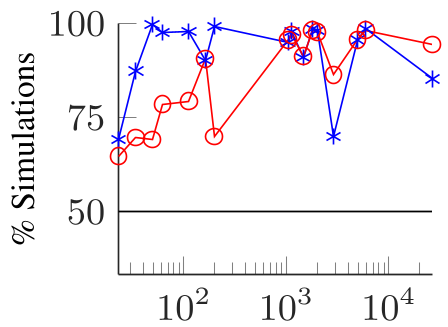 Figure 2: Execution time and Accuracy metrics across different dataset sizes.
Key Findings:
- Efficiency: LEGIT+ processed networks with 25,000+ nodes in a fraction of the time required by RANDOMWALK (which requires complex matrix inversions).
- Inclusivity: LEGIT+ discarded significantly fewer voters than baselines (up to 30% more voters were "saved" and counted compared to the basic LEGIT).
- Accuracy: In "ground truth" scenarios (where there is a correct answer), LEGIT+ reached the correct conclusion more often than its competitors.
Critical Insight: Why the "No Harm" Axiom Matters
The "No Harm" axiom is the secret sauce. By ensuring that "adding fake nodes doesn't hurt others," the authors prove that for any weighted median aggregation, the system becomes False-Name-Proof.
This means a user's best strategy is simply to report their true opinion through their single real account.
Conclusion & Future Outlook
LEGIT+ provides a rare bridge between Social Choice Theory and Graph Theory. While it assumes we only care about "one person, one vote," it sets the stage for future systems that incorporate Homophily (closeness of interests) while remaining bulletproof against bot manipulation.
As decentralized social protocols (like Lens or Farcaster) gain traction, algorithms like LEGIT+ will be essential for filtering the signal from the noise without resorting to centralized gatekeepers.