
S-KT: Rapid Population Tracking for Key Tags in Anonymous RFID Systems
Fast Tracking the Population of Key Tags in Large-Scale Anonymous RFID Systems
This paper introduces specialized RFID tracking protocols, B-KT and S-KT, designed to estimate the population of a specific subset of "key tags" in large-scale systems. By focusing exclusively on expected singleton slots and employing sampling with early termination, the method achieves high estimation accuracy while drastically reducing communication latency.
Executive Summary
In large-scale RFID deployments, such as multi-tenant warehouses, users often care only about a specific subset of items—key tags—rather than the entire population. This paper presents S-KT (Sampling-based Key tag Tracking), a breakthrough protocol that estimates the number of present and absent key tags with high precision and unprecedented speed. By shifting the focus from "identifying all" to "statistically sampling the critical few," S-KT outperforms existing SOTA methods by over 200%, fulfilling a vital need for time-sensitive inventory management.
Problem & Motivation: The "Noise" of Ordinary Tags
The fundamental challenge in key tag tracking is interference. In a warehouse with 100,000 tags, a tenant might only own 5,000 "key" tags. Existing protocols face a dilemma:
- Identification Protocols: Identifying every tag is 100% accurate but takes far too long (proportional to the total population).
- Global Estimators: Standard cardinality estimators count all tags but cannot distinguish between the tenant’s items and everyone else’s.
Previous attempts like the ZDE protocol attempted differential estimation but required the reader to observe the entire time frame, wasting cycles on slots occupied by "ordinary" (non-key) tags.
Methodology: The Power of Expected Singleton Slots
The core insight of this work is that since the reader knows the IDs of the key tags (), it can pre-calculate a virtual slot status vector ().
1. The B-KT (Basic) Protocol
The reader uses a Hash function and a random seed to map key tags to specific slots. It identifies expected singleton slots—slots where exactly one key tag is predicted to land. During the actual physical query, the reader uses a lightweight bitmap to tell tags to skip all other slots.
- If an expected singleton slot is empty (), a key tag is confirmed absent.
- If it contains the correct checksum (), the tag is present.
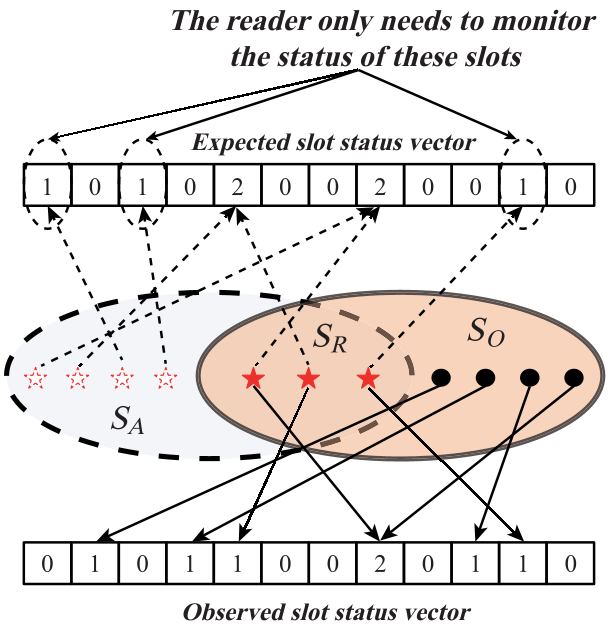 Fig 1. Comparison between Virtual Frame (K) and Physical Frame (C) to determine tag status.
2. S-KT and Early Termination
To handle massive systems, the authors introduce a sampling probability (). Instead of querying all tags, only a fraction participate. More importantly, they implement an Early Termination Tactic. Using the 3-sigma rule, the system calculates tighter bounds on the unknown variables (total population and dynamic degree ) after each sub-frame. If the required accuracy () is statistically met, the process stops immediately, saving significant time.
Experiments & Results
The authors compared S-KT against several benchmarks, including CATS (searching), ZDE (differential estimation), and TH (identification).
Performance Highlights:
- Scalability: While identification time grows linearly with the total number of tags (), S-KT’s time increases only marginally because it filters out non-key interference.
- Efficiency: At key tags, S-KT is 30x faster than the fastest identification protocol and 3.7x faster than the state-of-the-art ZDE.
- Reliability: S-KT consistently meets the user-defined reliability , even as the environment becomes more dynamic.
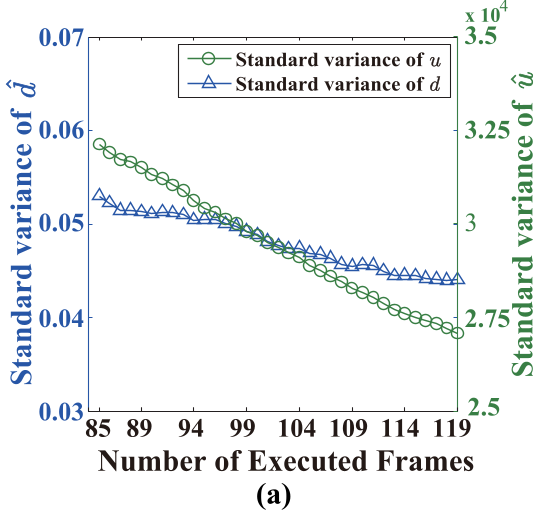 Fig 2. Time cost comparison vs. current tag number (c). S-KT maintains near-constant performance.
Critical Analysis & Conclusion
Takeaways
S-KT represents a significant shift in RFID protocol design. By leveraging the known information (key tag IDs) to create a virtual filter at the MAC layer, it effectively ignores the "background noise" of ordinary tags. The inclusion of the 3-sigma rule for early termination is a brilliant application of statistics to real-time hardware constraints.
Limitations
The current model assumes a single-reader scenario. In multi-reader environments, reader-reader collisions and overlapping interrogation zones could complicate the mapping of tags to slots. Furthermore, physical layer issues such as the "capture effect" (where a stronger signal masks a weaker one in a collision) might slightly bias the singleton-slot observations in extreme conditions.
Future Outlook
This methodology isn't limited to RFID. The concept of "expected slot monitoring" could be applied to any Large-scale IoT network where a controller needs to track the status of a specific group of sensors amidst a sea of heterogeneous devices.