
Favor for Favor: Decoding Reciprocity in Flickr and Twitter
Faving Reciprocity in Content Sharing Communities: A Comparative Analysis of Flickr and Twitter
This paper investigates "faving" reciprocity in content-sharing communities by comparing Flickr and Twitter. Using large-scale datasets, it quantifies how users reciprocate appreciation (favs/retweets) and identifies the influence of social links (contacts/followers) on this behavior.
TL;DR
Is a "Favorite" a genuine mark of quality, or just a social "thank you"? This paper explores the "tit-for-tat" nature of content appreciation. By comparing Flickr (photo-centric) and Twitter (news-centric), the study reveals that reciprocity accounts for a massive chunk of platform activity. Interestingly, in Flickr, you are actually more likely to see equal and faster reciprocity from strangers than from your own friends.
Background: Beyond Social Links
Most research on social networks asks: "If I follow you, will you follow me back?" This paper digs deeper into Content-level Reciprocity. When you "fave" a photo or "retweet" a post, the receiver gains visibility and psychological satisfaction. This creates a hidden economy of social exchange that drives the "Interestingness" algorithms of modern Web 2.0 platforms.
Methodology: The User Hierarchy
The authors categorize the population into three distinct archetypes to filter out the noise:
- Type A: Passive observers who fave others but don't upload.
- Type B: Pure creators who upload but don't engage with others.
- Type C: The "Engine" of the community. These users both produce and consume, accounting for over 83% of activity in Twitter and the vast majority in Flickr.
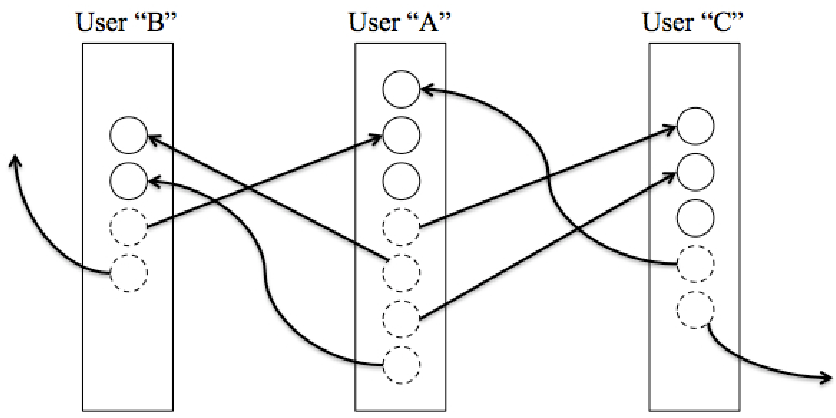
Key Insights: Why We Reciprocate
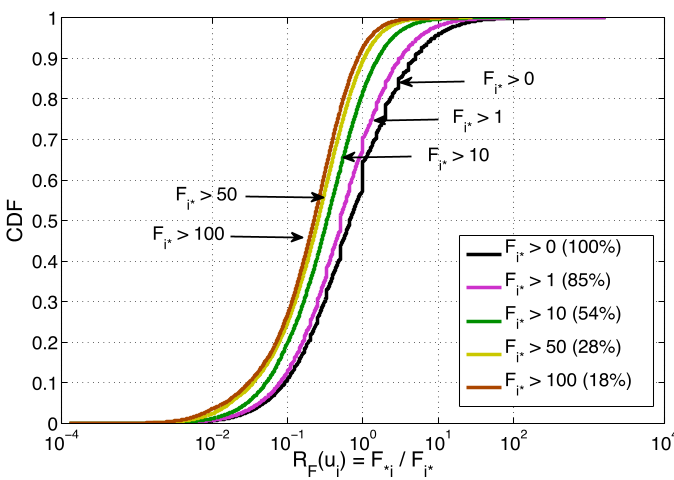
The study finds that while only ~10% of user pairs in Flickr are reciprocated, they generate 37% of all favorites.
1. The "Stranger Danger" Paradox
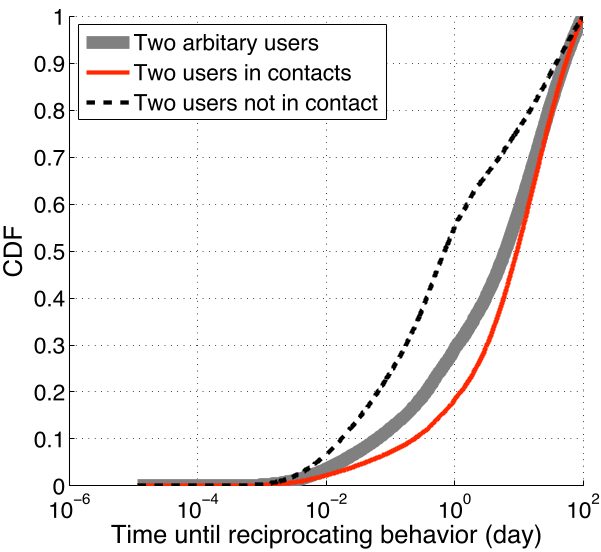
In Flickr, the data shows a surprising trend: Users who are NOT contacts reciprocate more equally and faster than those who are.
- Intuition: When a friend faves your photo, it's expected. When a stranger does it, it feels like a "favor" that requires a specific response to show gratefulness or to invite a new connection.
2. Flickr vs. Twitter: Design Matters
Twitter (analyzed during the #iranelection era) showed less intense reciprocity than Flickr.
- Flickr: Favs are a primary way to climb the "Explore" page. Thus, ambitious photographers use faving as a strategic tool to gain popularity.
- Twitter: Retweeting places content directly into your own stream. Users are more selective because a retweet affects their own "brand" or feed quality, making them less likely to reciprocate purely out of politeness.
Response Latency: The Speed of Gratitude
The timing of a reciprocated action is a "smoking gun" for psychological obligation.
- In Flickr, the median response time for strangers is significantly lower than for contacts.
- In Twitter, following relationships barely impact the speed of a retweet, suggesting that the "news" value of the content outweighs the social obligation of the link.
Critical Analysis & Conclusion
This work highlights that Social Software is not neutral. Small design choices—like whether you notify a user of a "fav" or where a "favorites list" is displayed—drastically alter the social fabric.
Limitations: The Twitter dataset was event-specific (#iranelection), which might skew results toward informational utility rather than social grooming.
Future Outlook: As platforms move toward "algorithmic feeds," the role of organic reciprocity is being replaced by AI. However, for community managers and developers, understanding that strangers drive growth through high-velocity reciprocity remains a vital lesson in building engagement loops.