
Beyond General Polarity: Fuzzy Ontology-Based Sentiment Analysis for Intelligent Transportation
Feature-based Transportation Sentiment Analysis Using Fuzzy Ontology and SentiWordNet
This paper introduces a feature-based Transportation Sentiment Analysis (TSA) system that integrates Fuzzy Ontology with SentiWordNet to extract specific transportation attributes from social media. The method combines semantic knowledge with machine learning classifiers (Logistic Regression and Multi-layer Perceptron) to achieve higher accuracy in sentiment classification than traditional non-ontological approaches.
TL;DR
Analyzing public opinion on transportation is no longer just about "positive" or "negative" labels. This paper introduces a specialized framework that uses Fuzzy Ontology to map messy social media data to specific transport features (like "road conditions" or "traffic facilities"). By combining semantic knowledge with SentiWordNet and machine learning, the authors achieved a significant boost in classification accuracy, hitting up to 73%.
Background: Why Sentence-Level Analysis Isn't Enough
For an Intelligent Transportation System (ITS), knowing a tweet is "negative" is useless if you don't know what the user is complaining about. Is it the traffic jam, the road surface, or the lack of signage? Prior research often treated sentences as black boxes (document/sentence-level analysis). The fundamental challenge lies in the unstructured, short, and slang-heavy nature of social media, where features are often implicit or semantically complex.
Methodology: The Power of Semantic Knowledge
The authors argue that a "crisp" (standard) ontology is too rigid for the dynamic language of social media. Instead, they propose a Fuzzy Ontology approach.
1. Data Filtration with SVM
Before analysis, the system filters out irrelevant noise using an SVM classifier. If a sentence doesn't reach a specific "transportation-relevance" score (calculated via N-grams and feature mapping), it is discarded.
2. Feature Extraction via Fuzzy Ontology
The heart of the system is the domain ontology. It defines "is-a" and "part-of" relationships between transport concepts. When a user mentions "terrible accident on road," the ontology recognizes "road" and "accident" as target features.
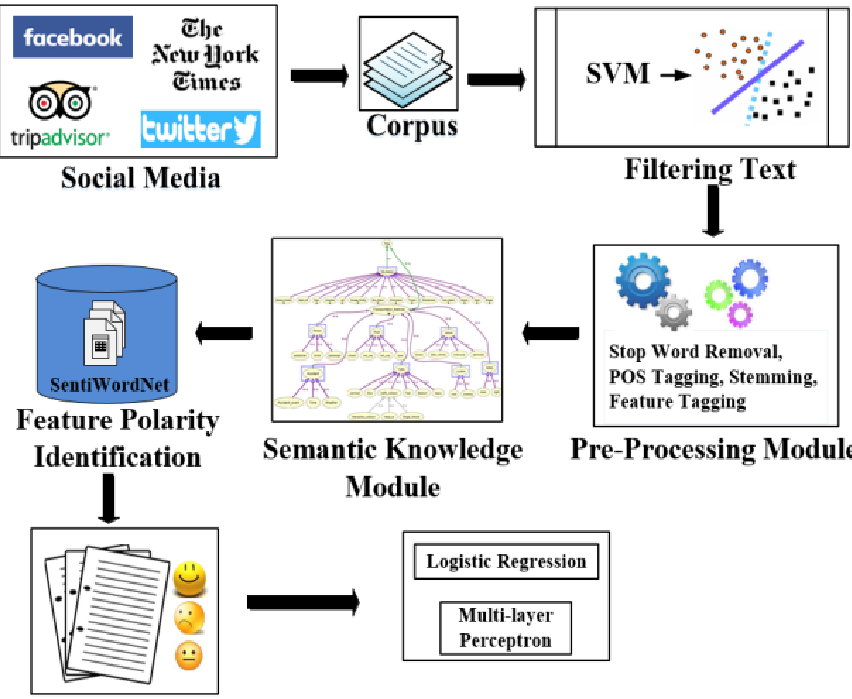 Fig 1 & 2: The framework relies on a specialized ontology to bridge the gap between raw text and domain concepts.
3. Polarity Scoring with SentiWordNet
Instead of simple word counts, the system uses SentiWordNet to assign scores to adjectives and adverbs. Because words have multiple meanings, the system calculates an average across synsets to determine the most likely sentiment intensity.
Experimental Evidence
The authors compared their ontology-enhanced models against standard versions of Logistic Regression (LR) and Multi-layer Perceptron (MLP).
- Logistic Regression + Ontology: 72% Accuracy
- Multi-layer Perceptron + Ontology: 73% Accuracy
The key finding is that classifiers without the ontology structure fail to "understand" implicit aspects, leading to much lower performance.
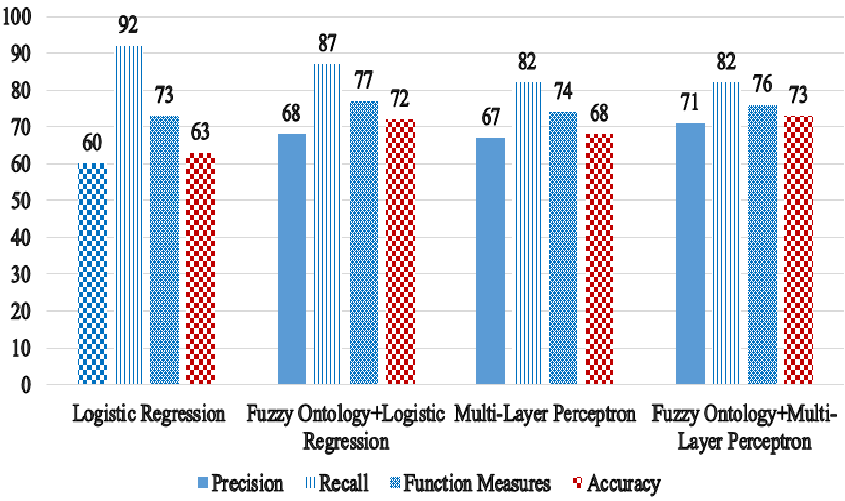 Fig 4: The clear performance gap proves that semantic context is the "secret sauce" for TSA.
Critical Insight & Conclusion
While many modern researchers rush toward LLMs (Large Language Models), this paper highlights the enduring value of structured expert knowledge. The use of Fuzzy Ontology allows for a level of interpretability and feature-pinpointing that raw neural networks often lack.
Limitations: The current system relies on a manually verified ontology. Scaling this to every sub-domain of city planning would be labor-intensive. Future work could look into automated ontology evolution—where the system learns new transport features as they emerge in public discourse.
Takeaway: Effective ITS integration requires granular data. By mapping sentiments to specific features, city planners can move from reactive "vibe checks" to proactive, data-driven infrastructure improvements.