
Beyond Traditional LBP: Systematic Benchmarking of Facial Features for Emotion Recognition
Feature Extraction and Feature Selection for Emotion Recognition using Facial Expression
This paper presents a systematic benchmarking and selection of facial features for Facial Expression Recognition (FER). It proposes a comprehensive framework evaluating 18 distinct handcrafted features (46,352 total dimensions) and discovers that the Bag of Visual Words (BoVW) approach using only 20% of selected features achieves superior performance on the CK+ dataset.
TL;DR
Is more data always better? In the realm of Facial Expression Recognition (FER), this paper argues no. By evaluating 18 types of handcrafted features, the researchers at IIIT-Delhi found that 80% of facial features are noise. By utilizing a "Bag of Visual Words" (BoVW) approach and focusing on a high-performing subset of features like HOG and the newly introduced Grey Co-matrix, they achieved 85.9% accuracy with significantly reduced computational overhead.
The "Small Feature Set" Bottleneck
Despite decades of research into FER, most studies suffer from a "narrow vision" problem—they focus on a single feature type (like Local Binary Patterns) and evaluate it on specific contexts. There has been a lack of a systematic "stress test" to determine which features actually drive performance across the board. Furthermore, high-dimensional data poses a massive challenge for real-time systems like driver monitoring or human-robot interaction.
Methodology: The Battle of Features
The authors didn't just pick a few features; they implemented 18 distinct descriptors, creating a massive feature vector of 46,352 dimensions.
1. Two Structural Approaches
The study compared two distinct pipelines:
- The Formal Approach: Treats the entire face as a single region for feature extraction.
- The BoVW Model: Divides the face into local patches (Eyes vs. Nose/Mouth), creates a "visual vocabulary" through K-means clustering, and represents images as histograms of these visual words.
2. Information-Theoretic Feature Selection
To prune the massive feature set, they employed three powerful algorithms:
- JMI (Joint Mutual Information): Focuses on eliminating redundancy.
- CMIM (Conditional Mutual Information Maximization): Prefers uncorrelated features.
- MRMR (Minimum-Redundancy Maximum-Relevance): Balances feature-class correlation with feature-feature distance.
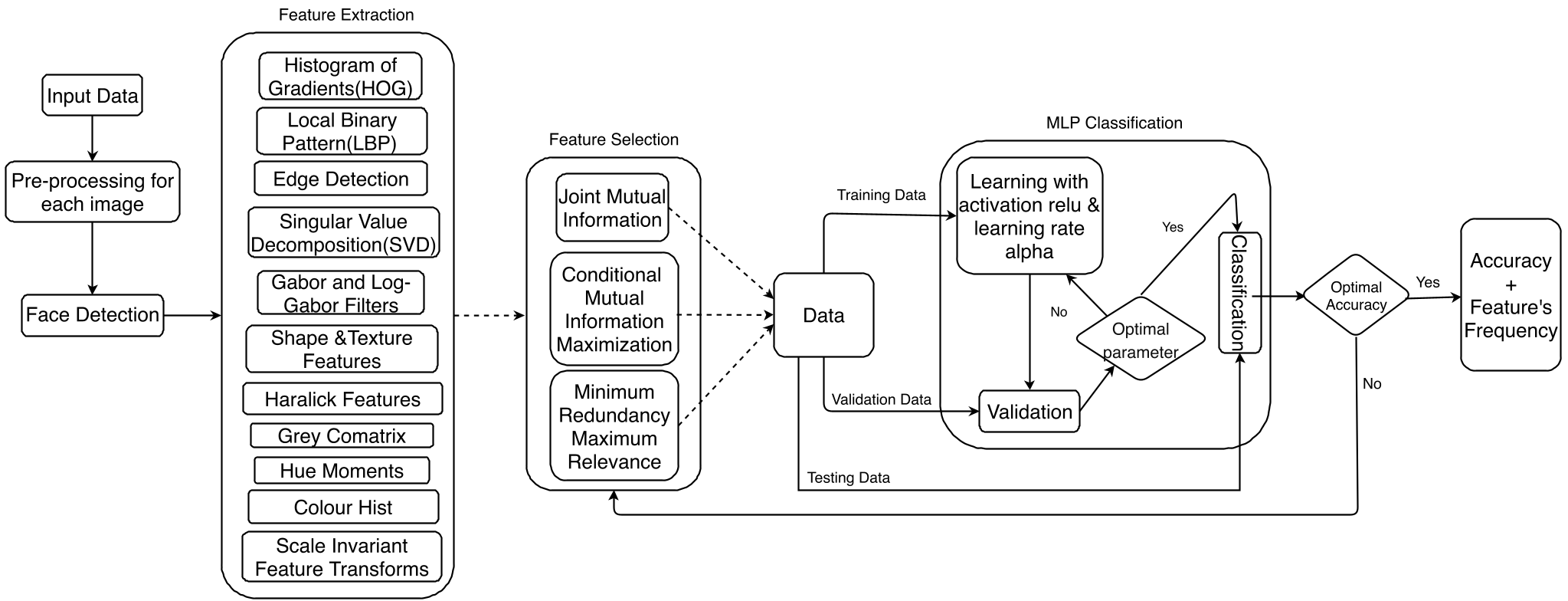 Figure 1: The Formal pipeline vs. the superior BoVW pipeline.
Key Discoveries: New Kings of FER
The research yielded several surprising insights that challenge the status quo:
- The 20% Rule: Increasing features beyond 20% of the total identification set (roughly 9,270 features) does not improve accuracy. In many cases, adding more features actually degrades performance due to the "curse of dimensionality."
- HOG is Still King: Histogram of Oriented Gradients (HOG) emerged as the most significant feature due to its ability to capture gradient and magnitude orientations of eyes and mouths effectively.
- The Rise of Grey Co-matrix: Explored for the first time in FER, the Grey Co-matrix (GLCM) outperformed classic benchmarks like LBP. It captures spatial relationships between pixel intensities that traditional filters miss.
- LDSP over LBP: While Local Binary Patterns (LBP) are famous, Local Directional Position Patterns (LDSP) proved to be much more robust for emotional cues.
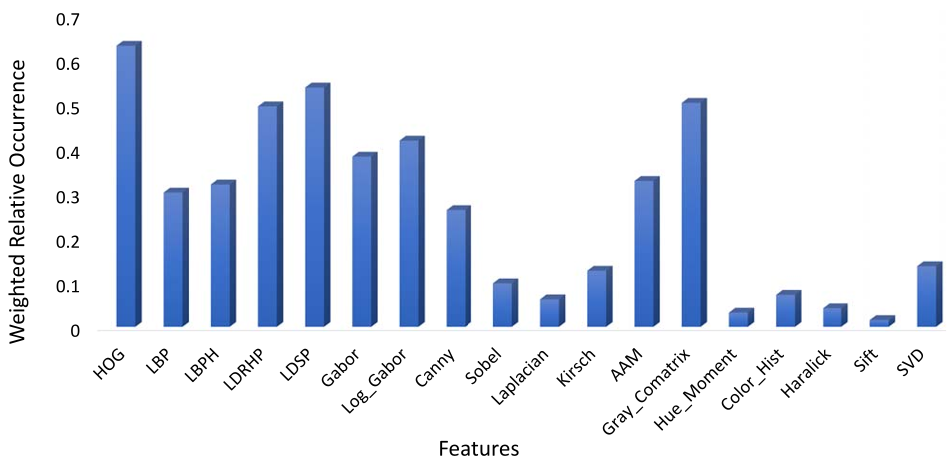 Figure 2: Relative frequency of feature significance, showing HOG and LDSP as top performers.
Experimental Validation
Using the CK+ (Extended Cohn-Kanade) dataset, the authors tested their assumptions against 8 basic emotions.
- Formal Approach Accuracy: 84.53%
- BoVW Model Accuracy: 85.9% (The winner)
The BoVW approach wins because it captures local variations (like a slight twitch in the eye or a curve of the lip) more effectively than a global whole-face analysis.
Critical Insight & Future Outlook
This paper serves as an essential "manual" for anyone designing non-neural network-based FER systems. It proves that handcrafted features are not dead; they are simply under-optimized.
Limitations: The study is confined to the CK+ dataset and discrete emotion labels (e.g., "Happy"). Real-world emotions are often a spectrum (Valence/Arousal), and future work needs to bridge this gap by using multi-dataset training to improve generalization across different lighting and demographic conditions.
Conclusion: If you are building a lightweight FER system, stop using every feature available. Focus on 20%, prioritize HOG and Grey Co-matrix, and utilize a patch-based BoVW architecture for the best results.