
Federated Learning: Redefining Privacy in RSS Fingerprint-based Localization
Federated Learning for RSS Fingerprint-based Localization: A Privacy-Preserving Crowdsourcing Method
This paper introduces a privacy-preserving indoor localization framework that utilizes Federated Learning (FL) for RSS fingerprinting. By employing a Multi-Layer Perceptron (MLP) architecture trained decentrally, it achieves high-precision localization without requiring users to upload sensitive raw signal data to a central server.
Executive Summary
TL;DR: This paper presents a pioneering approach to indoor localization by integrating Federated Learning (FL) with RSS fingerprinting. By shifting the training process from a central server to edge devices, the method eliminates the need to share raw location data, achieving a localization accuracy (MAE) of ~5 meters while maintaining strict user privacy.
Background: Within the landscape of Indoor Positioning Systems (IPS), Deep Learning (DL) has become the gold standard for feature extraction. However, the hunger for data in DL creates a massive privacy bottleneck. This work positions itself as the first to successfully apply the Federated Learning paradigm to the localization domain, offering a "best-of-both-worlds" solution: the power of crowdsourced data without the privacy nightmare.
The Privacy Dilemma in Crowdsourcing
Traditional RSS (Received Signal Strength) fingerprinting relies on a "Radio Map." Creating this map via crowdsourcing usually involves users sending their signal strengths and coordinates to a central cloud.
- The Risk: This central repository is a honeypot for sensitive movement patterns.
- The Problem with Existing Fixes: Data anonymization is often reversible, and noise injection (Differential Privacy) frequently destroys the precision required for meter-level localization.
The authors' insight is simple yet profound: Don't move the data; move the model.
Methodology: Decentralized Intelligence
The core of the system is a Multi-Layer Perceptron (MLP). The architecture is intentionally kept lean (four hidden layers: 20-10-10-10) to accommodate the limited NPU/CPU capabilities of mobile chipsets like the Snapdragon 845.
The Workflow
- Initialization: The server sends a global MLP model to participating users.
- Local Training: Each user collects local RSS beacons from Access Points (APs), labels them, and trains the model locally.
- Weight Aggregation: Users send only the weights () of their neural networks back to the server.
- Federated Averaging: The server calculates a new global model using weighted averaging based on the sample size of each participant:
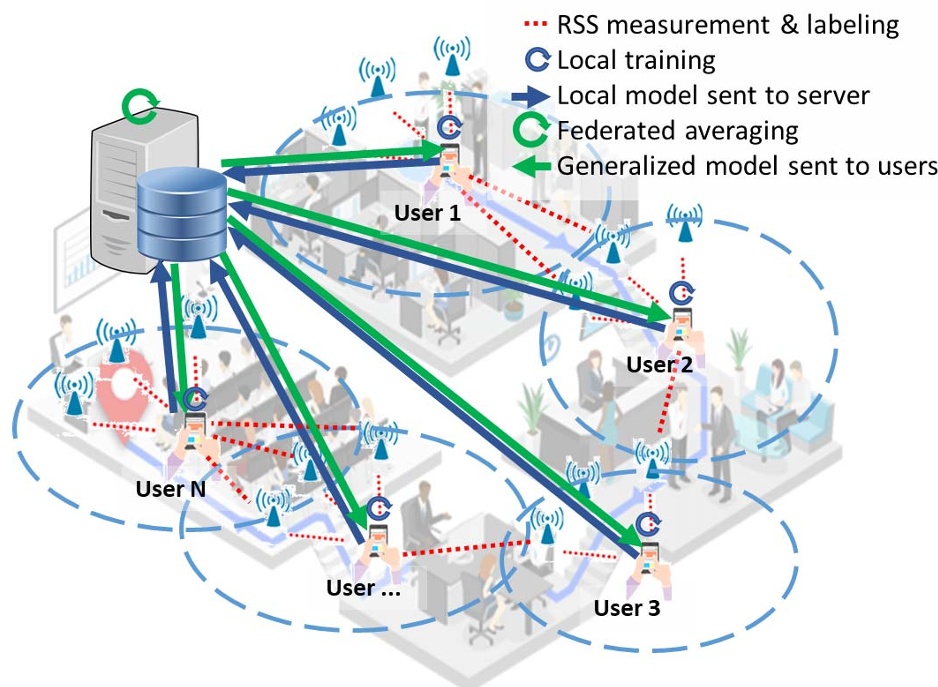 Fig 1: The Federated Learning-based crowdsourcing ecosystem.
Experiments and Real-World Scenarios
The authors validated their approach using the UJIIndoorLoc dataset, covering a massive multi-building area. They tested three critical scenarios:
- Scenario 1 (The Booster): FL was used to supplement a small centralized dataset. Adding 15 federated users improved accuracy by 1.8 meters.
- Scenario 2 (Privacy vs. Performance): They compared FL directly against centralized training. The performance gap was less than 1 meter, a negligible price to pay for total data privacy.
- Scenario 3 (The Real World): Users had different amounts of data and were located in different parts of the building (Non-IID data).
 Table 1: MAE Results showing FL's competitive performance across scenarios.
Critical Insight: Handling Heterogeneity
One of the most impressive findings is how FL handles spatial heterogeneity. In Scenario 3, because users are in exclusive regions of a building, their local models are highly biased toward local APs. While this increases convergence time, the Federated Averaging process acts as a natural regularizer, reducing global bias and helping the model generalize across the entire architectural complex.
Conclusion & Future Outlook
Takeaway: This research proves that Federated Learning is not just a theoretical construct for NLP or CV; it is a practical tool for wireless signal processing. It successfully achieves an MAE of 4.98m in a 105,300 area.
Limitations: While communication-efficient, the method still assumes users can accurately label their data (e.g., "I am at coordinate X, Y"). Future iterations might need to look at Unsupervised Federated Learning to remove the labeling burden from the user.
Future Work: We expect to see this expanded into CSI (Channel State Information) for even higher sub-meter accuracy and perhaps integrated with "Incentive Mechanisms" to encourage more users to join the federated circle.