
Beyond Invisibility: Concealing the Statistical Traces of Reversible Data Hiding
14894_First Steps Toward Concealing the Traces Left by Reversible Image Data Hiding.
This paper introduces a novel approach to conceal embedding traces in Reversible Image Data Hiding (RIDH), specifically targeting the popular Prediction Error Expansion and Histogram Shifting (PEE-HS) framework. By utilizing Gaussian-modeled surrogate prediction errors and binary dither noise, the method preserves the statistical Laplacian distribution of prediction errors while maintaining perfect image reversibility.
TL;DR
While Reversible Image Data Hiding (RIDH) allows for perfect restoration of the original image, it often leaves "statistical fingerprints" that give away the presence of hidden data. This paper introduces the first systemic framework to hide these traces by replacing deterministic histogram shifting with a probabilistic surrogate error selection and dithered expansion, effectively blending the hidden data into the natural noise of the image.
The "Invisible" but Detectable Problem
In many sensitive fields like medical imaging or legal forensics, we need to hide data in images such that the original image can be recovered bit-for-bit. The industry standard, PEE-HS (Prediction Error Expansion - Histogram Shifting), achieves this by expanding prediction errors to create space for data.
However, the authors point out a critical flaw:
- Shifting Traces: To prevent data overlap, these methods shift large sections of the error histogram, creating unnatural "peaks."
- Expansion Traces: The process of doubling an error to embed a bit () creates a "stepping effect" where adjacent histogram bins have identical heights.
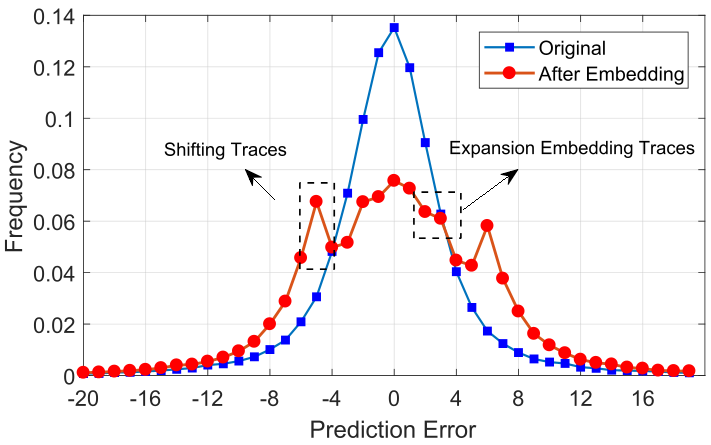 Figure 1: Comparison showing the original smooth histogram vs. the "jagged" histogram produced by standard RIDH.
Methodology: The Art of Probabilistic Masking
1. Eliminating Shifting Traces via Surrogate Errors
Traditional methods shift the histogram based on the actual value of the error. The authors propose a "detour":
- They model the relationship between neighboring prediction errors using a Gaussian Distribution.
- A surrogate error () is generated pseudo-randomly based on this model.
- Only pixels where the surrogate error falls within a threshold are used for embedding. Because the selection is probabilistic rather than deterministic, no global histogram shifting is required.
2. Smoothing Expansion Traces via Dithering
To fix the "stepping effect," the authors introduce a binary dither noise ().
- The new embedding formula becomes: .
- This dither breaks the rigid structure, effectively "smearing" the histogram bins back into a natural-looking Laplacian curve.
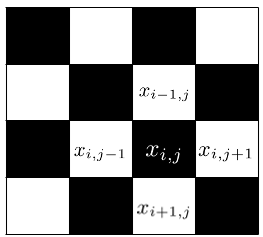 Figure 2: The chessboard spatial partition ensures that predictors at the receiver remain identical to the sender.
Experimental Validation
The authors tested their method against the seminal Sachnev et al. [18] algorithm.
- Statistical Fidelity: Using Jensen-Shannon divergence, they proved that their "concealed" histograms are significantly closer to the original Laplacian distribution than previous works.
- The Trade-off: There is a "security tax." To hide the traces, the method sometimes embeds data in less-optimal pixels, leading to a PSNR (image quality) drop of a few decibels compared to greedy algorithms. However, the visual quality remains high (SSIM > 0.94).
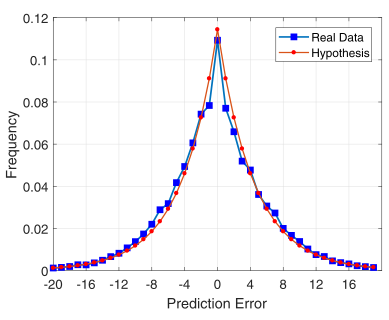 Figure 3: Qualitative comparison of the original histogram (left), traditional PEE-HS (middle), and the proposed "smooth" concealment method (right).
Critical Insight & Conclusion
This paper represents a paradigm shift. For years, the RIDH community has chased higher capacity (more bits per pixel) and lower distortion (higher PSNR). This work argues that security is the third pillar.
Limitations: The current method is designed for the spatial domain. As the authors suggest, sophisticated steganalysis might still detect traces in transform domains (like DCT). Future research must integrate these concealment strategies across multiple domains simultaneously to achieve "truly" invisible reversible data hiding.