
Beyond Big Data: How Playfulness and Practicality Drive Long-Term Health Changes
Can Fitness Trackers Help Diabetic and Obese Users Make and Sustain Lifestyle Changes?
This study investigates the long-term impact of Fitbit fitness trackers on 18 diabetic and obese users over seven months. It identifies five key design requirements—playfulness, practicality, persuasiveness, personalization, and privacy—that drive sustained lifestyle changes and increased physical activity.
TL;DR
Can a simple wearable device like a Fitbit actually help someone with diabetes or obesity change their life? A seven-month study by researchers from the University of Geneva and EPFL suggests the answer is yes—but not for the reasons you might think. While users start for the "coaching," they stay for the "fun" and "seamlessness."
The Engagement Gap in Digital Health
The healthcare industry is obsessed with data: blood glucose levels, caloric intake, and heart rate. However, for a patient struggling with obesity or diabetes, a mountain of data can feel like a burden rather than a blessing. Prior work has often focused on the accuracy of sensors, yet patients frequently abandon these devices after the "honeymoon phase." The real challenge isn't just measuring health—it's motivating the human to sustain better habits once the novelty wears off.
The Evolution of User Needs
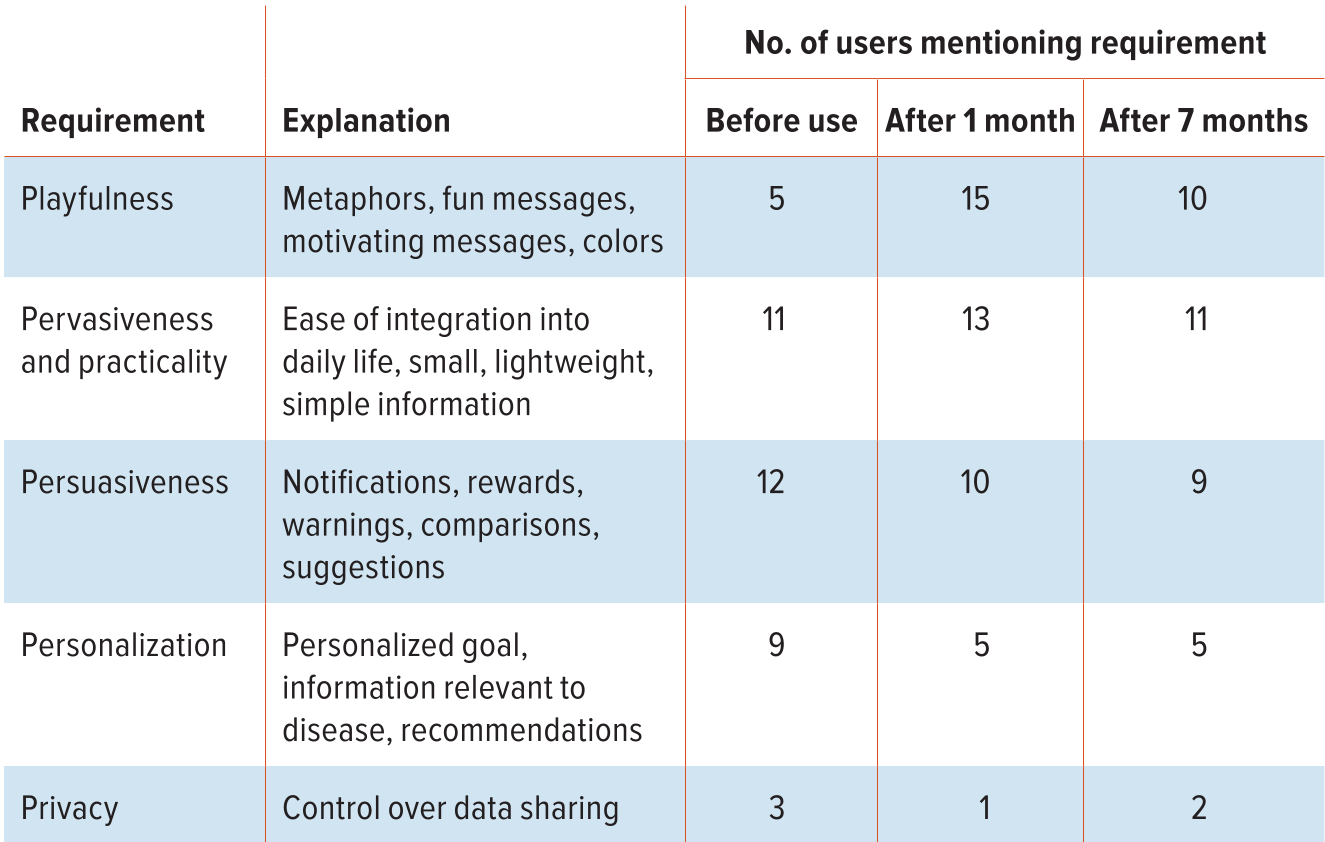
The most striking finding of this research is that what a user thinks they want before using a tracker is not what actually keeps them moving six months later.
- Phase 1 (The Spark): Initially, users prioritized Persuasiveness. They wanted a "digital coach" to nudge them and tell them exactly what to do.
- Phase 2 (The Routine): As the months passed, Playfulness and Pervasiveness (practicality) became the dominant drivers. Fun messages and "growing flowers" on the screen provided the emotional hook needed to endure the daily grind of exercise.
Methodology: A Deep Dive into Behavior
The study followed 18 individuals (ages 36 to 73) diagnosed with diabetes or obesity. By using a "Grounded Theory" approach—transcribing nearly 2,000 minutes of interviews—the researchers mapped the transition of these users through the Transtheoretical Model of Behavior Change.
Key Design Pillars identified:
- Playfulness: Visual metaphors (like a flower that grows as you walk) were more effective than raw numbers (steps).
- Pervasiveness & Practicality: The device must be "unobtrusive." If it's hard to sync or needs frequent manual data entry, users quit.
- Personalization: Goals need to be adaptive. Jumping from 5,000 to 10,000 steps too quickly is "discouraging" rather than motivating.
Results: Meaningful Lifestyle Shifts
Quantitative data showed a clear upward trend in activity. More importantly, the qualitative feedback revealed a shift in "activity awareness." Participants began to see their environment differently—finding opportunities to walk in parking lots or choosing stairs over elevators.

One participant (P13) reached an average of 70,000 steps per week, a feat they previously thought impossible. The "social connection" also played a role; being a "cool mom" with a new gadget provided a sense of pride that replaced the stigma of chronic illness.
Critical Analysis & The Road Ahead
While the study is pioneering, it does have limitations. The sample size is small (18 users) and focused on a single device (Fitbit One). Future research needs to explore:
- Automated Privacy: How can we simplify data sharing controls for elderly users who find complex settings overwhelming?
- Virtual Integration: Can we map physical walking to virtual achievements (like avatars or "unlocked" music) to provide extrinsic rewards?
Takeaway for Designers: Stop building "medical monitors" and start building "lifestyle companions." Success in digital health isn't measured in the precision of the sensor, but in the smile of the user when their digital flower finally blooms.
Source: "Can Fitness Trackers Help Diabetic and Obese Users Make and Sustain Lifestyle Changes?" by Mirana Randriambelonoro, et al., IEEE Computer Society.