
Beyond Static Traces: Building Flexible Workload Models for Modern Social Networks
A flexible workload model based on roles of interactive users in social networks
The paper introduces a flexible role-based workload model for Online Social Networks (OSNs), specifically identifying "Social," "Generator," and "Reader" profiles. By utilizing the DWEB framework and the GUERNICA generator, it accurately simulates interactive user behaviors and navigational transitions to facilitate fine-grained performance evaluation.
TL;DR
As Online Social Networks (OSNs) evolve from simple messaging hubs to complex ecosystems managed by professionals (Community Managers) and passive consumers alike, static workload models are failing. This paper proposes a role-based workload model—categorizing users into Social, Generator, and Reader profiles—to create high-fidelity, interactive simulations for performance testing. By focusing on "roles" rather than fixed clickstreams, the model adapts naturally to new features and changing user habits.
The Problem: The "Technical Paradox" of OSNs
In the world of systems research, we face a paradox: OSNs are ubiquitous, yet high-quality, representative workloads for testing them are scarce.
- Data Silos: Big tech companies treat user traces as trade secrets.
- Dynamic Habits: User behavior isn't static; it changes with mobile adoption and the emergence of professional roles.
- The Interactivity Gap: Most models treat users as "open-loop" systems, ignoring how server latency or content quality changes a user's next move.
Methodology: The Hierarchy of Action
The authors solve this by layering the workload model through the DWEB (Dynamic Web Workload Model) framework. The architecture moves from low-level technicalities to high-level intent:
- Actions: The atomic unit (e.g., clicking a button).
- Activities: A sequence of actions toward a goal (e.g., "Post a Blog").
- Roles: The behavioral shell that dictates the probability of moving between activities.
Architectural Mapping
The authors mapped the interface of a standard OSN (using the Elgg engine) to identify navigational nodes. By grouping these nodes, they created an abstract navigation graph that governs how different roles traverse the site.
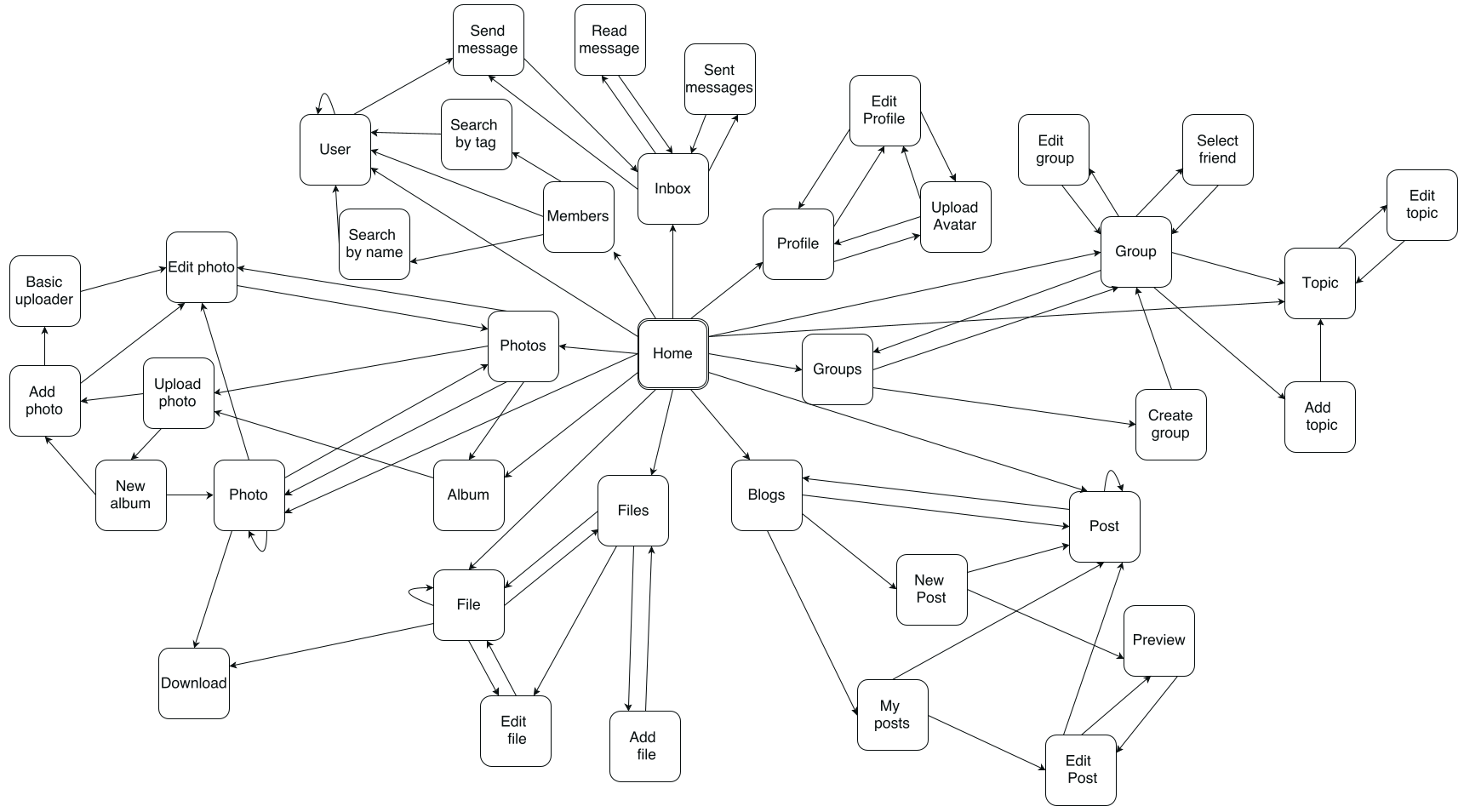 Figure 1: Navigational graph representing the structure of an OSN and possible transitions.
Defining the Roles
The core innovation lies in the definition of three distinct archetypes, each with its own state-transition matrix:
- Social User: The "average" participant. They browse content 92% of the time but occasionally generate posts or comments.
- Generator User: The "Power User" or Community Manager. Their transition matrix is heavily weighted toward uploading content, responding to messages, and editing profiles.
- Reader User: The "Lurker." They exclusively request content and never trigger "write" actions, focusing solely on timelines and photo feeds.
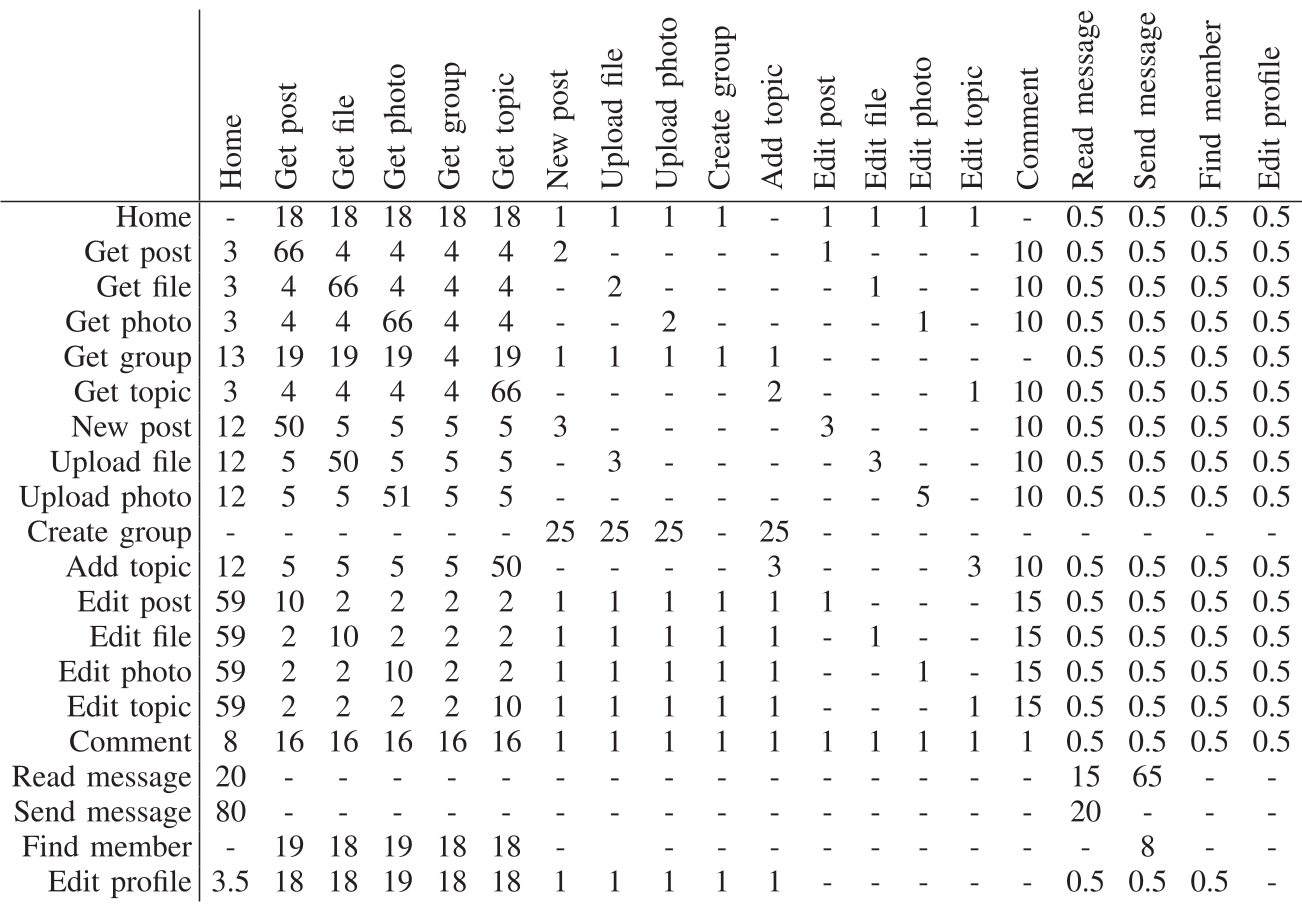 Table 1: Detailed transition probabilities for the Social Role, showing a high tendency to stay within browsing activities (Get post, Get file).
Experimental Implementation: GUERNICA & LoadG
To make this theoretical model actionable, the authors integrated it with GUERNICA, a workload generator, and LoadG, a graphical interface.
- Interactivity: The model isn't just a Markov Chain. It allows for "conditional transitions." If a server's response time is too high, the probability of the user "closing the session" increases, simulating real-world frustration and QoS impact.
- Flexibility: Researchers can modify the XML output of LoadG to add new roles (e.g., "Bot" or "Advertiser") without rewriting the underlying simulation engine.
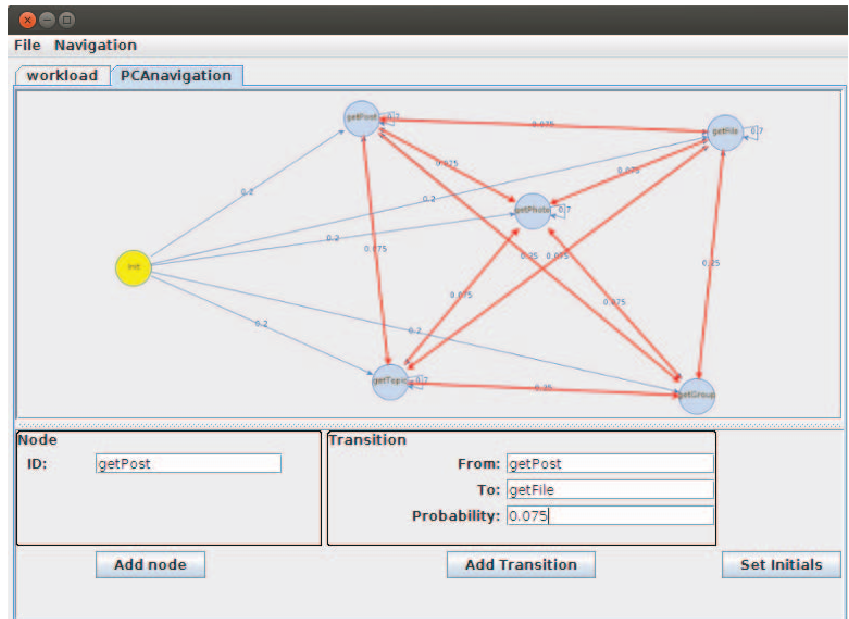 Figure 2: The LoadG interface used to graphically define activities and transition logic.
Critical Insight: Why This Matters
The shift from page-based modeling to activity-based modeling allows this research to remain relevant even as platforms transition from traditional web pages to Single Page Applications (SPAs) or mobile APIs. By abstracting "Uploading a Photo" as an activity, the underlying technical implementation (whether it's one POST request or three) can change while the workload model remains valid.
Conclusion and Future Outlook
This work provides a crucial bridge for researchers who lack access to production-grade traces from giants like Meta or X. By using role-based abstractions, we can simulate complex, interactive environments that reflect the current state of social media.
Future Work: The authors aim to use this model to benchmark OSN hardware requirements more accurately, potentially extending the roles to include malicious behaviors (spammers) to test system resilience.