
Flickr Distance: Bridging the Semantic Gap through Visual Correlation
Flickr Distance: A Relationship Measure for Visual Concepts
The paper introduces Flickr Distance (FD), a visual relationship measure used to quantify the correlation between semantic concepts. By leveraging the Latent Topic Visual Language Model (LTVLM) to capture varied visual states of concepts and employing Jensen-Shannon (J-S) divergence, FD achieves a more human-coherent conceptual distance than text-based metrics like Normalized Google Distance (NGD).
TL;DR
The paper proposes Flickr Distance (FD), a metric that calculates the relationship between two concepts by looking at their visual content rather than just textual co-occurrence. By modeling concepts as distributions of visual trigrams across latent topics, FD provides a relationship measure that is far more aligned with human perception and out-performs existing text-based metrics by up to 139% in coherence.
Why Measuring "Distance" is Hard
In the world of AI, understanding how "horse" relates to "donkey" (similarity) or how "wheel" relates to "car" (meronymy) is crucial for search and organization. Historically, we have used two methods:
- WordNet: Accurate but limited. It requires human experts and cannot keep up with the millions of tags appearing on the web.
- Normalized Google Distance (NGD): Scalable but "blind." It assumes two things are related only if they appear in the same text document. However, people rarely write "the car has wheels" in every article about cars, making text-based co-occurrence data sparse and often misleading.
The authors argue that visual information is the missing link. Two concepts are related if they look similar or appear in similar visual contexts.
Methodology: The Latent Topic Visual Language Model (LTVLM)
The core innovation is how a "concept" is represented mathematically. Instead of a single vector, the authors treat a concept (like "Apple") as a collection of Latent Topics (e.g., a green apple, a red apple, a logo, a sliced apple).
1. Feature Extraction
Images are divided into patches, and texture histograms are converted into 8-bit visual words. This keeps the model computationally efficient and prevents the "sparsity problem" found in high-dimensional features like SIFT.
2. Modeling with Trigrams
Using a Visual Language Model (VLM), the system looks at "trigrams"—sequences of three neighboring visual words. This captures spatial structure (e.g., how the edge of a wheel curves) rather than just a "bag of words."
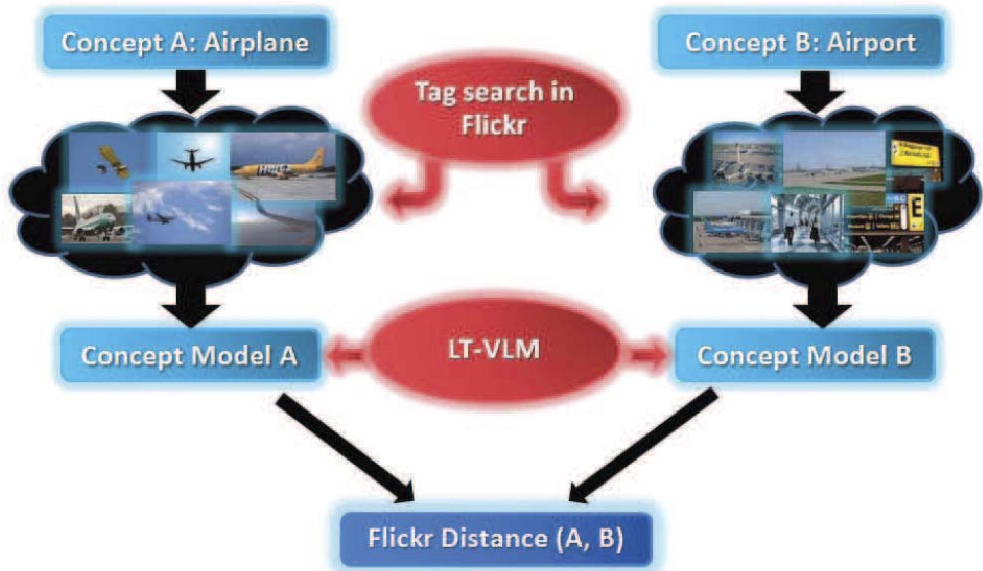 Figure 1: The framework for calculating Flickr Distance through visual modeling.
3. Measuring the Distance
Once each concept is a probability distribution of these trigrams, the distance between two concepts is calculated using Jensen-Shannon (J-S) Divergence. This measures how much "information" is shared between the visual models of Concept A and Concept B.
Experimental Proof: Better than Text
The authors validated FD against human scores and WordNet. The results were striking:
- Human Coherence: FD achieved an Average Spectral Coherence (ASC) of 0.92, compared to NGD's 0.71.
- Visual Conceptual Network (VCNet): The authors built a network of 1,000 tags. As shown below, FD correctly links concepts that are visually and logically related but textually distant.
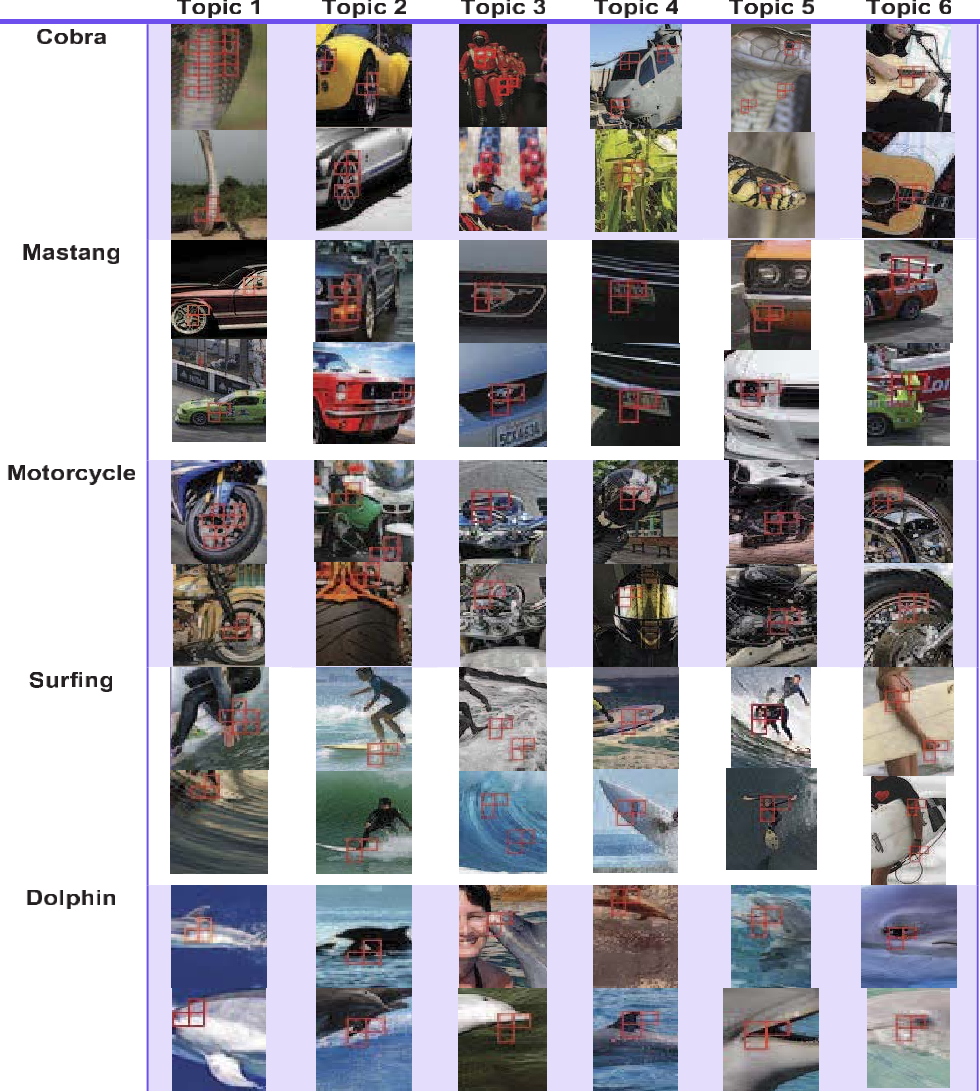 Figure 2: The Visual Conceptual Network (VCNet) showing clusters of related tags.
Real-World Applications
The paper demonstrates three major use cases:
- Conceptual Clustering: Grouping tags like "soccer," "baseball," and "tennis" together based purely on their visual distance.
- Image Annotation: Automatically suggesting tags for an image. Using FD improved top-4 precision from 6.0% (NGD) to 19.2% (FD).
- Tag Recommendation: Helping users label photos by suggesting visually correlated tags.
 Table 1: Comparison of Precision@N for different annotation methods.
Critical Insight: The Power of Visual Patterns
Why does it work? Consider "Computer" and "TV." Both frequently appear in "Rooms" and both have "Screens." A text search might not link them often, but their visual trigram distributions will overlap significantly because they share these visual patterns.
Conclusion & Future Outlook
Flickr Distance proves that there is immense semantic value hidden in the pixels of web-scale image collections. While the model currently faces limitations with very small objects and the manual tuning of latent topics (), it offers a robust, scalable complement to WordNet.
As we move into an era of Multimodal AI, the insights from this paper—specifically modeling concepts as latent visual states—remain a foundational perspective for bridging the gap between what a machine sees and what it understands.