
Vol sans effraction: Breaking Museum Walls with Drones and AR
15564_Flying a drone in a museum An augmented-reality cultural serious game in Provence.
The paper presents "Vol sans effraction," an innovative serious game designed for the Arlaten Museum in France. It leverages a camera-equipped drone and augmented-reality (AR) algorithms to allow visitors to explore a closed Roman Forum while virtually challenging museum stereotypes.
TL;DR
How do you keep a museum "alive" when its doors are physically shut for renovation? The Arlaten Museum solved this by letting visitors "trespass" legally. Using a drone equipped with AR technology, the Vol sans effraction project turns the street into a cockpit, allowing the public to fly through a UNESCO World Heritage site and "shoot down" museum stereotypes.
Context & Motivation: The Closed-Door Dilemma
Founded by Nobel laureate Frédéric Mistral, the Arlaten Museum in Arles holds a centuries-old Roman Forum in its courtyard. During its extensive renovation (concluding in 2017), this heritage was hidden from view.
The challenge wasn't just physical access; it was a branding crisis. Many young people view museums as "dusty," "boring," or "for elites." The authors recognized that traditional brochures wouldn't work. They needed a "Museum 2.0" approach—one that moved the museum "outside its walls" (Hors-les-murs) using high-tech interaction to bridge the gap.
Methodology: Telepresence through the Joystick
The core of the project is a "Serious Game." Unlike a standard video game, its primary goal is educational mediation.
1. The Drone "Avatar"
The museum utilized a Parrot AR.Drone 2.0, a lightweight quadricopter. Because museum walls are thick (blocking standard Wi-Fi), a Wi-Fi repeater was installed to ensure a stable link between the pilot on the street and the drone in the courtyard.
2. Augmented Reality & Target Detection
The pilot views a live 720p 30fps stream on a vintage-styled cockpit interface. To make the "flying" meaningful, the team placed eight physical targets in the Roman Forum.
- The Algorithm: Developed in C++ under Ubuntu, the detection algorithm is optimized for speed. It scans for specific color sequences (e.g., Yellow-Red-Blue-Black-Blue-Red-Yellow) within columns of pixels.
- The Result: If a target is detected in the crosshairs when the "fire" button is pressed, an AR explosion occurs, and a video clip plays where a young speaker refutes a museum cliché.
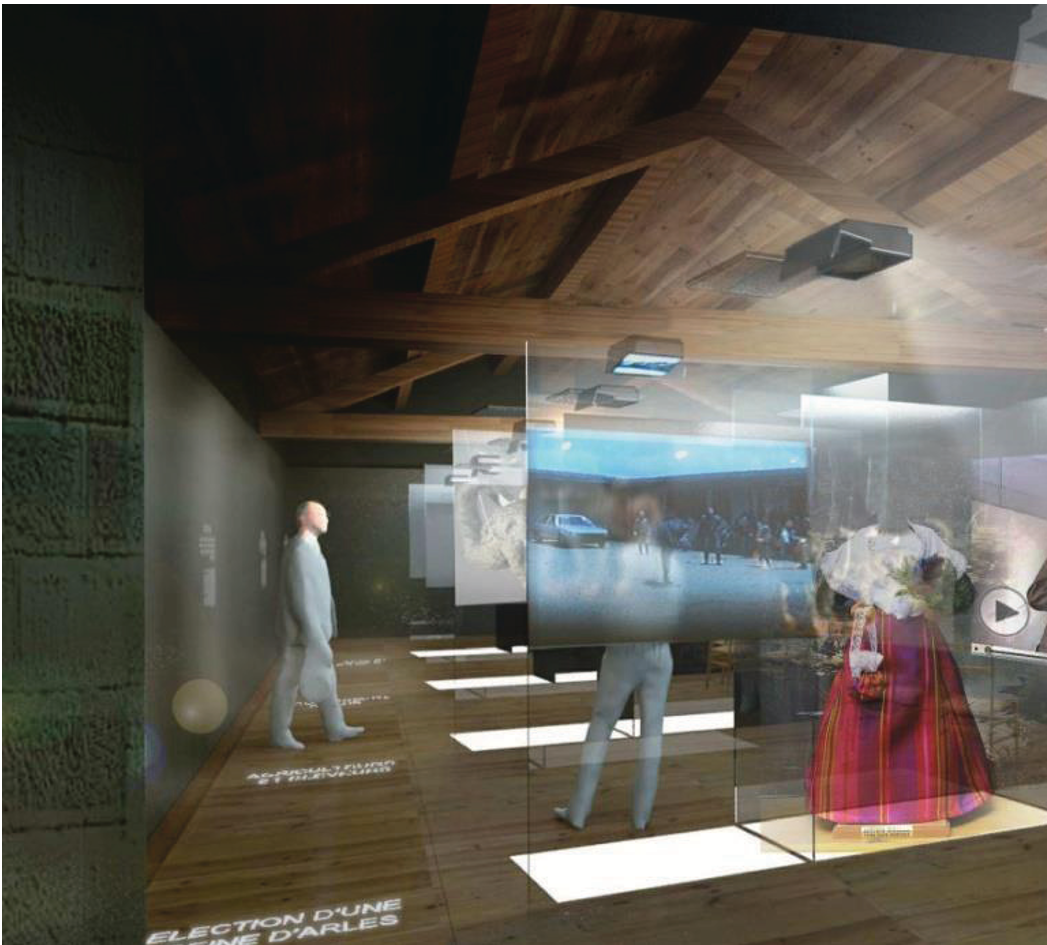 Figure 1: Conceptual visualization of the AR interface planned for the renovated museum.
Experiential Design: "Flight without Breaking In"
The game title Vol sans effraction is a clever French pun—Vol means both "flight" and "theft." It suggests a "heist" where the audience steals a glance at a forbidden site without breaking anything.
The Gameplay Loop:
- Tutorial: The "pilot" learns the controls using a joystick.
- Exploration: The drone flies over the Roman ruins, providing views usually inaccessible even when the museum is open.
- Mediation: By shooting targets like "Museums are only for old people," the player unlocks views of the "Future Arlaten Museum," creating anticipation for the reopening.
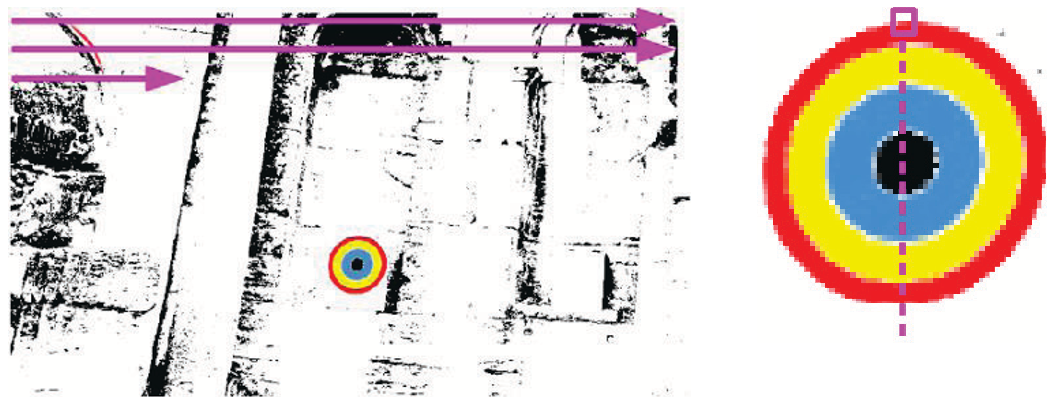 Figure 2: The real-time target detection logic and the resulting AR video feedback.
Results & Impact
The system was tested at the Heritage Cluster (Arles) and during "Marseille-Provence 2013."
- Performance: The custom algorithm took only 8ms to detect targets, leaving ample CPU power for smooth 30 FPS rendering on an i5 processor.
- User Feedback: A study on 15 test subjects aged 18-55 showed that the "surprise effect" of a drone and the "ease of shooting" (thanks to an auto-centering assist) were key high points. Even non-gamers found the educational messages regarding the museum's future clear and engaging.
Critical Insight: Why This Matters
This work moves beyond the "virtual tour" (which can be static and lonely). By using a physical drone, the experience retains a sense of "real-world" presence. It proves that:
- Robotics can be a tool for cultural mediation.
- Gamification is effective at combating elitist stereotypes of "High Culture."
- Accessibility can be achieved digitally even when a site is a hard-hat construction zone.
Conclusion & Future Work
The Vol sans effraction project successfully turned a renovation period into a marketing and educational triumph. Future iterations aim to include even more robust AR tracking and potentially multi-drone experiences. For the Arlaten Museum, the sky is no longer a limit—it's a new gallery.