
Flying Social Networks: Bridging Human Relationships and Aerial Communication
14678_Flying Social Networks Architecture, Challenges and Open Issues.
This paper introduces Flying Social Networks (FSN), a novel paradigm that integrates Social Network Analysis (SNA) with Flying Ad Hoc Networks (FANET). By leveraging the social attributes and relationships of UAV users, the authors propose a five-layer architecture aimed at optimizing routing, caching, and Quality of Service (QoS) in aerial communication environments.
TL;DR
Unmanned Aerial Vehicles (UAVs) are no longer just isolated flying machines; they are manifestations of their users' intentions. This paper proposes Flying Social Networks (FSN), a framework that utilizes social network analysis (SNA) to solve the chronic instability and high latency of traditional Flying Ad Hoc Networks (FANET). By predicting drone movements through user interests, the authors achieve superior routing and caching performance.
Problem & Motivation: The Chaos of the Sky
Traditional FANETs are plagued by dynamic topologies. High-speed UAV movement leads to frequent path failures, while standard "flooding-based" routing protocols consume excessive bandwidth.
The authors' core insight is that UAVs do not move randomly; they follow the tasks and interests of their human operators. If two users share a social bond or a common interest (e.g., photography at a specific landmark), their UAVs are statistically more likely to encounter each other. This social predictability is the untapped resource that FSN seeks to exploit.
Methodology: The Five-Layer FSN Architecture
The paper proposes a comprehensive architecture that fuses the physical world of drones with the digital world of social interactions.
1. The Architecture
The FSN architecture is divided into five functional layers:
- Data & Analysis Layers: Extract interaction data from Online Social Networks (OSN) and use Machine Learning to construct relationship networks.
- Network Layer: The "brain" of the FSN, where social-based routing (SBR) and caching rules are applied.
- Application & Physical/Data Link Layers: Handle the specific UAV tasks and wireless transmission (e.g., 802.11p).
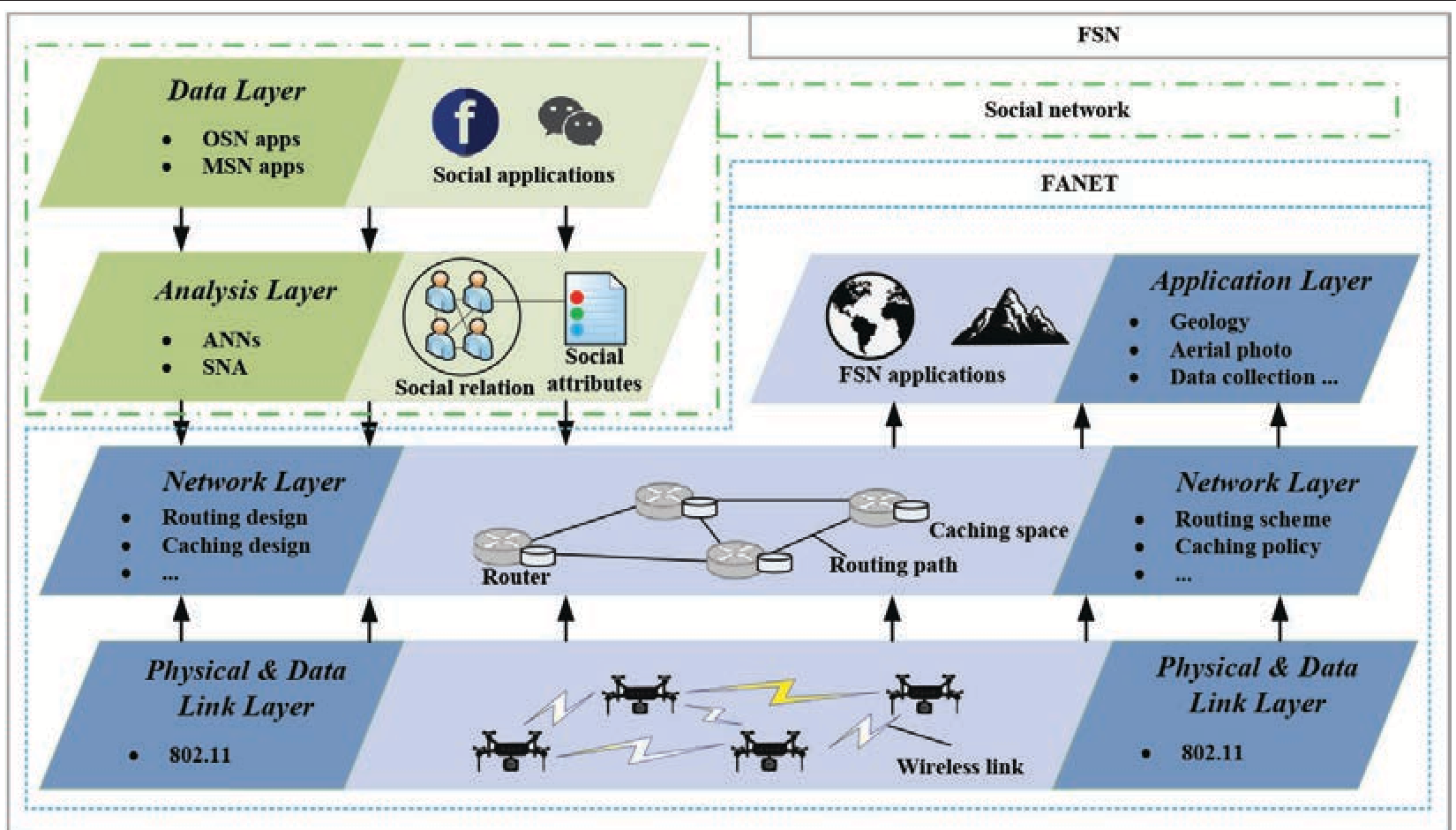 Figure 1: The synergy between Social Network Analysis and FANET protocols.
2. Social-Based Routing (SBR)
Instead of broadcasting control packets to find a path, SBR uses an Interest Matrix. By calculating the Jaccard similarity between users, the system identifies "socially close" nodes. Packets are then forwarded to UAVs that have the highest probability of encountering the destination node based on shared interests.
Experiments & Results: Proving the Social Advantage
The researchers conducted simulations comparing their Social-Based Routing (SBR) against First Contact Routing (FCR) using the Opportunistic Network Environment (ONE) simulator.
Key Findings:
- Higher Delivery Ratio: SBR showed a consistent advantage in packet delivery as the message Time-To-Live (TTL) increased. This is because SBR intelligently selects relay nodes rather than blindly passing data to the first node encountered.
- Lower Latency: By predicting encounters, SBR minimizes the "wait time" for opportunistic links, reducing the average end-to-end delay.
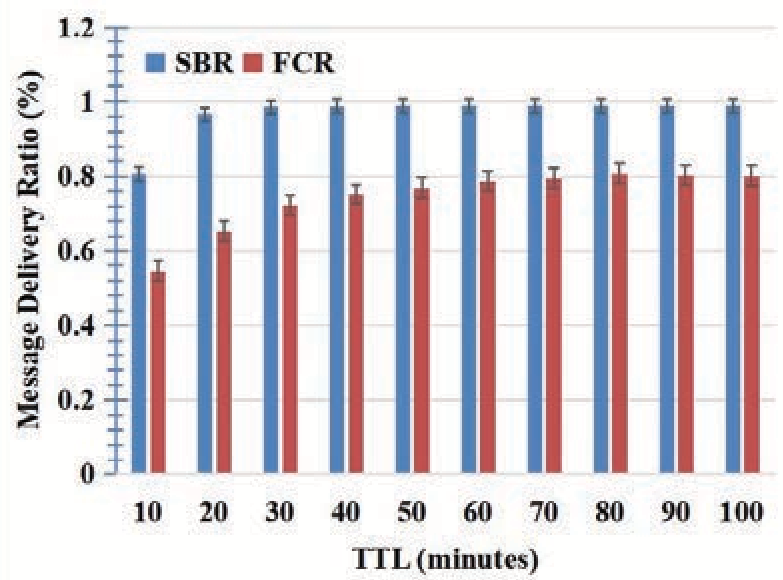 Figure 2: Delivery ratio and average delay comparison between SBR and FCR.
Critical Analysis & Conclusion
The FSN paradigm is a significant step toward Human-Centric Networking. It successfully argues that the "connectivity" problem in robotics is often a "predictability" problem in sociology.
Future Challenges:
- Privacy: Collecting OSN data from UAV users poses significant privacy risks that require robust encryption or federated learning approaches.
- Selfishness: UAVs have limited power; the paper suggests "social reciprocity" (helping those who help you) to encourage nodes to cache and forward data for others.
- Heterogeneity: Integrating data from different social platforms and different types of UAVs remains a complex data fusion challenge.
In conclusion, FSN provides a roadmap for more resilient, intelligent, and efficient aerial networks by recognizing that behind every drone is a human connection.