
Precision Selection: Targeted Modeling for Social Networks via FIC
Focused model selection for social networks
2016-04-11
Summary
Problem
Method
Results
Takeaways
Abstract
The paper introduces a focused model selection methodology for social networks based on the Focused Information Criterion (FIC). It enables researchers to select optimal models for specific quantities of interest—such as actor centrality or edge prediction—rather than using a "one-size-fits-all" model. The method is applied across Exponential Random Graph Models (ERGM), Network Autocorrelation Models (NAM), and Network Regression Models (NRM).
## TL;DR
Model selection in social network analysis (SNA) has long relied on global metrics like AIC or BIC. This paper argues that these "one-size-fits-all" approaches are fundamentally flawed because the "best" model depends entirely on **what** you want to estimate. By extending the **Focused Information Criterion (FIC)** to network models (ERGM, NAM, NRM), the authors provide a framework to select models that minimize the Mean Squared Error (MSE) for specific research focuses, such as the probability of a specific alliance or the impact of family wealth on network structure.
## The Research Intuition: Why Focus Matters?
In social sciences, a single network dataset can answer dozens of different questions. For instance, in the famous Florentine families dataset, are we interested in predicting marriage ties, or are we analyzing how wealth correlates with political influence?
Standard criteria (AIC/BIC) offer a single "optimal" model for the entire dataset. However, a model that is great at capturing the global density of a network might be terrible at estimating a specific family’s centrality. The authors' core insight is that **every research question (a "focus") deserves its own tailored model.**
## Methodology: The Bias-Variance Trade-off
The FIC process follows a mathematically rigorous path to balance the classic trade-off:
1. **Define the Focus**: Translate a research hypothesis into a parameter $\mu$.
2. **Define the Models**: Identify a "narrow" model (parsimonious) and a "wide" model (complex), along with intermediate candidates.
3. **Estimate MSE**: Instead of looking at log-likelihood, calculate the specific MSE (Bias² + Variance) of the focus estimator under each candidate model.
4. **Select**: The model with the lowest FIC (estimated MSE) wins.
### Model Architectures
The paper demonstrates this across three pillar models of SNA:
* **ERGM**: Modeling global structures via local configurations (triangles, k-stars).
* **NAM**: Addressing how family attributes (wealth) are influenced by their network position.
* **NRM**: Using one network (e.g., business ties) to predict another (e.g., marriage ties).
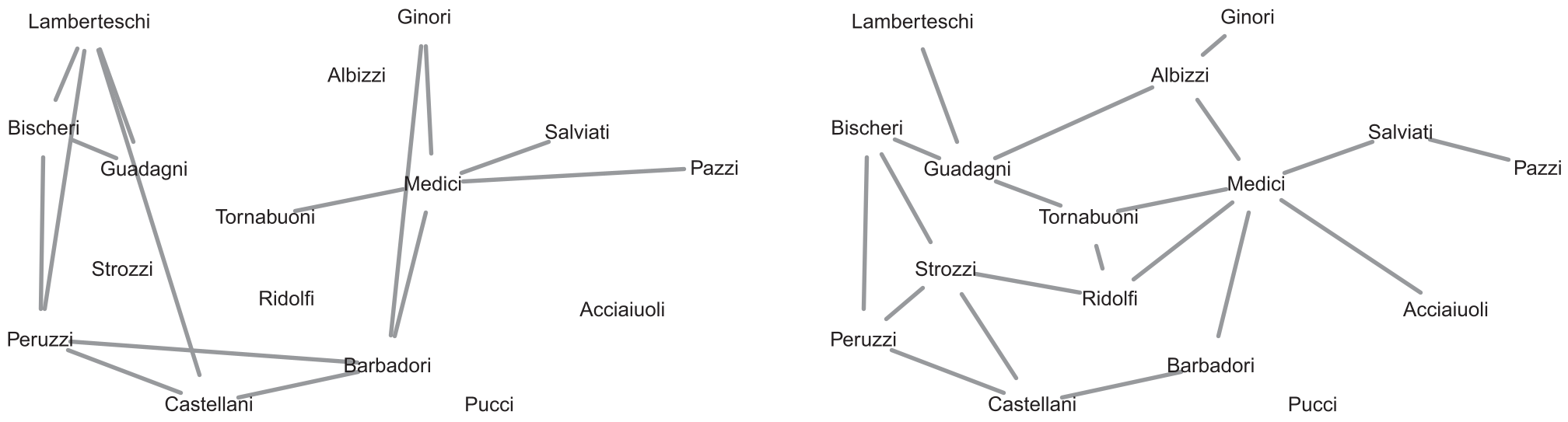
*Fig 1: The standard representation of actor-tie relationships used across the three model types.*
## Empirical Evidence: Florentine Marriages
Using the 15th-century Florentine families data, the authors show that when the focus is the **log odds ratio of a tie between the Strozzi and Medici families**, a model including family "wealth" is selected. However, when the focus shifts to the **transitive triangle effect** (the "friend of a friend" logic), a more complex model including change statistics is preferred.
Critically, AIC and BIC frequently selected the "narrow" model (simplest), which the authors proved had the **highest bias**, making it unsuitable for specific hypothesis testing.
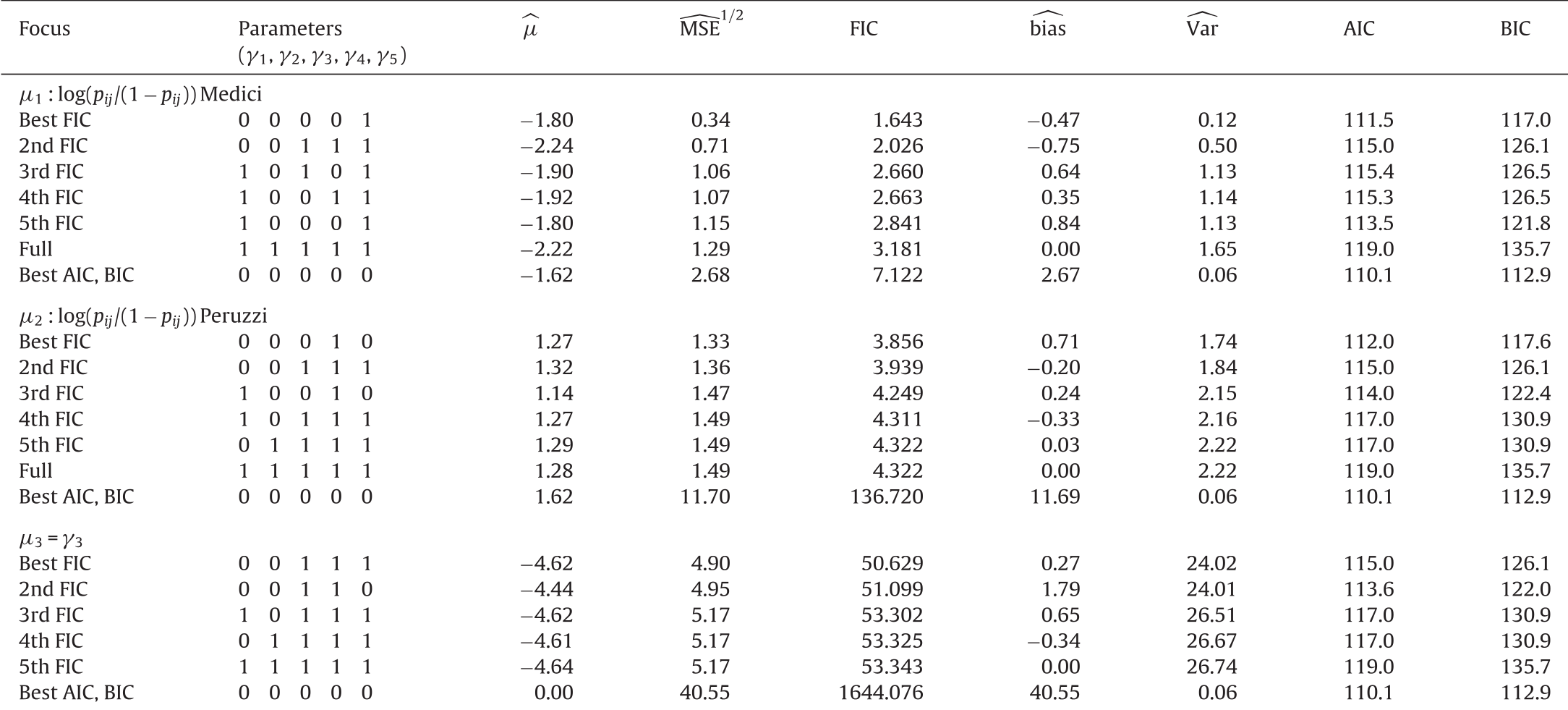
*Table 1: Note how the "Best FIC" model changes as the Focus parameter $\mu$ shifts, whereas AIC/BIC remain static.*
## Simulation Results: Exit Orders of Monks
In a controlled experiment using Sampson's "Monastery" data, the authors tested the FIC against AIC in predicting the order in which monks left a convent. The results (Fig 2) showed that the FIC-selected models consistently achieved a lower **Sum of Squared Errors (SSE)** for the specific exit order "focus" compared to the AIC-selected models.
)
*Placeholder: Fig 2 in the paper visualizes how FIC models outperform AIC across different levels of network autocorrelation.*
## Critical Analysis & Conclusion
**Takeaway**: The Focused Information Criterion represents a paradigm shift for SNA. It transforms model selection from a data-fitting exercise into a hypothesis-driven process.
**Limitations**:
* **Degeneracy**: Like AIC, FIC relies on Maximum Likelihood Estimation (MLE). If an ERGM is degenerate (non-convergent), FIC cannot solve it.
* **Computational Cost**: For very large networks with thousands of candidate models, calculating the Fisher Information Matrix for every focus can be intensive.
**Future Outlook**: The authors suggest extending this to **Relational Event Models (REM)** and **Dynamic Networks**, where focus-based selection could help predict "survival times" of social ties or the evolution of community structures over time.