
Social-Forecast: Mastering Video Popularity Prediction via Contextual Online Learning
Forecasting Popularity of Videos Using Social Media
This paper introduces Social-Forecast, a systematic online learning framework designed to predict video popularity within social media ecosystems. By integrating situational and contextual metadata with an adaptive-partitioning contextual bandit approach, it achieves state-of-the-art accuracy and timely forecasts without requiring any a priori training or datasets.
Executive Summary
TL;DR: Social-Forecast is an online algorithmic framework that predicts how popular a video will become on social media by looking at how it spreads, not just how many people watched it. It balances accuracy with "timeliness" (the economic value of early prediction) and improves performance by over 30% compared to traditional history-based models.
Background Positioning: This work bridges the gap between Quickest Detection theory and Contextual Multi-Armed Bandits. It moves beyond empirical "best-fit" curves to a rigorous online learning framework with proven convergence bounds, making it a "SOTA" reference for situational-aware forecasting.
The "Context" Crisis in Popularity Prediction
Why do some videos explode while others wither? Traditional models (like ARMA or simple regression) treat video views like a static time series. However, in the "Web 2.0" era, a video's fate is tied to its propagation context: Who initiated the share? How likely are their friends to re-share it?
Existing methods fail because:
- Data Staleness: Offline training becomes obsolete as social trends shift.
- Single-Stage Bias: They treat prediction as a one-time event, ignoring the value of waiting for more information vs. the cost of delay.
- Context Ignorance: They ignore the social "topology" (e.g., a celebrity sharing a video vs. a bot).
Methodology: The Core of Social-Forecast
The authors treat forecasting as a sequential decision process. At each "age" of a video, the algorithm has to decide: Forecast now or Wait?
1. Situational Awareness
The model looks at more than views. It identifies specific "Context" factors:
- Branching Factor (BrF): The number of viewers following the initiator.
- Share Rate (ShR): The percentage of viewers who re-share.
2. Adaptive-Partition Algorithm
Because the context space is massive and continuous, the model uses a "divide and conquer" strategy. It partitions the space into l-level hypercubes. When enough data is gathered in a specific region (hypercube), the algorithm splits it into smaller cubes to refine its "view" of that specific social situation.
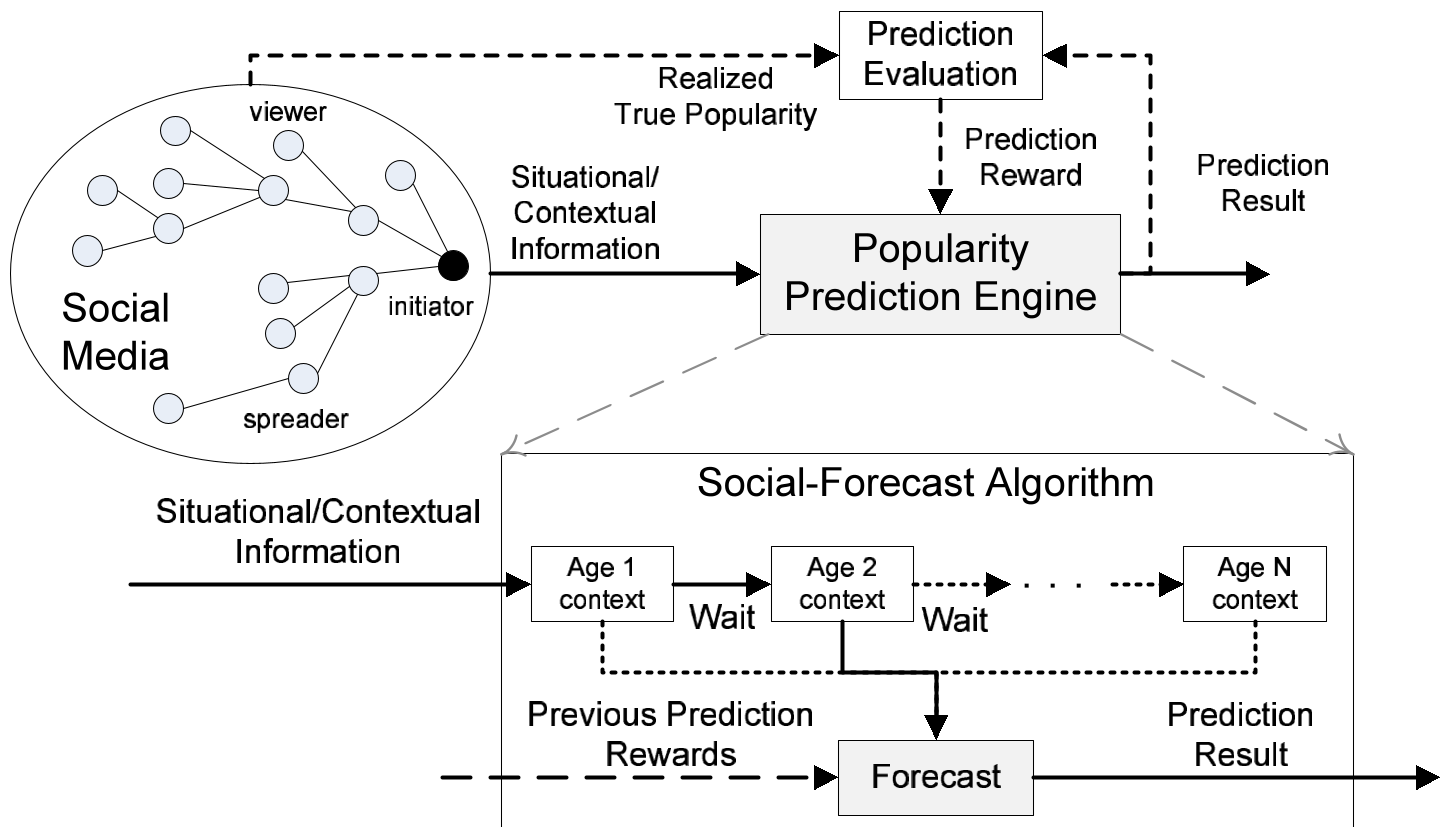 Fig 1: Contextual information flow and the multi-stage decision process.
3. Virtual Reward Updates
Unlike classic Bandits where you only learn from the action you took, Social-Forecast implements virtual updates. Since the video's popularity evolves independently of our prediction, we can "see" what the reward would have been for all possible actions (Popular vs. Unpopular) regardless of what we chose. This drastically accelerates learning speed.
Experimental Results: Proving the Gains
Testing on the RenRen dataset (China's equivalent of Facebook at the time), the results were conclusive.
- Superior Reward: Social-Forecast (SF) consistently achieved normalized rewards near 0.98, while the best view-based model (VP-25) hovered around 0.82.
- The Timeliness Tradeoff: As shown below, SF maintains high rewards regardless of the "importance" weight () of a video, whereas other models fluctuate significantly.
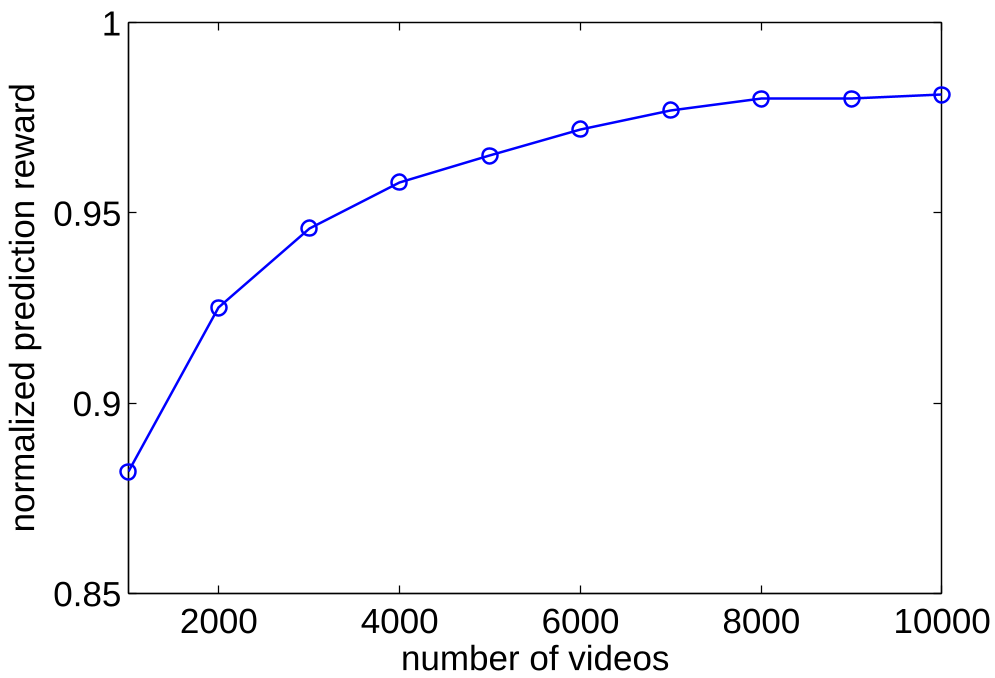 Table 1: Normalized prediction rewards showing Social-Forecast (SF) outperforming all benchmarks across different reward weights.
Critical Insight & Industry Value
The real brilliance of this paper is the Regret Analysis. The authors didn't just build a heuristic; they mathematically proved that the gap between their algorithm and an "Omniscient Oracle" shrinks sublinearly. This means the system is guaranteed to converge to the best possible strategy as it sees more videos.
Limitations & Future Work
- Feature Complexity: While BrF and ShR are powerful, modern social media involves complex "Attention Economics" and algorithmic feeds (like TikTok's For You Page) which may require even higher-dimensional contexts (e.g., watch-time retention).
- Distributed Learning: The paper assumes a single learner. Future iterations could explore Cooperative Learning where multiple platforms share context without compromising user privacy.
Conclusion: Social-Forecast transforms video prediction from a "guessing game" based on history into a "learning game" based on situational awareness. For advertisers and cloud providers, this is the blueprint for efficient resource allocation and revenue maximization.