
Digital Fingerprints: Decoding Image Forensics on Social Networks
A Forensic Analysis of Images on Online Social Networks
This paper presents a forensic investigation into image processing pipelines of major Online Social Networks (OSNs) including Facebook, Google+, and Badoo. It identifies specific "fingerprints" left by these platforms, such as fixed JPEG quantization tables, standardized pixel resolutions, and metadata stripping/alteration behaviors.
TL;DR
As the Web evolved, Online Social Networks (OSNs) became the primary repositories of digital imagery. This paper provides a forensic roadmap for identifying whether an image was processed by Facebook, Badoo, or Google+. By analyzing JPEG quantization tables, pixel resizing logic, and metadata stripping, the authors reveal that each platform leaves a unique, deterministic "fingerprint" on the files it hosts.
Academic Context: This work serves as a foundational study in Image Forensics, shifting the focus from "what is in the image" to "where has this image been."
Problem & Motivation: The OSN Black Box
When you upload a high-resolution photo to Facebook, it isn't just "stored"—it is ingested into a massive processing pipeline designed to optimize storage and bandwidth. For forensic investigators, this is a nightmare. Original camera metadata (EXIF) is often stripped, and the image is re-compressed, potentially destroying evidence of tampering or origin.
The authors' insight was simple yet powerful: if OSNs use standardized automated scripts for processing, then those scripts must leave consistent artifacts. If we can identify the specific Quantization Tables (QT) and Resizing Ratios used by a platform, we can identify middle-man interference.
Methodology: The "Upload-Download" Differential
The researchers built a heterogeneous dataset from various camera brands and used a three-step process:
- Baseline: Record original metadata, MD5 hashes, and JPEG QTs.
- Stimulus: Upload images to Facebook, Badoo, and Google+ (using different resolution settings).
- Analysis: Download the processed versions and compare them using tools like
JPEGSnoop,Exiftool, andMatlab.
1. The JPEG Compression Signature
JPEG compression is "lossy" because it ignores certain visual data based on a Quantization Table. Most software uses standard tables, but OSNs often customize theirs.
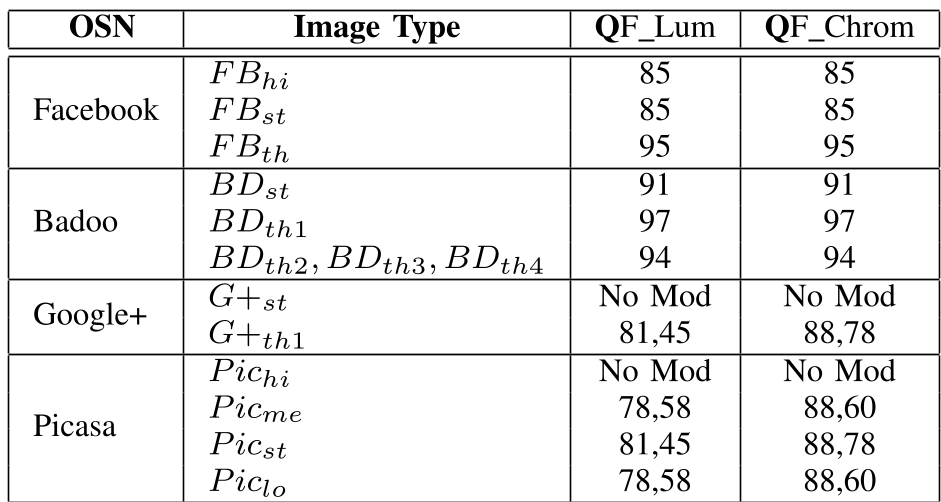
Table III reveals the "DNA" of OSN compression:
- Facebook: Forces a Quality Factor (QF) of 85 for almost all user uploads.
- Badoo: Uses a higher quality setting (QF 91) but maintains strict control.
- Google+: Unique in its "No Mod" policy for images below 2048px, preserving the original file's integrity.
2. Metadata: Stripping vs. Tagging
Metadata is the "biography" of a file. The study found two distinct behaviors:
- Destructive: Facebook strips almost all EXIF tags, though it adds an ICC Profile for color rendering. Interestingly, Facebook thumbnails include a "CREATOR: gd-jpeg" comment, revealing their back-end library.
- Constructive: Badoo actually adds information. It inserts a custom hexadecimal string into the EXIF "Comment" field.
The authors successfully reverse-engineered this string:
zU0 [Internal Color Data] [User ID in Hex] [Photo ID in Hex]
Experiments & Results: Identifying the Source
The researchers proved that they could distinguish between platforms based on the resulting image dimensions.
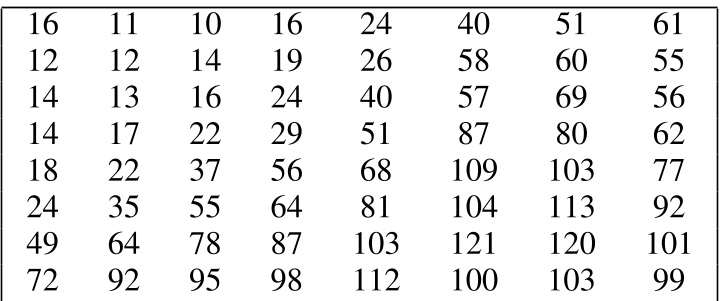 The 8x8 Luminance Table for Facebook (Table IV) is a fixed constant that forensic tools can search for.
Key Findings:
- Resolution Caps: Facebook caps standard photos at 720px and high-res at 2048px. Google+ uses a 2048px threshold; anything larger is resized and its metadata is stripped.
- Integrity: Google+ is the only platform among the three that allows for a "bit-perfect" download (matching MD5/SHA-1 hashes) if the original image is under the resolution limit.
Critical Analysis & Conclusion
Takeaway
This paper demonstrates that OSNs are not just passive hosts; they are active editors. For a forensic investigator, the absence of metadata in a Facebook photo is, in itself, a piece of evidence. The specific JPEG quantization table acts as a platform-specific watermark.
Limitations & Future Work
The primary limitation is temporal decay. OSNs update their algorithms frequently. The specific QF 85 for Facebook found in 2011 has likely shifted as new formats like WebP or improved HEIC compression became mainstream.
Additionally, the paper notes that "Anti-forensic" techniques (like re-injecting noise or fake QTs) could bypass these detections. Future research must address how AI-driven super-resolution or "smart" compression on modern social media complicates this landscape.