
Beyond the Screen: Bridging HCI and Service Science through Customer eXperience
Forming Customer eXperience Professionals: A Comparative Study on Students’ Perception
The paper presents an exploratory comparative study on student perceptions of Customer eXperience (CX) across diverse academic disciplines and countries. Using a structured survey of 202 students from Chile, Romania, and Spain, the study validates the high perceived importance of CX in modern curricula and identifies specific disciplinary gaps in customer identification.
TL;DR
In the evolving landscape of Human-Computer Interaction (HCI), the focus is shifting from the single-user interface (UX) to the holistic journey of the customer (CX). This paper investigates how students across three countries and five disciplines—ranging from Computer Science to Law—perceive the importance of CX. The findings reveal a high demand for CX in university curricula but highlight a worrying "customer blind spot" among engineering and legal students.
Context: Why CX is the New UX
Traditionally, User eXperience (UX) focuses on the interaction between a person and a specific product. However, as services become more complex, the industry is moving toward Customer eXperience (CX). CX is a holistic approach that captures the entire emotional and physical journey across every touchpoint a company offers. Despite its rising importance, many universities still lack a dedicated CX curriculum.
The authors, a multinational team of researchers, argue that CX is the essential bridge between HCI and Service Science. To effectively form CX professionals, we first need to understand the "Inductive Bias" that students from different disciplines bring to the table.
Methodology: A Multi-Disciplinary Health Check
The researchers conducted a survey involving 202 students from Chile, Romania, and Spain. They targeted five distinct fields:
- Computer Science (CS)
- Tourism
- Medical Technology
- Law
- Civil Engineering
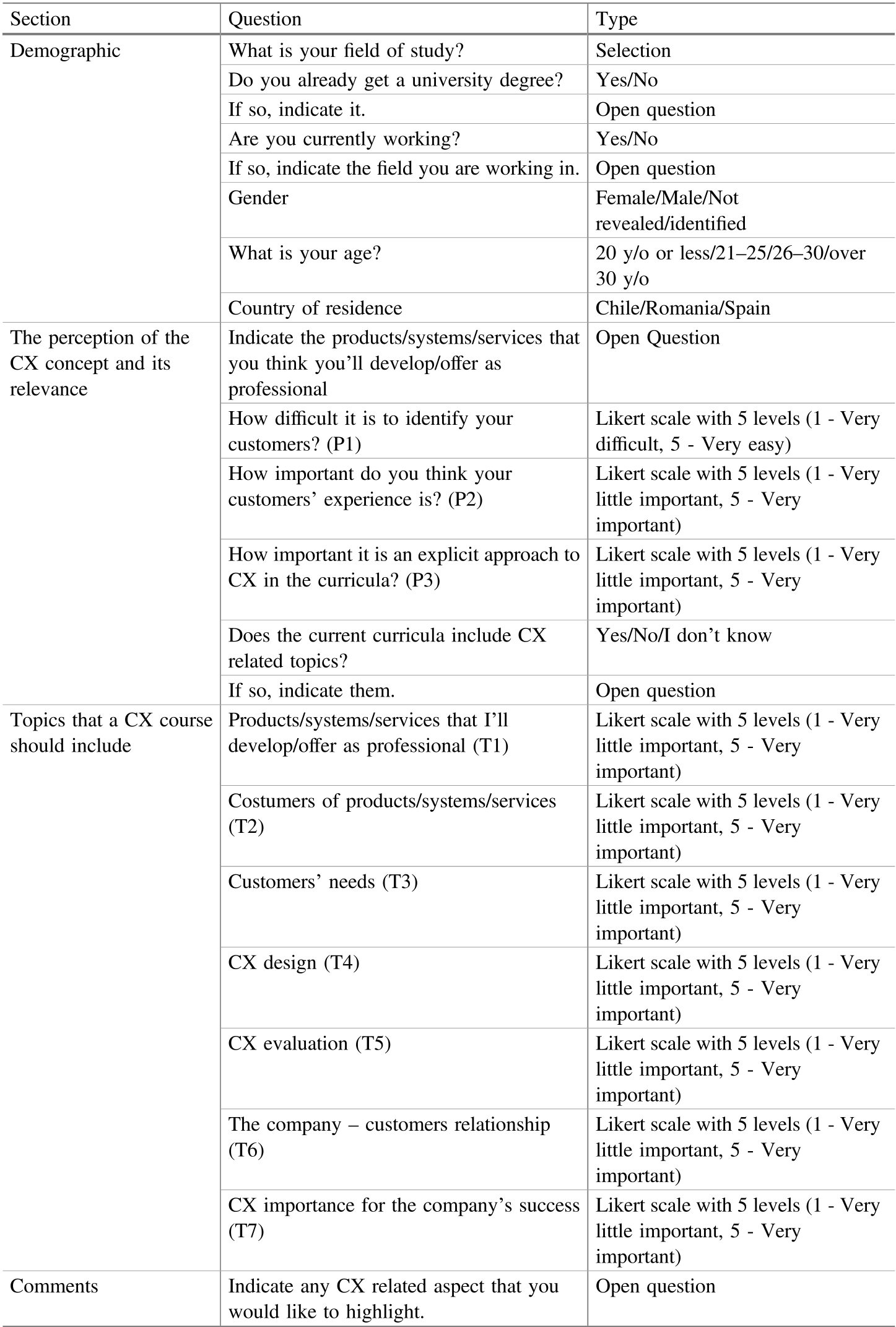
The questionnaire focused on two dimensions: the perceived relevance of CX and the suitability of specific course topics (such as CX design, evaluation, and company-customer relationships).
Key Insights: The Disciplinary Divide
The study’s results are a goldmine for educational designers. While everyone agrees CX is important, the ability to "see" the customer varies wildly by profession.
1. The Customer Identification Gap
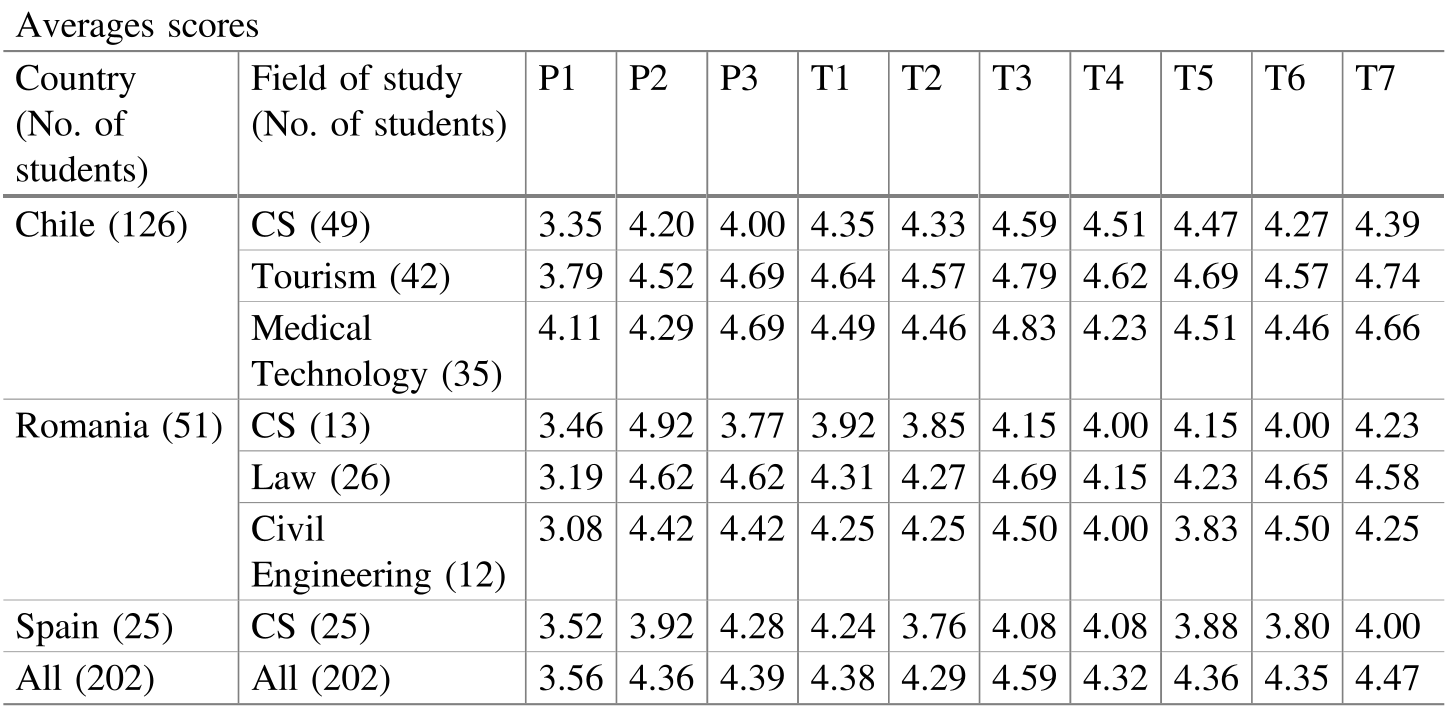
One of the most striking findings was the response to P1: "How difficult is it to identify your customers?"
- Medical Technology students found it easiest (Avg: 4.11). This is logical, as their "customer" is the patient standing right in front of them.
- Civil Engineering and CS students struggled significantly more (Avg: 3.08 - 3.35). For these students, the "customer" is often an abstract entity or a middleman, leading to a disconnected design process.
2. High Demand, Low Supply
Despite the lack of formal CX courses in their current curricula (0% participation), students across the board expressed a strong desire for it. Topic T3 (Customers' Needs) received the highest score (4.59), indicating that students are hungry for methodologies that help them understand the "Why" behind their work.
3. Demographic Irregularities
Using the Kruskal-Wallis and Mann-Whitney U tests, the authors found significant gender-related differences in how CX topics are prioritized. Interestingly, whether a student was already working or not had no significant impact on their perception—suggesting that the need for CX training is felt equally by novices and those already in the field.
Critical Analysis: What’s Missing?
While the study provides a vital baseline, it has limitations. The participation numbers were unbalanced (Chile represented over 62% of the data), and the lack of a standardized CX definition given to participants means some answers may be based on "blurry" perceptions.
However, the takeaway for the industry is clear: Professional success in technical fields is increasingly dependent on "soft" CX skills. CS students who understand the customer journey are more likely to build innovative, inclusive products than those who simply code to specifications.
Conclusion: Building the Path Forward
This research confirms that CX is no longer just for marketing students. It is a necessary pillar for any professional involved in creating products or services. The authors' future work will focus on refining these CX courses to bridge the gap identified in technical majors, ensuring that the "Human" in Human-Computer Interaction is never lost.
Editor's Note: As CX continues to merge with AI-driven personalization, studies like this serve as a vital reminder that technical excellence without customer empathy is a recipe for obsolescence.