
Beyond the Partisan Lens: How Linguistic Behavior Shapes the #MeToo Discourse
Fostering Civil Discourse Online: Linguistic Behavior in Comments of #MeToo Articles Across Political Perspectives
This study investigates linguistic behavior and political discourse in Facebook comments on #MeToo articles from far-left (Democracy Now), mainstream (The New York Times), and alt-right (Breitbart) news publishers. Using NLP techniques like LIWC, word2vec, and TF-IDF, the authors reveal that alternative media sources exhibit structural similarities in polarization, generalization, and othering, regardless of their political polarities.
TL;DR
Is online discourse fundamentally broken? This study analyzes 30,000 Facebook comments across the political spectrum—Far-Left (Democracy Now), Mainstream (NYT), and Alt-Right (Breitbart)—to see how they talk about the #MeToo movement. The shocking finding: while their ideologies differ, the way users on the far-left and alt-right communicate is structurally identical—characterized by high emotion, profanity, and the "othering" of perspectives, in stark contrast to the nuanced discussion found in mainstream media.
Problem & Motivation: The Echo Chamber's Language
We know social media polarizes us, but how does that polarization manifest in the actual words we type? Most research tells us that we live in "echo chambers," but this paper digs into the Linguistic Inductive Bias of these chambers. The authors argue that language doesn't just reflect identity; it constitutes it. By examining how different news "brands" frame a movement like #MeToo, we can see how the very structure of conversation might be undermining the possibility of civil discourse.
Methodology: The NLP Toolkit
The researchers didn't just look at word counts. They used a sophisticated three-pronged approach:
- LIWC (Linguistic Inquiry and Word Count): To capture the psychological and affective "vibe" (e.g., Are they angry? Are they using informal slang?).
- Word2Vec (Word Embeddings): To see which words are "neighbors" to #MeToo. This reveals the Semantic Context. For Breitbart, #MeToo is a "joke"; for NYT, it’s a "campaign."
- TF-IDF + Discourse Analysis: To find unique "signature" keywords for each group and then qualitatively read those comments to understand the rhetorical strategy.
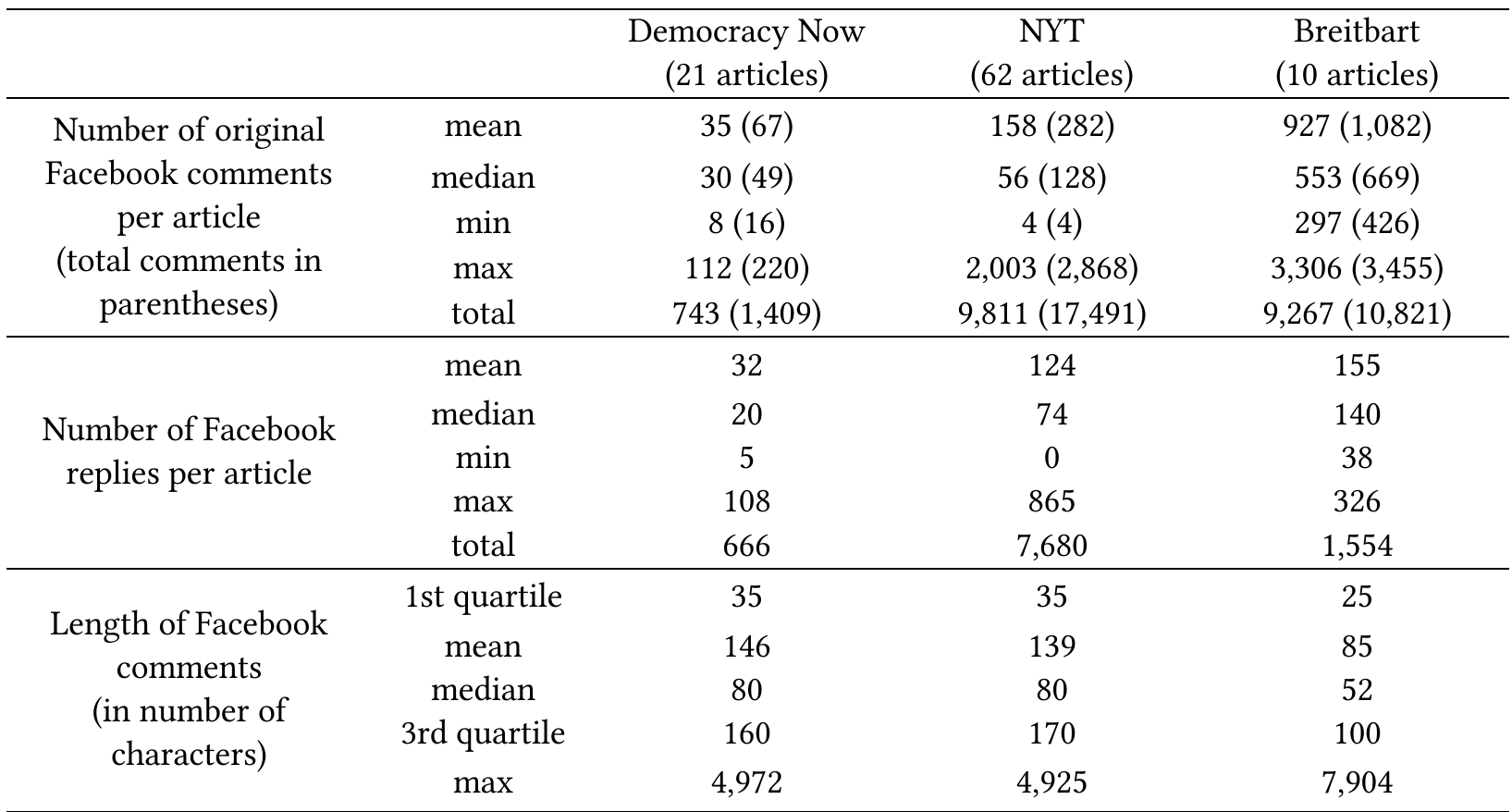
Key Insights: The Anatomy of Polarization
1. The Affective Gap
The data shows a massive divide in Anger and Informality. Breitbart comments were the "angriest" and most "sexualized," but the far-left (Democracy Now) wasn't far behind in terms of the structure of their speech—both used significantly more profanity and informal language than the NYT cohort.
2. Semantic Framing: Different Worlds
The authors used word2vec to find the "nearest neighbors" of the token "MeToo." The results are a roadmap of cultural division:
- NYT: Hashtag, courage, share, respect. (Framed as a social movement/advocacy).
- Breitbart: Whore, joke, stupid, hypocrite. (Framed as a scam or a source of ridicule).
- Democracy Now: Fame, money, rich, color. (Framed through the lens of socioeconomic and racial exclusion).
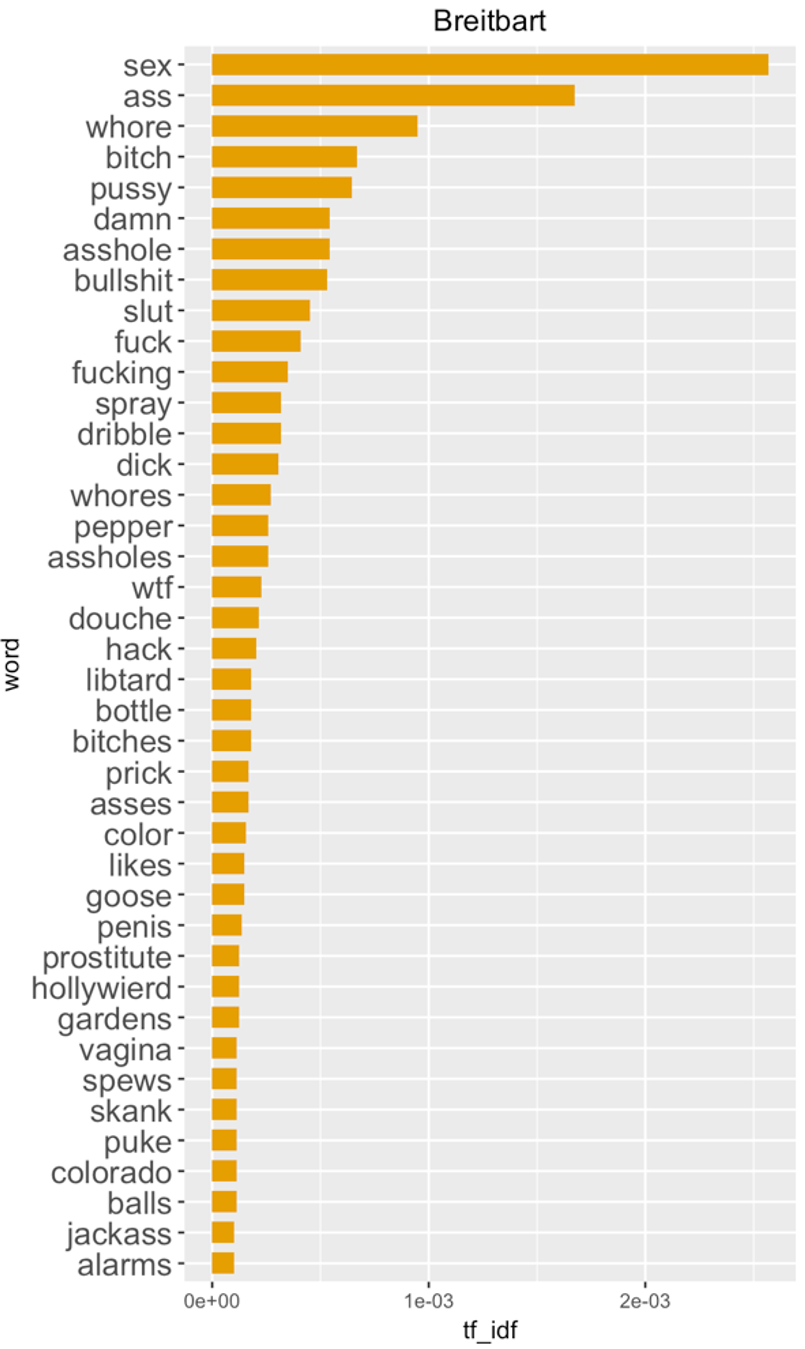
3. Rhetorical Patterns: Othering vs. Empathy
The most profound part of the study is the qualitative analysis of Rhetorical Engagement:
- Dehumanization (Alt-Right): Breitbart comments often framed survivors as "whores" looking for cash, using absolute language ("always") to dismiss claims.
- Social Fragmentation (Far-Left): Democracy Now comments often "othered" survivors by race or class, arguing that the movement was "largely a bunch of fed up white women."
- Perspective-Taking (Mainstream): NYT comments were uniquely characterized by personal disclosure ("It happened to me") and attempts to educate or bridge gaps in understanding.
Critical Analysis: A "Horseshoe" of Discourse?
The study concludes that "distance from the mainstream" creates a specific interaction pattern. Both ends of the political spectrum (in this sample) engaged in Heuristic Processing—making quick, emotionally charged judgments.
The Takeaway is sobering: if democratic dialogue requires shared reasoning and inclusive personal experience, it is currently struggling to survive in the hyper-partisan fringes of our digital news ecosystem.
Limitations: The study only looked at three publishers and about 30,000 comments. Future work needs to see if these patterns hold across different topics (like climate change or economy) to confirm if this "structural similarity" of extremes is a universal law of online behavior.
Conclusion
This paper serves as a vital reminder that where we read the news dictates how we talk about it. When discourse becomes a tool for "othering" rather than "understanding," the movement itself becomes secondary to the partisan battleground.