
Seamless Social Networking: A Framework for Cross-Device Content Adaptation
A framework for adapting content of social network services for heterogeneous devices
This paper introduces an adaptation framework designed to dynamically convert Social Network Service (SNS) content and activities for heterogeneous devices (Smart TV, PC, Mobile, etc.). By utilizing a profile-based mapping system and XML-coded hierarchical structures, the framework ensures consistent user experiences across different hardware capabilities and interaction modalities.
TL;DR
In an era where we jump between Smart TVs, tablets, and smartphones, "one-size-fits-all" digital content is no longer viable. This paper presents a sophisticated adaptation framework that intelligently transforms Social Network Service (SNS) activities based on device profiles. By mapping social logic to hardware capabilities, the authors achieved a 25% reduction in task completion time and a 30% boost in user satisfaction.
The Multi-Device Dilemma: Beyond Responsive Web
The core motivation for this research stems from the rapid proliferation of heterogeneous devices. While "Responsive Web Design" addresses screen resolution, it often ignores the context of activity and interaction modality. For instance, a "Meeting Discussion" activity requires different inputs on a Smart TV (remote control) than on a Desktop (keyboard/mouse) or a Smartphone (GPS and sensors).
The authors argue that current manual conversion methods are too slow to keep up with the hardware market. We need a system that understands both what the user is doing (Social Activity) and what they are doing it on (Device Profile).
Methodology: The Adaptation Engine
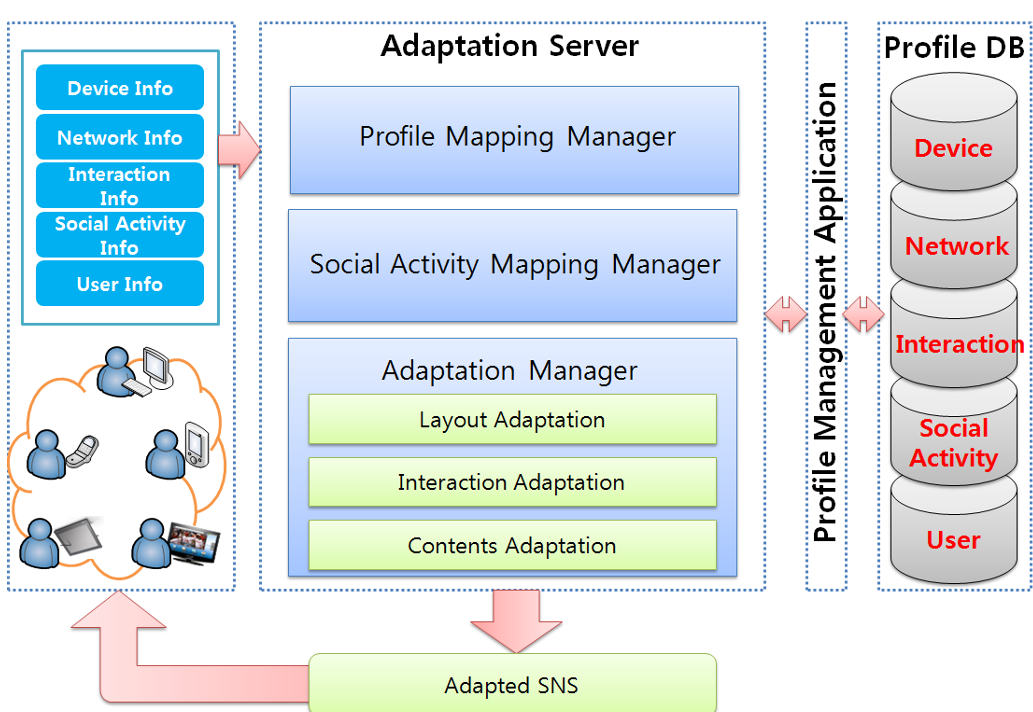
The proposed framework acts as an intelligent intermediary between the SNS content and the end-user. It functions as an extended Model-View-Controller (MVC) architecture.
1. Profile Mapping
The system maintains a "Profile DB" containing:
- Device Profiles: Resolution, sensors, input/output methods.
- User Profiles: Preferences and personal requirements.
- Social Activity Profiles: The logic of the task (e.g., Suggestion, Choice, Execution).
2. The Transformation Pipeline
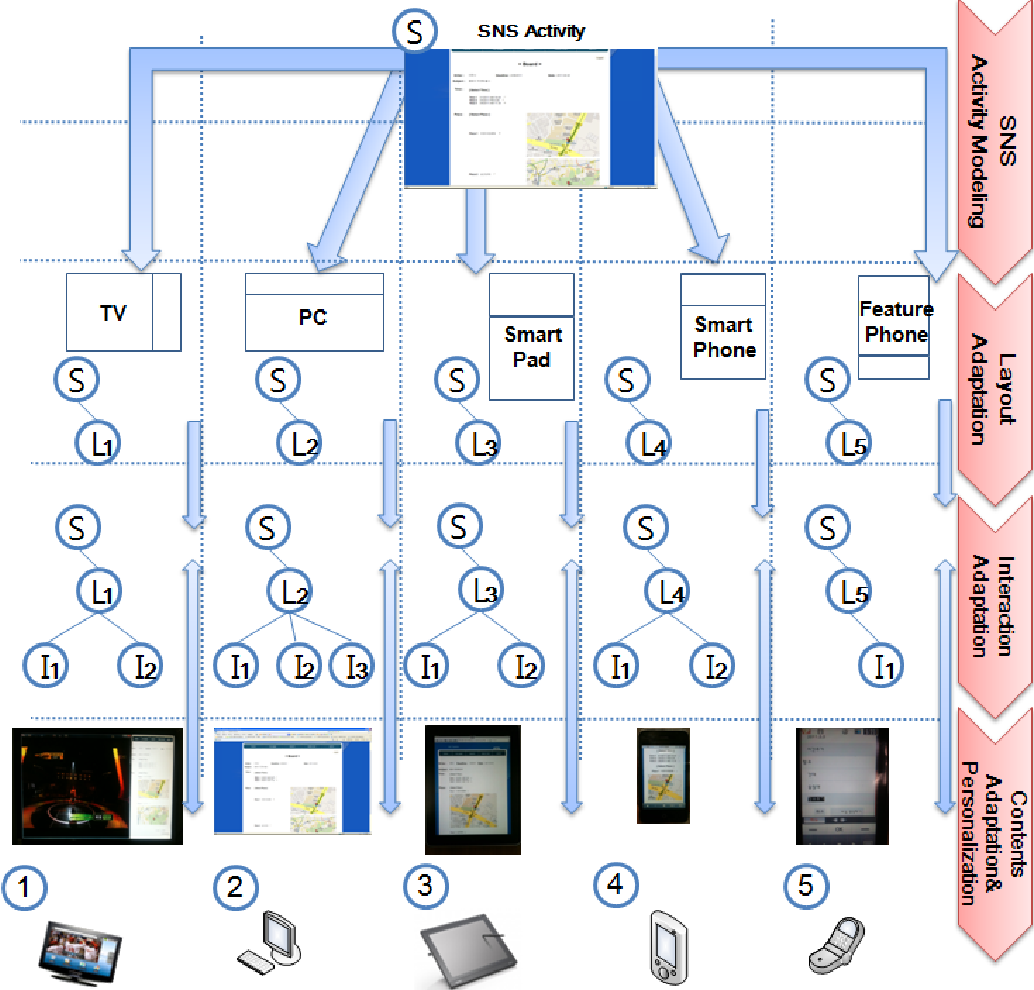
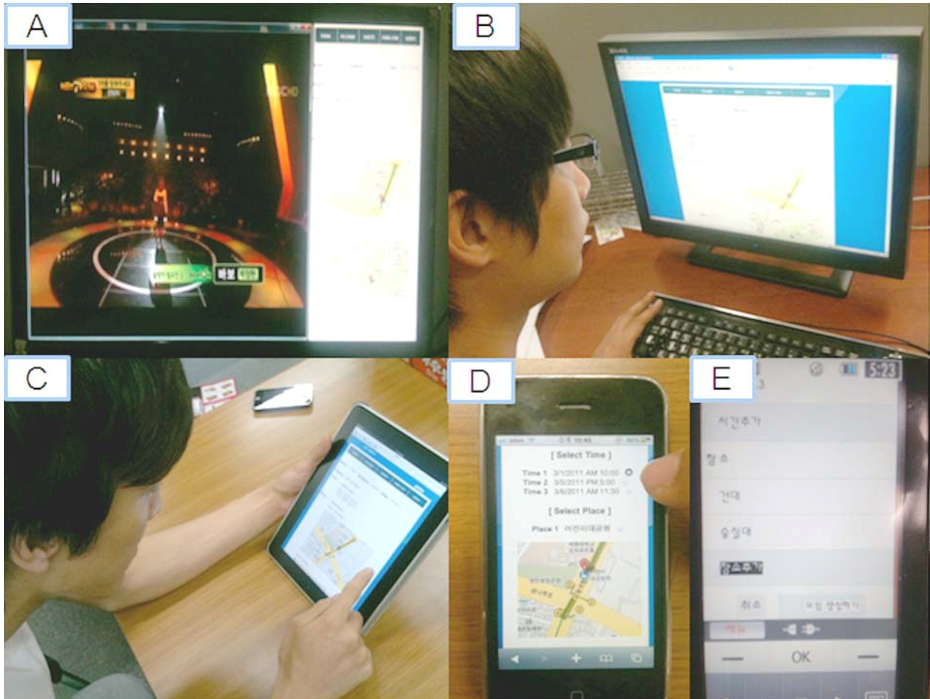
When a content request is made, the Adaptation Manager uses XML-based hierarchical structures to redefine the layout and interaction types. For a Smart TV, it might create a "Picture-in-Picture" overlay for a discussion while the user watches a program. For a Smartphone, it integrates location-based services (LBS) to help the user find the meeting spot during the "Execution" phase.
Strategic Case Study: Meeting Management System
The authors validated their framework using a Meeting Management SNS. They identified seven key social activities and three meeting types (Regular, Notified, and Flash Mob).
The beauty of this approach is that the framework realizes that a "Flash Mob" doesn't need an "Answer" activity, and a "Feature Phone" (accessed via WAP) should only receive the bare essentials of the content.
Experimental Evidence
The framework was put to the test against "non-adapted" conventional approaches. The results were telling:
- Efficiency: Users completed social tasks 25% faster.
- Usability: A 30% increase in satisfaction scores.
- Reduced Friction: The adaptation significantly lowered the number of "clicks" or actions required to reach a goal.
Critical Analysis & Takeaways
This work is a strong precursor to modern Context-Aware Computing. By decoupling the social intent from the physical representation, the authors provide a scalable way to support the "N-screen" ecosystem.
Key Insights for Future Researchers:
- Inductive Bias: The framework assumes that social activities can be decomposed into rigid hierarchical steps. While this works for meeting management, more "fluid" SNS behaviors (like infinite scrolling feeds) might require more dynamic adaptation.
- Limitations: The reliance on XML and predefined profiles might face challenges with the sheer variety of "Internet of Things" (IoT) devices entering the market today.
- The Path Forward: Future iterations of this work could integrate Machine Learning to predict the best layout and interaction modality based on real-time user behavior rather than static profiles.
In conclusion, this framework proves that when software "respects" the hardware it lives on, the user experience improves exponentially.