
PELS: Bridging Social Networking and Digital Property in the Future of eLearning
11487_A Framework for eLearning with Social Media Using DRM.
The paper introduces the Personal eLearning System (PELS), a framework designed to integrate individual skill development with social media collaboration. It uniquely incorporates a Digital Rights Management (DRM) architecture to secure learning artifacts and facilitate a business model for content creators within a social network context.
TL;DR
The Personal eLearning System (PELS) is a proposed framework that transforms social media from a distraction into a high-utility learning environment. By integrating Digital Rights Management (DRM) into a social learning platform, PELS allows users to organize, share, and—crucially—monetize their personal learning artifacts (notes, solutions, and research) while maintaining strict intellectual property control.
Background & Motivation
Standard eLearning platforms (LMS) often isolate students or create "silos" where information is lost in local folders or old email threads. The authors argue that value creation in learning isn't just about the person or the social link; it's about the relationship between ideas and documents.
The core problem identified is a lack of ownership and integrity. When a student solves a complex calculus problem or a professional creates a high-value strategy note, there is currently no easy way to share that knowledge securely within a social network while receiving proper recognition or remuneration.
The PELS Architecture: The Heart of Collaborative Learning
PELS is structured to move beyond simple "content viewing." Its architecture is designed to handle the entire lifecycle of a learning artifact—from planning and creation to sharing and selling.
Core Components
- User Applications: Focused on the "Personal Learning Environment," allowing users to plan syllabi and organize multimedia notes.
- PELS Core Platform: The engine that drives search, testing, and reporting. It acts as the bridge between database resources and user interfaces.
- Service Manager (The DRM Layer): This is the most critical innovation. It manages the legal and financial aspects of learning, handling payment solutions and content security.
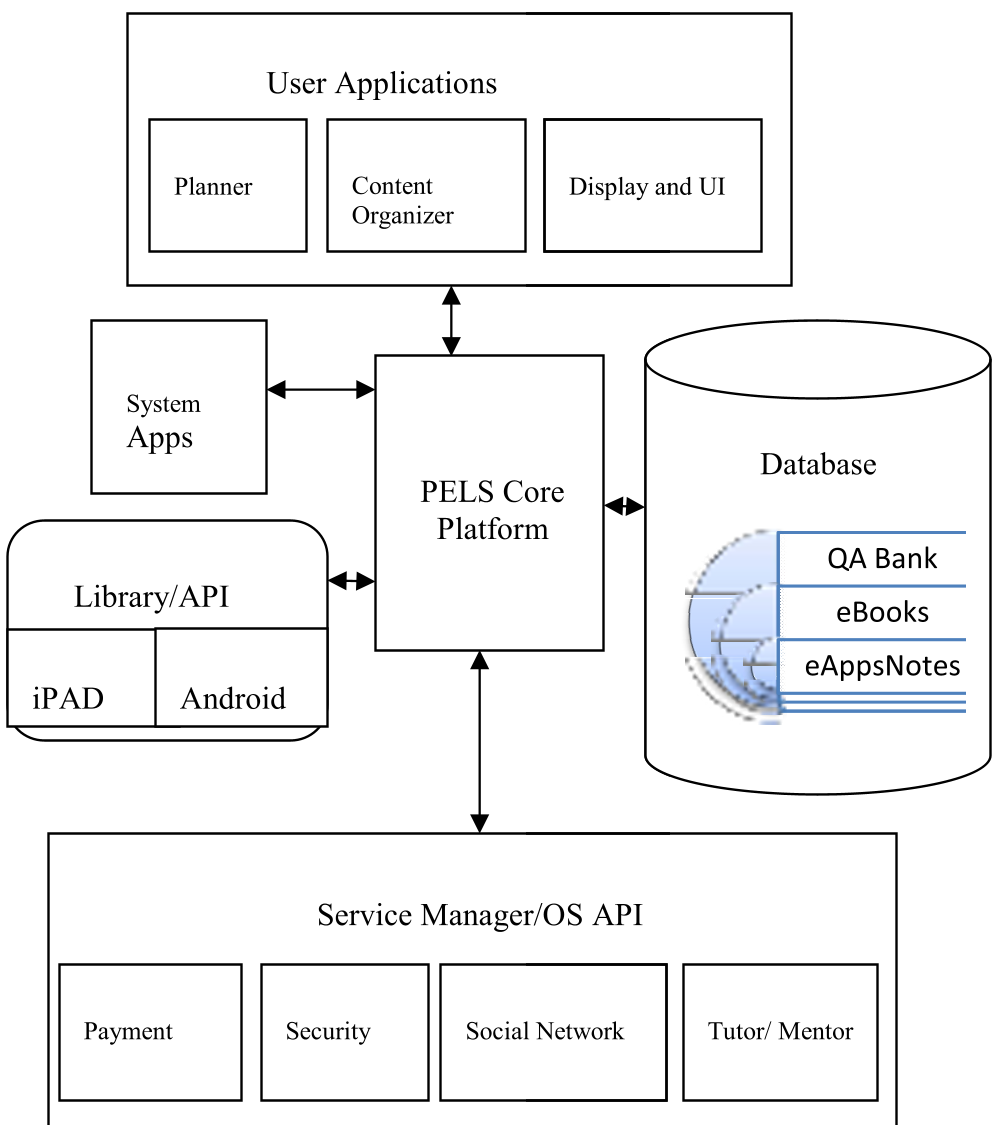 Figure 1: The high-level PELS architecture showing the interplay between the Core Platform and external Service Managers.
Methodology: How Learning Happens
The PELS methodology follows a specific workflow:
- Planning: The Learner uses a "Learning Planner" to organize subjects.
- Collaboration: The "Problem Solver" module allows users to solve challenges in tandem with subject matter experts (SMEs) via social tools like Skype or Wikis.
- Verification: Content is checked against a "QA Bank" to verify the integrity and correctness of answers.
- Assessment: Quantitative reports are generated to measure speed, grade, and difficulty levels.
Digital Rights Management (DRM) as an Enabler
The paper emphasizes that for a $5 Billion eLearning market to thrive, authors and students need Recognition and Remuneration. PELS adopts several DRM principles:
- Persistent DRM: Ensuring security remains with the document even as it moves across devices (iPad, Android, PC).
- Role-Based Access Control (RBAC): Distinguishing between who can "view" and who can "edit" or "re-sell" a shared artifact.
- Rights Expression Language (REL): Establishing a common format so different platforms can understand the permissions attached to a class note or eBook.
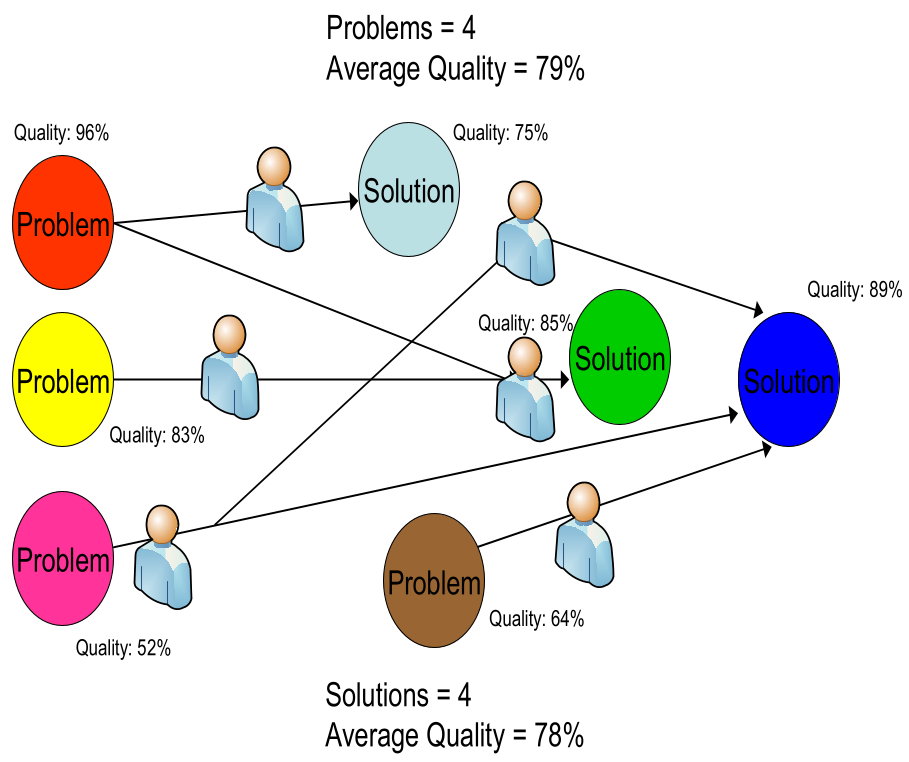 Figure 4: The envisioned "n-dimensional dynamic cloud" where strategies, people, and documents are linked.
Critical Insight & Conclusion
The significance of this work lies in its shift toward "Social Business" in education. By treating learning artifacts as protected digital assets, PELS incentivizes high-quality content creation.
Takeaway: The future of eLearning isn't just better content; it’s a better ecosystem. By combining social connectivity with the legal protections of DRM, platforms can turn "wasted human capital" into a searchable, valuable, and tradable knowledge base.
Limitations: While the framework is robust, its success depends heavily on the adoption of universal DRM standards and the willingness of users to participate in a monetized social learning economy.