
Evaluating Social Mediators: A Decoupled Framework for Assessing Robotic Toys in Special Education
“Does it work?” A framework to evaluate the effectiveness of a robotic toy for children with special needs
The paper introduces a comprehensive evaluation framework for the IROMEC project, an interactive robotic toy designed for children with special needs. It integrates technical safety, usability, and clinical effectiveness to assess the robot's role as a social mediator in five key developmental areas (SMI, MMR, and AUT).
TL;DR
Assessing whether a robot "works" for children with special needs requires more than just measuring motor precision or battery life. This paper presents the IROMEC Evaluation Framework, a holistic approach that bridges the gap between engineering safety and therapeutic effectiveness. By combining technical standards with qualitative clinical insights, the authors provide a roadmap for deploying robots as social mediators rather than just mechanical tools.
The "Performance-Ability" Gap in Robotics
The primary motivation behind the IROMEC project is a critique of current academic robotics. Most developers focus on technical efficiency—how fast a robot moves or how well it avoids obstacles. However, for a child with Autism (AUT), Mild Mental Retardation (MMR), or Severe Motor Impairment (SMI), the robot's value lies in its role as a social mediator.
The authors argue that existing psychological assessment tools (like the Bayley Scales or WPPSI) fail this demographic because:
- They are standardized for typically developing children.
- They require formal testing sessions which ignore the day-to-day "performance" of children with communication barriers.
- They are too time-consuming for busy clinical/school environments.
Methodology: The Three-Stage Architecture
The proposed framework divides evaluation into a hierarchical process:
1. Technical Evaluation & Safety
Before a child touches the robot, it must pass rigorous safety audits (HAZOP analysis) and comply with international standards like EN 71 (Mechanical and Physical Properties of Toys).
2. Usability Study
This stage examines the "Acceptance" of the robot. This includes the GUI analysis, the sound of motors, and the visual feedback of the screens. The goal is to ensure the robot transitions from a "foreign object" to an integral part of the play activity.
3. Interaction Effectiveness (The Core)
This is where the paper introduces the Triangulation Technique. Because one data source is insufficient, the researchers combine:
- Quantitative: Pre/Post intervention questionnaires filled by caregivers.
- Qualitative: Observation grids after each session to detect emerging play patterns.
- Interviews: Semi-structured talks with therapists to capture "the whole child."
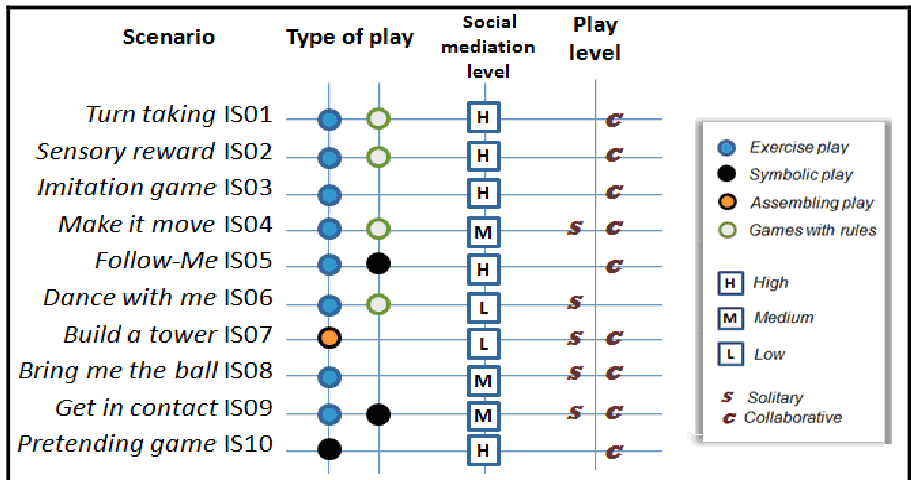 Fig 1: The ESAR-based play scenarios designed to stimulate specific developmental areas.
The IROMEC Implementation
The IROMEC robot itself is a modular system that can be configured horizontally (for mobility) or vertically (for stability/docking). It uses "scaffolding" logic: the robot gradually increases the complexity of its behavior as the child develops skills.
Key Developmental Areas Targeted:
- Sensory: Visual and tactile perception.
- Cognitive: Cause-and-effect understanding and short-term memory.
- Communicational: Turn-taking and eye contact.
- Motor: Coordination and fine hand use.
- Social/Emotional: Self-esteem and cooperative play.
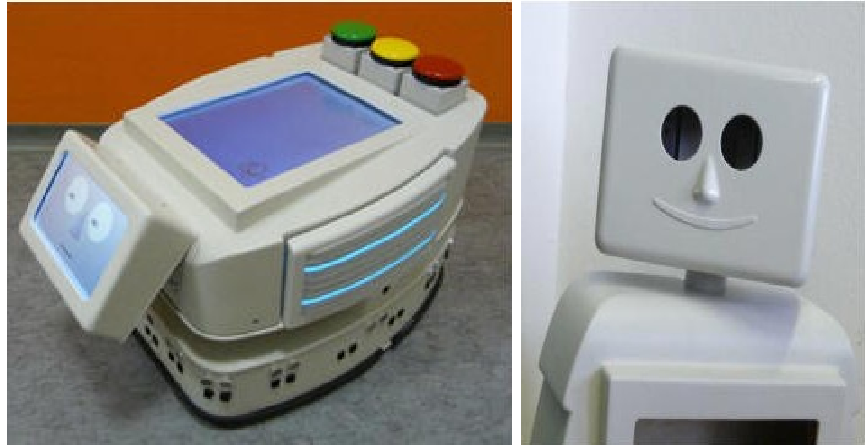 Fig 2: Modular hardware allows the robot to adapt to different user impairments (e.g., using different "masks" or interaction modules).
Research Results & SOTA Comparison
Unlike prior robotic studies that only present "proof of concept" simulations, the IROMEC framework provides a standardized evaluation tool mapped to ICF-CY objectives.
- Validation: The tool was refined through expert consultation and "Questionnaire Revision Forms."
- Performance vs. Ability: The study emphasizes measuring what the child actually does (Performance) rather than what they are abstractly capable of doing (Ability), providing a more realistic baseline for therapists.
- Flexibility: The software allows therapists to select only the objectives relevant to a specific child, significantly reducing the administrative burden.
Critical Insights: Beyond the Lab
The true value of this work is its Inductive Bias toward real-world application. By involving teachers and parents as the "respondents" (proxies for the child), the framework overcomes the communication impairment barrier.
Limitations: While the framework is robust, the paper acknowledges that long-term evaluation (longitudinal data) is still ongoing. The reliance on adult respondents also introduces potential subjective bias, which must be balanced by the objective observation grids.
Future Outlook
The IROMEC framework is already being expanded into projects like RoboSkin, which adds tactile feedback (robotic skin) to the interaction loop. As AI moves toward more autonomous social robots (like the KASPAR humanoid), frameworks like this will be essential to ensure these "toys" are actually achieving therapeutic goals rather than just providing novelty entertainment.