
Designing Persuasion: How Framing and Social Causes Ignite Crowdfunding Success
The Effects of Framing and Cause-Related Marketing on Crowdfunding Sponsors' Intentions: A model Development
This paper proposes a theoretical framework to investigate how message framing and Cause-Related Marketing (CRM) influence sponsors' intentions in crowdfunding. It integrates Prospect Theory and CRM strategies to address the low success rates of crowdfunding projects on platforms like Kickstarter and flyingV.
TL;DR
Why do over half of crowdfunding projects fail despite having innovative ideas? This paper explores a psychological shift in project design. By moving beyond what a product is to how it is framed and who it helps (Cause-Related Marketing), creators can significantly boost a stranger's intention to click "sponsor."
Strategic Positioning: This work acts as a bridge between classical behavioral economics (Prospect Theory) and the modern digital economy, providing a blueprint for project creators to optimize their "only communication channel"—the project page.
The "Failure Gap" in Crowdfunding
Crowdfunding platforms like Kickstarter and Taiwan’s flyingV have revolutionized fundraising, yet they suffer from a staggering failure rate (approx. 55-58%). The researchers identify a critical bottleneck: the communication gap. When the project description is the only tool available to persuade a crowd, most creators fail to use the psychological levers of "Decision Framing."
Methodology: The Psychology of a "Sponsor"
The paper treats crowdfunding sponsorship not just as a donation, but as a "purchase intention" filtered through two cognitive lenses:
1. The Power of the Positive Frame
Drawing from Tversky and Kahneman’s Prospect Theory, the authors argue that "Attribute Framing" dictates how we perceive value.
- The Logic: People react differently to "75% lean" vs "25% fat," even though they are identical.
- The Insight: Projects presented in a positive light (focusing on gains and successes) are expected to lower the perceived risk for the sponsor compared to those focusing on avoiding failure or negative outcomes.
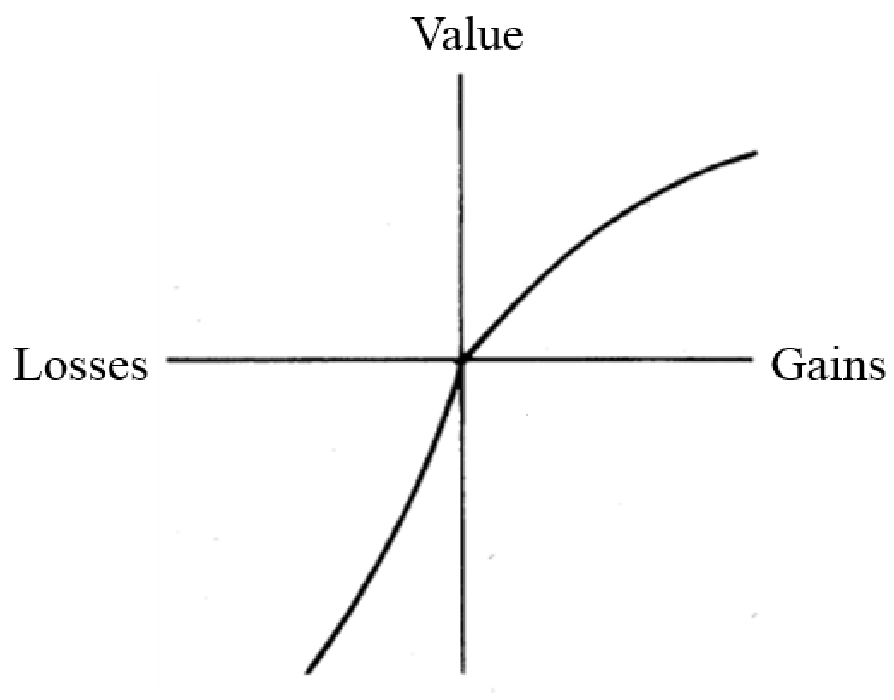 Figure 1: Prospect Theory - Visualizing how humans weigh gains and losses differently.
2. Cause-Related Marketing (CRM)
The study integrates CRM—where a company pledges to support a cause when a consumer performs a transaction.
- The "Warm Glow" Effect: Sponsors don't just back a project for the reward; they back it for the happiness derived from helping others.
- The Mechanism: Whether through transactional donations or "Licensing Programs" (using a non-profit's logo like the WWF), CRM builds immediate brand equity and trust.
Experimental Model & Hypotheses
The authors propose a rigorous model to be tested in future empirical settings, summarized by the following structure:
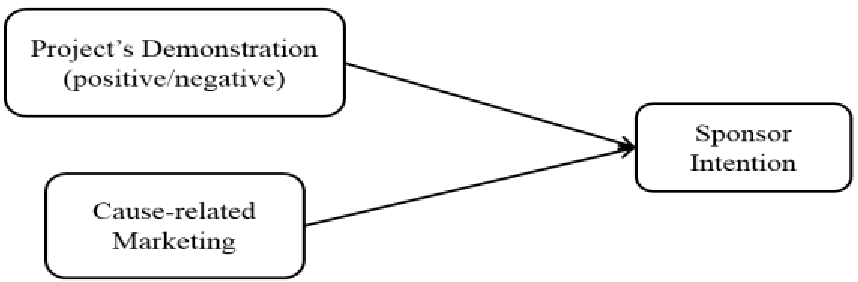 Figure 2: The Proposed Research Model connecting Framing and CRM to Sponsor Intentions.
| Hypothesis | Description |
|---|---|
| H1 | Positive frame projects > Negative frame projects in generating sponsor intent. |
| H2 | Projects with CRM > Projects without CRM in attracting backers. |
Critical Insight: More Than Just Marketing
What makes this paper stand out is its classification of framing types (Risky Choice, Attribute, and Goal). It suggests that crowdfunding isn't just about "Attribute" framing (the product's features) but also "Goal" framing—where the act of sponsoring itself becomes the achievement of a social good.
Conclusion & Future Outlook
The era of "build it and they will come" in crowdfunding is over. This model suggests that the next generation of successful creators will be those who:
- Refine the Narrative: Use positive attributes to minimize the subconscious perception of risk.
- Socialize the Profit: Integrate a cause that aligns with the brand to create a symbiotic relationship between enterprise and non-profit.
Limitations: As a theoretical model development, the next step is empirical validation across diverse categories (e.g., Tech vs. Arts) to see if "framing" remains equally effective when the product is utilitarian versus hedonic.