
Friends Only: Why We Lock Down Our Digital Lives
Friends Only: Examining a Privacy-Enhancing Behavior in Facebook
This study investigates the adoption of "friends-only" profile settings on Facebook among undergraduate students, utilizing Communication Privacy Management (CPM) theory. It identifies that technical privacy-enhancing behaviors are driven by network saturation and social boundary violations rather than just general privacy attitudes.
TL;DR
Why do we suddenly decide to make our social media profiles private? It isn't just about general "privacy concerns." This seminal 2010 study reveals that the shift to a "Friends-Only" status on Facebook is a strategic reaction to network saturation, weak-tie expectancy violations, and interpersonal coordination. As our digital networks grow too large, the "gaze" of casual acquaintances triggers a defensive lockdown.
The Problem: Beyond the Privacy Paradox
For years, researchers were baffled by the Privacy Paradox: users say they care about privacy, yet they post everything online. However, this study argues that privacy isn't a static trait but a dynamic boundary regulation process.
The real challenge is context collapse. When your mother, your boss, your best friend, and a random guy from freshman orientation all see the same post, the "imagined audience" fragments. The authors wanted to find the specific "inflection points" that force a user to hit the "Friends Only" switch.
Methodology: The CPM Framework
The researchers utilized Communication Privacy Management (CPM) theory to analyze behavior through three lenses:
- Rule Development: Deciding what to tell whom based on the strength of ties.
- Boundary Coordination: Managing "expectancy violations"—when people you didn't intend to see your profile (like an "outsider") actually look at it.
- Boundary Turbulence: The messy process of cleaning up "leaked" info (e.g., untagging photos or asking friends to delete posts).
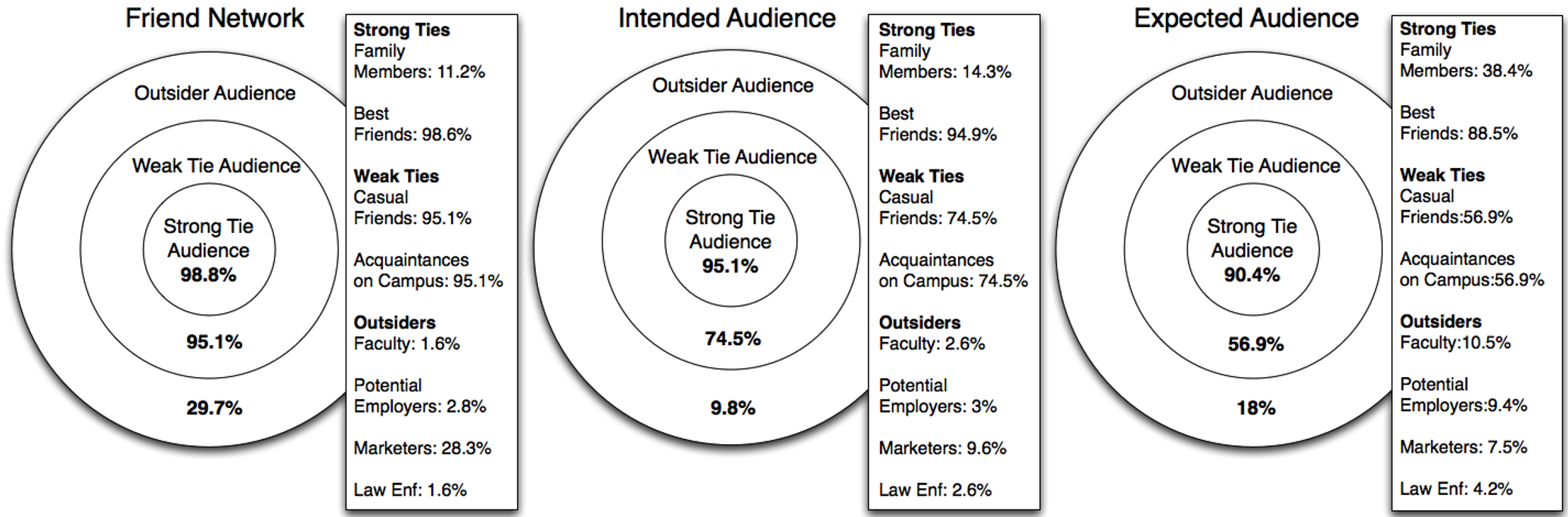 Figure 1: The gap between who we want to see our profile (Intended) and who we think actually sees it (Expected).
Key Insights: The Weak Tie Trigger
The study’s most striking finding involves Weak Ties. While we often worry about "outsiders" (employers or law enforcement), the data suggests that Weak Ties (campus acquaintances) are the real drivers of privacy shifts.
- The 3.3x Effect: If a user experiences an expectancy violation by a weak tie (realizing a casual acquaintance is "creeping" on them), they are 3.3 times more likely to go private.
- Network Saturation: Every 10 friends added increases the likelihood of going private by 1%. Once your network reaches a certain size, an open profile offers no marginal benefit—only risk.
- Conversant Privacy: Privacy is social. Users who actively talk to their friends about privacy (e.g., "Hey, delete that photo of me") are significantly more likely to use technical settings.
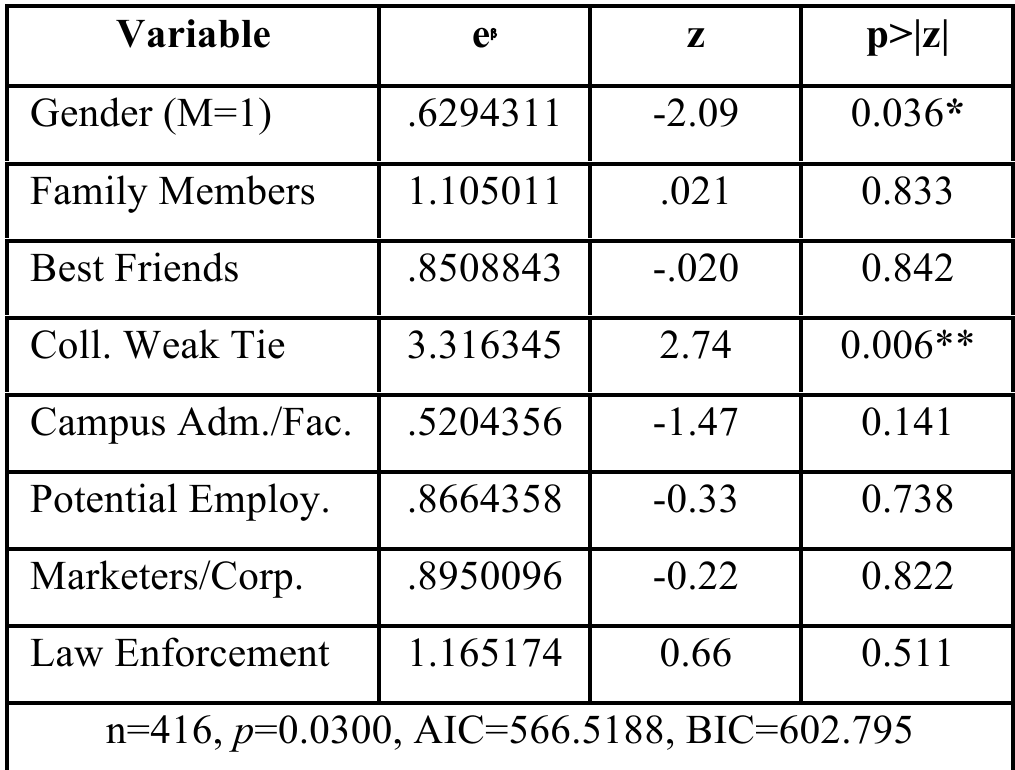 Table 1: Logistic Regression showing the significant impact of Weak Tie violations.
Critical Analysis & Implications for Design
This paper shifts the burden of privacy from the individual to the interface.
Implications for Developers:
- Support Social Coordination: Instead of just making better "settings" menus, platforms should build tools that help friends negotiate boundaries together (e.g., collaborative tagging rules).
- The "Functional Periphery": Privacy tools should target the "Weak Tie" boundary. Large-scale platforms often fail because they treat "Public" and "Friends" as the only two states, ignoring the discomfort caused by the "Active Lurker" in one's extended social circle.
Limitations: The study is focused on 2010-era Facebook and undergraduate demographics. In today's "Algorithm-first" world (TikTok/X), the "Intended Audience" is often global by design, which arguably makes these "boundary violations" the norm rather than the exception.
Conclusion
Going "Friends-Only" is a signal of a Common Bond Identity. It is an attempt to turn a sprawling, risky network back into a safe, intimate group. For researchers and designers, the takeaway is clear: privacy is not about hiding; it’s about audience control.