
Friendship Prediction in LBSNs: Bridging Social Topology and Physical Mobility
An Algorithm for Friendship Prediction on Location-Based Social Networks
The paper introduces a friendship prediction algorithm for Location-Based Social Networks (LBSNs) using a Support Vector Machine (SVM) classifier. By leveraging Information Gain for feature selection, it integrates social relationship similarity, check-in distance, and check-in type to achieve high-accuracy link prediction on the Gowalla and Brightkite datasets.
TL;DR
This study presents a robust framework for predicting friendships in Location-Based Social Networks (LBSNs) like Gowalla. By combining a refined social relationship similarity metric with spatial distance and interest-based check-in types, the authors utilize a Support Vector Machine (SVM) to achieve over 92% precision, demonstrating that the fusion of virtual social structures and physical behavior is key to understanding modern human connectivity.
Background & Motivation
Current social networks are no longer just "online." LBSNs like Foursquare or Mingle bridge the gap between virtual interaction and real-world movements. However, predicting who will become friends remains a challenge. The authors argue that previous works focused too narrowly—either just looking at common neighbors or just geographic proximity. Their insight? Friendship is a byproduct of three overlapping spheres: who you know, where you go, and what you like to do.
Methodology: The Three Pillars of Friendship
The researchers used Information Gain (IG) to rank features, identifying three critical components:
1. Refined Social Relationship Similarity
Standard metrics like Jaccard or Adamic-Adar (AA) treat all neighbors equally. This paper introduces a weighted scheme () that distinguishes between:
- Edges between common neighbors.
- Edges between common neighbors and the target users.
- Edges leading to "other" neighbors.
This provides a much more granular view of the local network topology.
2. Check-in Distance
Based on the intuition that the probability of friendship follows a long-tailed distribution relative to distance, the model incorporates the average spatial gap between user check-in sequences.
3. Check-in Type (Interest Similarity)
Even if two people never visit the same physical coordinate, they might both frequent "Jazz Clubs" or "Coding Cafes." Using Location Information Entropy, the model filters out generic public places (like airports) to focus on unique interests that signal a high potential for friendship.
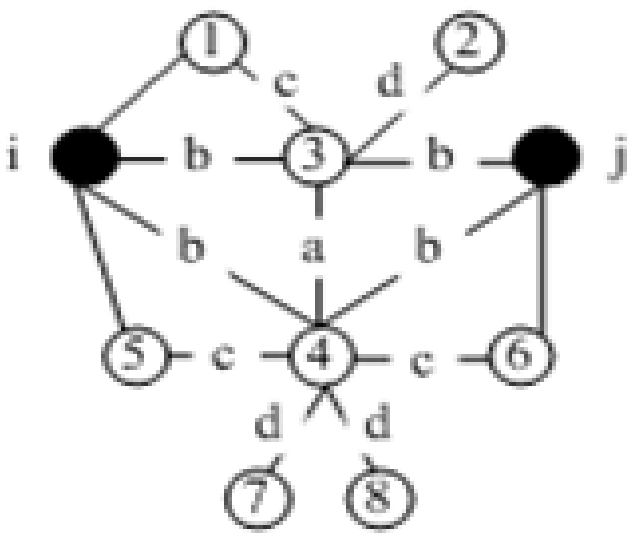 Figure 1: Visualization of social relationship categories used for the refined similarity metric.
Experiments and SOTA Performance
The authors tested their approach on two massive datasets: Gowalla (6.4M check-ins) and Brightkite (4.5M check-ins).
Using an SVM with an RBF kernel, they optimized the hyper-parameters () through a rigorous grid search. The fusion of all three features proved significantly more powerful than any single feature alone.
| Metric | Gowalla | Brightkite |
|---|---|---|
| Precision | 0.923 | 0.902 |
| Recall | 0.821 | 0.753 |
| AUC | 0.879 | 0.847 |
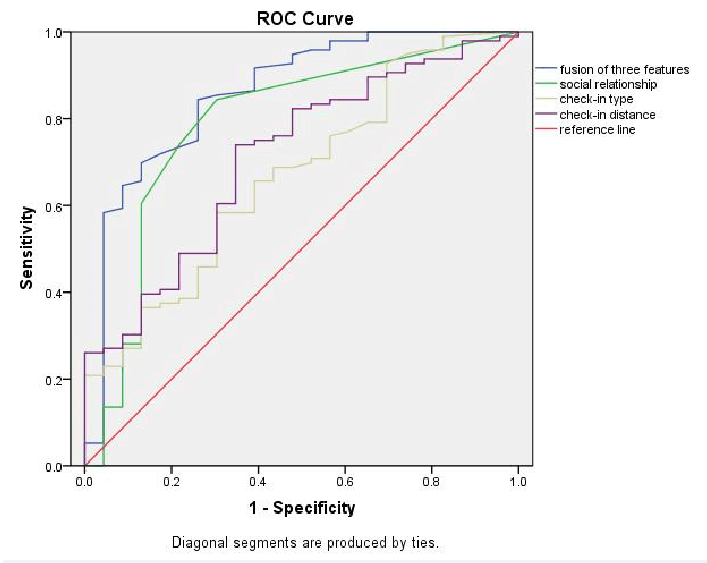 Figure 2: ROC Curves showing the superior performance of "Feature Fusion" compared to individual attributes.
Critical Insights & Future Work
The primary takeaway is the dominance of social relationship features (AUC 0.787) over purely mobility-based features. Physical proximity acts as a strong filter, but the existing social "interlock" remains the strongest predictor of new ties.
Limitations: The model is relatively stagnant in time. Future research should look at temporal dynamics—how do moving trajectories over a specific weekend predict a friendship formed on Monday? Furthermore, moving from SVM to Graph Neural Networks (GNNs) could automate the feature extraction process that the authors had to design manually.
Conclusion
By quantifying the "contribution" of different life facets using Information Gain and SVMs, this paper provides a clear roadmap for LBSN service providers to improve their recommendation engines and community mining tools.