
Beyond Safety: Designing Children’s Furniture as a Medium for Psychological Growth
Research on the Furniture Design Criteria for Children’s Psychological Development in Home Environment
This research identifies psychological design criteria for children's furniture by correlating parenting styles with furniture preferences. Using an ethnographic study of high-middle-income families in Shanghai and a large-scale questionnaire (N=1,369), the authors propose a differentiation model that moves beyond physiological safety to support mental health and developmental needs.
TL;DR
While the market for children's furniture in China is booming, the design remains stuck in a "safety and size" paradigm. This paper argues that furniture is not just functional hardware but a tool for psychological development. By mapping parenting styles to specific design attributes, the authors provide a new blueprint for creating home environments that foster mental health, independence, and social bonding.
Background: The Gap in the Market
Despite the rapid growth of the children’s furniture industry—projected to reach CNY 100 billion—most products are designed with an "adult-centric" view of safety and health. The authors identify that middle-to-high-income families in urban China are seeking more: they use furniture to construct a "growth environment" that reflects their unique parenting philosophies.
Problem & Motivation
The core issue is the neglect of the Inductive Bias inherent in children's products. Prior work has focused on ergonomics and accident prevention, but the psychological dimension—how a bed or desk affects a child's sense of "self-support" or "social belonging"—remains under-researched. The authors' intuition is that the "Scene, Person, and Product" chain (a theory by Prof. Xu Boming) is driven primarily by the parent's psychological projection onto the child.
Methodology: Coding the Family Dynamics
The researchers utilized an ethnographic approach, involving in-depth interviews and "psychological drawings" with 22 families in Shanghai. This qualitative data was processed through Grounded Theory Coding:
- Open Coding: Identifying raw categories like "education background" and "consumption style."
- Axial Coding: Determining the "Parenting Style" as the core category.
- Selective Coding: Formulating a mathematical relationship for Family Grouping (FG).
The Common and Differentiation Model
The authors define the Common Factor of Design (CFD) based on age (CA) and gender (CG), but argue that the true innovation lies in the Differentiation Model:

Four Personas, Four Design Directions
The study identifies four major family types, each requiring a different design "language":
- Trusteeship & Self-Achievement: Focuses on interestingness and adaptability. These parents want fun, modular furniture that grows with the child.
- Elite, Hierarchical: Focuses on professionalism and age-appropriateness. They view furniture as a tool for training and discipline.
- Liberal-and-Sociable: Values parent-child interactivity and aesthetics. Think "reading nooks" where mothers and children bond.
- Liberal-and-Intellectual: Prioritizes self-support and mobility. These parents encourage independence through "scaled-down" adult environments.
Quantitative Validation
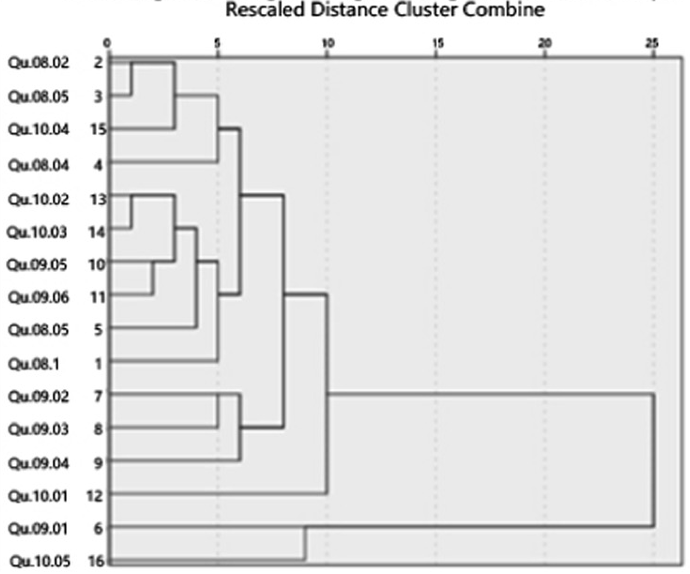
To ensure these weren't just anecdotal findings, the researchers surveyed 1,369 participants across China. The results showed a high correlation between the "parenting style" variables and the preferred "design factor" variables.
Deep Insight: Furniture as a Psychological Anchor
The study concludes that furniture serves as the "hard environment" that enables the "soft environment" of parenting. This shifts the role of the furniture designer from a craftsman to a spatial behaviorist.
Key Takeaways for Designers:
- Modular Diversity: For the "Trusteeship" group, design for "fault tolerance" and "easy-cleaning."
- Emotional Intelligence: Use the "Censydiam" model to map whether a product offers "Control" (for elite families) or "Enjoyment" (for liberal families).
- Intergenerational Dynamics: Design for the "decision-maker" (parent) while serving the "end-user" (child).
Limitations & Future Outlook
While the study leads with data from Shanghai, the authors admit that cultural variations across China's diverse provinces may yield different results. Furthermore, as the "Post-90s" and "Post-00s" become parents, their technological fluency may require introducing more "Smart/IoT" factors into the mobility and intelligence-promoting design categories.
The future of children's furniture lies not in the safety of the material, but in the empowerment of the mind.