
DUD_RuleSN: Empowering Social Network Privacy through Distributed Active Logic
Future Generation Computer Systems
The paper introduces DUD_RuleSN, a decentralized access control model for social networks built on a novel distributed logic called Active-UD-Datalog. It uniquely integrates active rules and triggering mechanisms into a purely declarative framework to handle dynamic personal data and fine-grained authorization.
TL;DR
Social networks are increasingly decentralized, yet our security models remain stuck in the past. Researchers have proposed DUD_RuleSN, a rule-based access control model powered by Active-UD-Datalog. This framework allows users to define "Active Rules"—policies that don't just sit there but actually react—enabling automated billing, group management, and autonomous privacy control without a central authority.
The "Centralization Trap" in Social Media
Most current social network authorizations suffer from a fundamental paradox: they operate on decentralized data but rely on centralized logic. When you set a privacy rule on a traditional platform, a central reference monitor decides who sees what. This fails to capture the autonomy and dynamics of modern interactions.
The authors identify three major pain points:
- Lack of Expressiveness: Traditional models like RBAC can't handle complex "if-then" scenarios involving time or changing attributes.
- Operational Opacity: Existing distributed languages often mix logic and execution (imperative code), making security policies hard to audit.
- Static Nature: Policies rarely adapt to real-time events (e.g., stopping a video stream exactly when a user's prepaid balance hits zero).
The Core Innovation: Active-UD-Datalog
To solve this, the paper introduces Active-UD-Datalog. Unlike standard Datalog, which is used for querying, this version supports Update Atoms and Triggering Mechanisms.
1. Model Architecture
The model organizes a social network into a clear hierarchy:
- Subject Hierarchy (UGH): Users and Groups.
- Object Hierarchy (CSH): Spaces and Content.
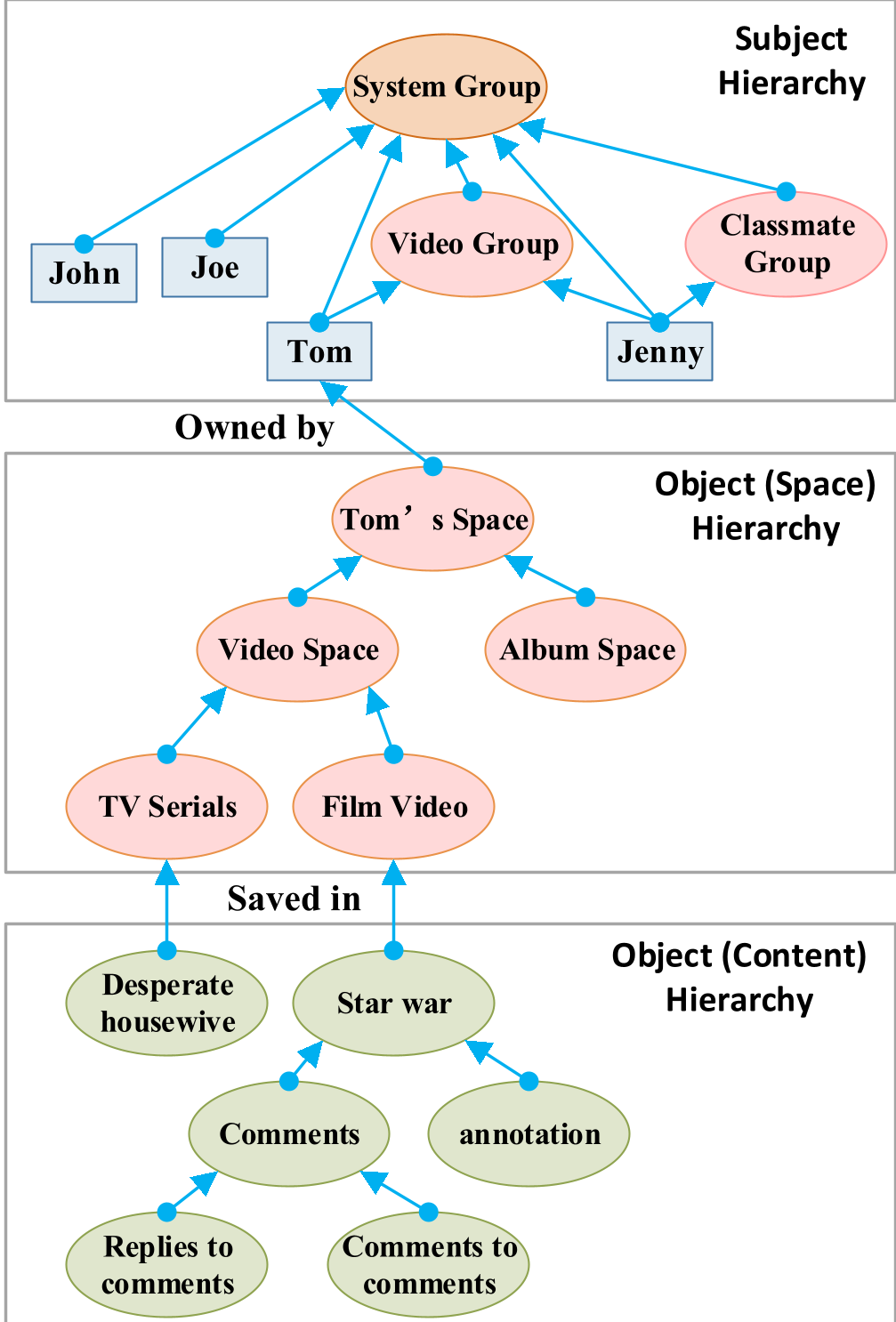 Figure 1: The hierarchical structure connecting subjects, spaces, and content.
2. Active Rules: The "How"
An "Active Rule" follows an Event-Condition-Action (ECA) pattern. For example:
- Event: A clock tick occurs.
- Condition: User has watched a video for 60 minutes.
- Action: Automatically deduct $5 from their digital wallet.
By using non-immediate update semantics, the system ensures that updates are consistent across the distributed nodes, preventing "race conditions" where a user might be authorized and denied at the same millisecond.
Putting Logic into Practice: A Real-World Scenario
Consider a user named Tom who wants to share premium videos. He needs to enforce:
- Discounts for friends of friends (depth < 2).
- Capacity limits (max 100 viewers).
- Strict age gates (18+ only).
- Automated billing per hour.
DUD_RuleSN handles this through stratified logic. It separates basic attributes (Layer 1) from complex authorization rules (Layer 3) and final "Do" rules (Layer 5).
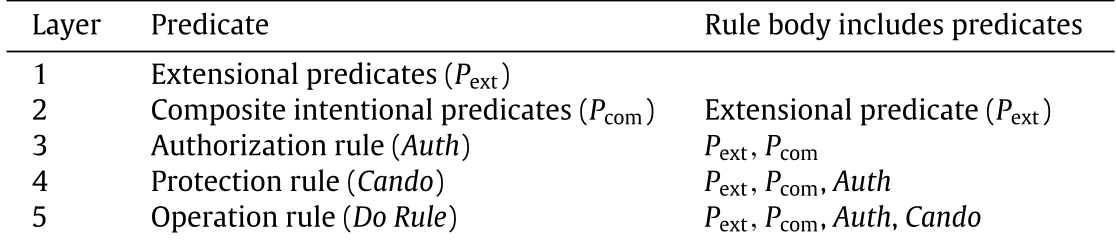 Table 1: The stratified execution layers that ensure the system remains computationally efficient (PTIME complexity).
Comparison with SOTA
When compared to specialized languages like Dedalus or WebdamLog, DUD_RuleSN stands out because it is purely declarative. It doesn't exchange complex code "rules" between users (which is a security risk); it only exchanges facts, making it much safer for a public social network.
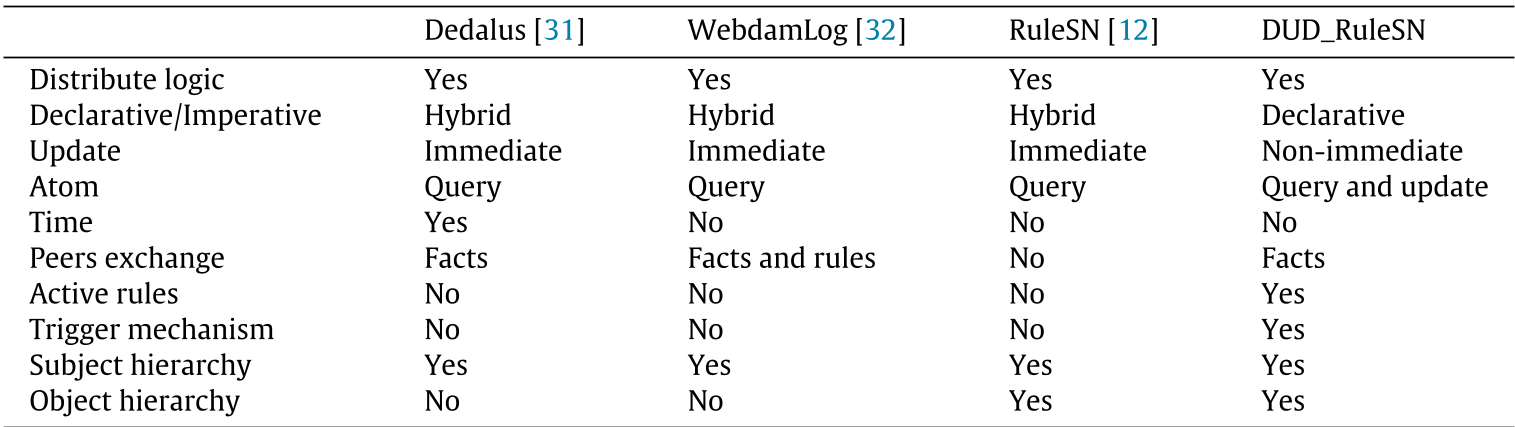 Table 2: Comparison of feature sets across distributed logic models.
Critical Insight & Future Outlook
The brilliance of DUD_RuleSN lies in its Autonomy. In this model, every user is their own "Reference Monitor." This shifts the power from the platform owner back to the user.
Limitations: Currently, the model lacks a robust "Temporal Logic" to handle complex history-based queries (e.g., "Has this user ever been banned?"). The authors admit that integrating distributed temporal logic is the next logical step.
The Takeaway? As we move toward Web3 and decentralized social platforms, logic-based models like DUD_RuleSN provide the mathematical backbone needed to ensure privacy is automated, auditable, and truly under user control.