
Beyond Fuzzy Logic: Embracing Common Sense and Crowd Wisdom in Decision Making
Revisiting Fuzzy and Linguistic Decision Making: Scenarios and Challenges for Making Wiser Decisions in a Better Way
This article provides a comprehensive retro-prospective on 50 years of fuzzy and linguistic decision-making (FLDM). It transitions from foundational fuzzy set theory to modern paradigms like "Crowd Decision Making," highlighting how Computing with Words (CW) manages human vagueness in complex Multi-Criteria and Group Decision Making (MCDM/GDM) scenarios.
TL;DR
For 50 years, fuzzy and linguistic decision-making (FLDM) has tried to bridge the gap between human vagueness and mathematical precision. However, we have reached a crossroads where mathematical complexity is outstripping practical utility. This seminal review by Herrera-Viedma et al. calls for a return to Common Sense, leveraging AI and Big Data to transform decision aid from a theoretical exercise into a "Wisdom of the Crowds" phenomenon.
The "Publish or Perish" trap: Why complexity isn't always better
The paper pulls no punches in its critique of the current academic landscape. While extensions like Pythagorean or Fermatean fuzzy sets are mathematically elegant, they often fail the "Common Sense" test. If a human expert cannot intuitively understand the representation, the model loses its real-world value.
The core motivation is clear: we need to stop building more complex "hammers" and start looking at the "nails"—the real-world decision problems involving thousands of people, social network influences, and data-driven insights.
Methodology: From Matrices to Social Dynamics
The authors structure the methodology across three core frameworks:
- MCDM (Multi-Criteria): Solving contradictory indicators using families like Value Measurement (SAW) or Outranking (ELECTRE).
- GDM (Group Decision): Focusing on Consensus Reaching Processes (CRP) to ensure collective agreement.
- MpMcDM: Combining both for large-scale, multi-perspective problems.
The Consensus Reaching Process (CRP)
A pivotal part of the methodology is the iterative feedback loop required to bring experts into agreement. The paper highlights a shift from manual negotiation to Automatic Feedback Mechanisms and the integration of Social Network Analysis (SNA) to weigh opinions based on trust.
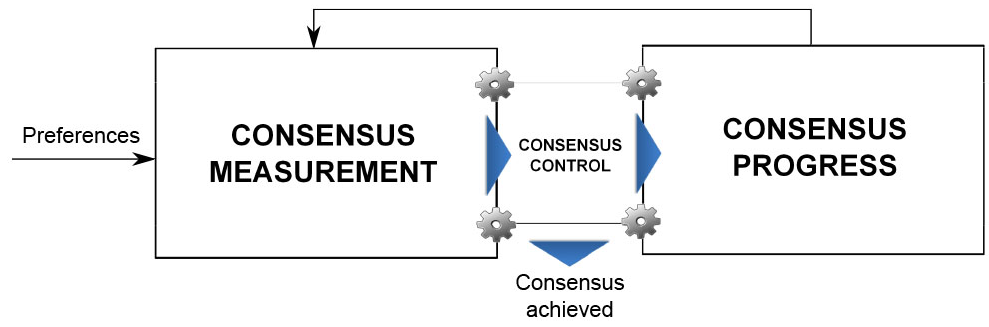 Figure 1: The standard iterative process used to move from individual preferences to a collective, consensual solution.
Emerging Frontiers: The Intelligence of many
The most exciting section deals with Large-Scale Decision Making (LSDM). In the era of social media, decisions involving 20 to 1,000+ participants are the new norm.
- Opinion Dynamics: Modeling how opinions "polarize" or "fragment" based on social influence.
- Sentiment Analysis: Using NLP to extract assessments from TripAdvisor or Amazon reviews rather than asking experts to fill out complex matrices.
- Blockchain Integration: Removing the "central moderator" to create a transparent, decentralized decision-making environment.
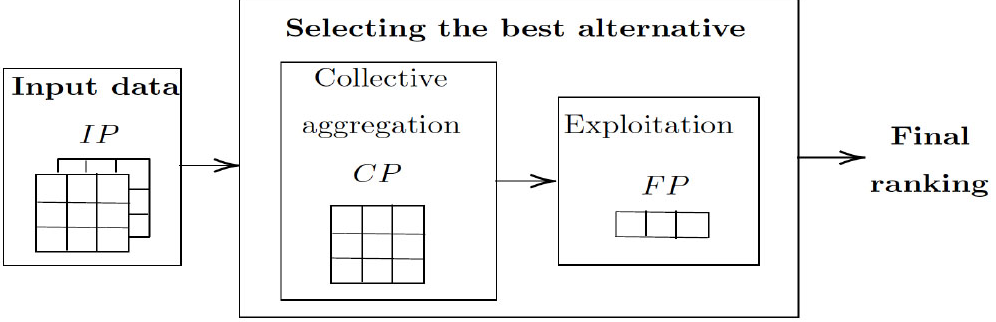 Figure 2: The complex landscape of emerging scenarios, from Blockchain to Smart Territories.
Critical Insight: The Performance Metric Deficit
The "Senior Academic" take on this paper is its focus on Validation. Unlike machine learning, which has Accuracy and F1-score, FLDM lacks standardized quality measures. The authors argue we must evaluate:
- Separability: Can the model actually distinguish between two close alternatives?
- Consensus Cost: How much effort (or change) is required to reach an agreement?
- Ground Truth: Moving toward real-world datasets rather than "application examples."
Conclusion: A New Decade for FLDM
The paper concludes that AI is the "oil of the 21st century" for decision-making. By combining Computing with Words with Personalized Recommender Systems, we can create tools that don't just compute numbers, but understand the nuance of human sentiment.
The "Wiser Decisions" of the future won't come from more complex formulas, but from better data integration and a rigorous adherence to human common sense—a tribute to the late Lotfi Zadeh's original vision.