
Bridging the Machine-Expert Divide: Enhancing AI Intelligibility via Fuzzy Linguistics
A fuzzy linguistic supported framework to increase Artificial Intelligence intelligibility for subject matter experts
The paper introduces a fuzzy linguistic-supported framework designed to bridge the intelligibility gap between Machine Learning (ML) models and Subject Matter Experts (SMEs). By utilizing 2-tuple fuzzy linguistic modeling, it transforms complex data-driven insights into natural language statements, achieving a human-centric interface for XAI.
TL;DR
Artificial Intelligence is being adopted faster than ever, yet a critical "show-stopper" remains: Intelligibility. Even when we use Explainable AI (XAI) tools like LIME or SHAP, the results are often too mathematical for business experts to trust or act upon. This paper proposes a novel framework using Fuzzy Linguistic Modeling to translate "machine-speak" into the natural, qualitative language experts use (e.g., "very likely," "high impact"), effectively closing the communication gap between data science and subject matter expertise.
The "Precision" Trap: Why Current XAI Fails the Expert
Most XAI research focuses on transparency—turning a "black box" into a "white box." However, the authors argue that transparency does not equal intelligibility.
Subject Matter Experts (SMEs) don't think in terms of "Feature X weight = 0.45" or "Probability = 0.872." They think in linguistic quantifiers. The problem is two-fold:
- Format Mismatch: LIME/SHAP explanations are too specific and concrete for strategic decision-making.
- Knowledge Integration: Experts have "preconceived hypotheses" in their heads that aren't in the training data. There is currently no standard way to check if a model supports an expert's intuition.
Methodology: The Fuzzy Bridge
The core innovation lies in using the 2-Tuple Fuzzy Linguistic Approach. This allows the system to aggregate linguistic information without the loss of precision typically found in basic fuzzy sets.
The Four Pillars of Intelligibility
The framework addresses four distinct scenarios where communication typically breaks down:
- Expert-2-Model: Validating an expert's belief (e.g., "Older customers with low income are less likely to churn") against the model's actual data patterns.
- Expert-2-Expert: Using the ML model as a "ground truth" to resolve disagreements or consolidate knowledge from multiple specialists.
- Model-2-Expert: Translating local explanations (like LIME rules) into human-readable sentences.
- Feature-2-Expert: Converting global feature importance lists into qualitative impact statements.
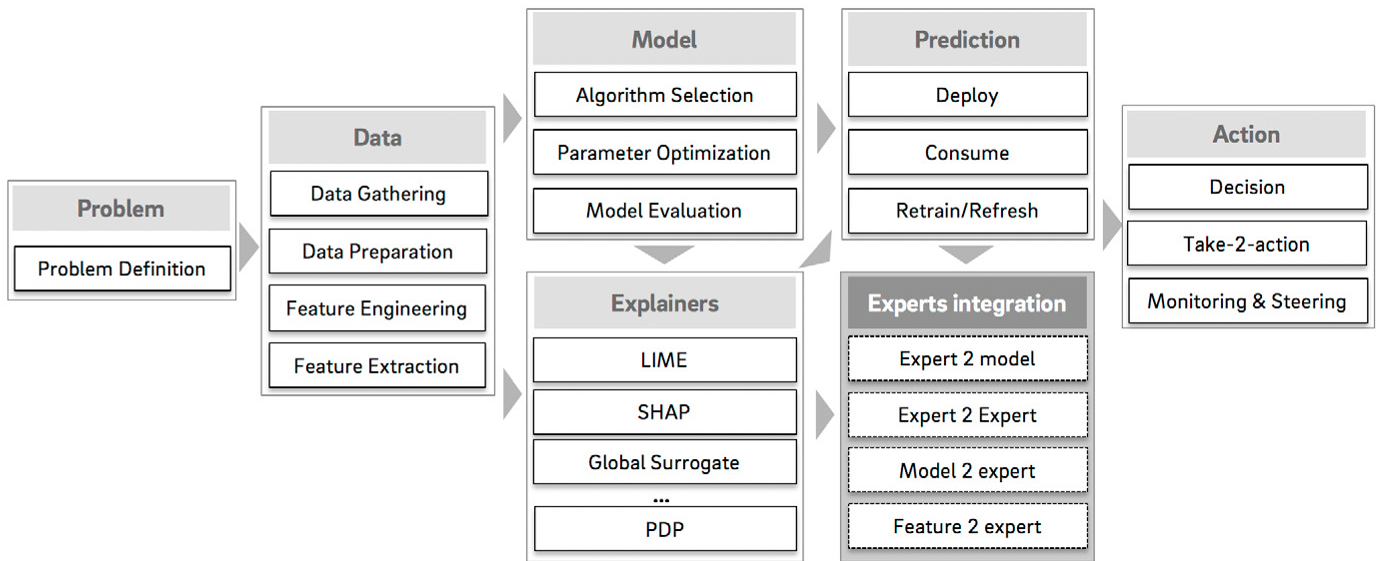 Figure 1: The proposed integration of the fuzzy linguistic module within the standard ML pipeline.
The Engineering of Intuition
The framework utilizes Linguistic Hierarchies (LH) to handle different levels of granularity. One expert might use a simple 3-term scale (Low, Med, High), while another uses a 5-term scale. The system maps these onto a unified hierarchy to ensure mathematical consistency.
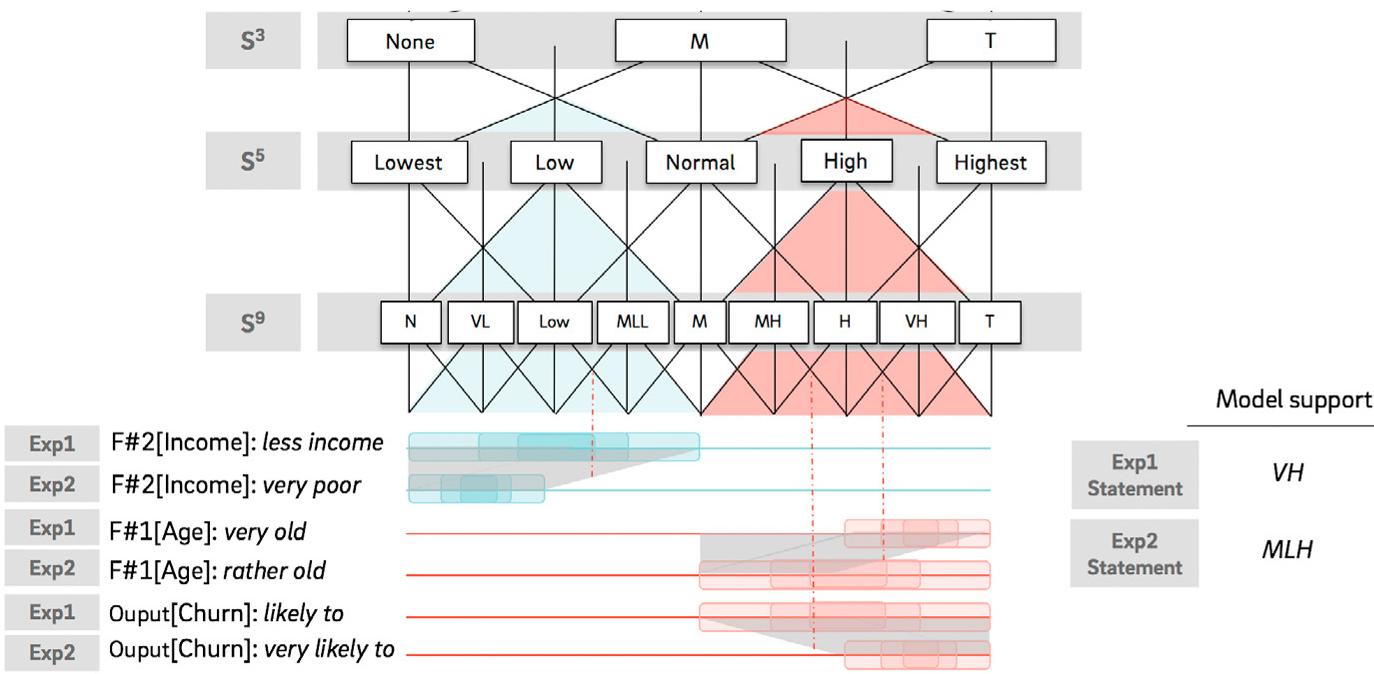 Figure 2: Example of fuzzy linguistic matching to identify overlapping or contradicting statements between two experts.
Real-World Application: Churn Prediction
The authors tested this on a real-world churn model. Instead of showing the expert a raw feature importance score, the system generated statements like:
"Feature 1, Feature 2 and Feature 3 have a very high impact on predicting churn."
By partitioning the attribute space into quantiles and mapping them to fuzzy terms, the system can take a rule like Feature 1 > 200 and translate it to Feature 1 is High to Very High.
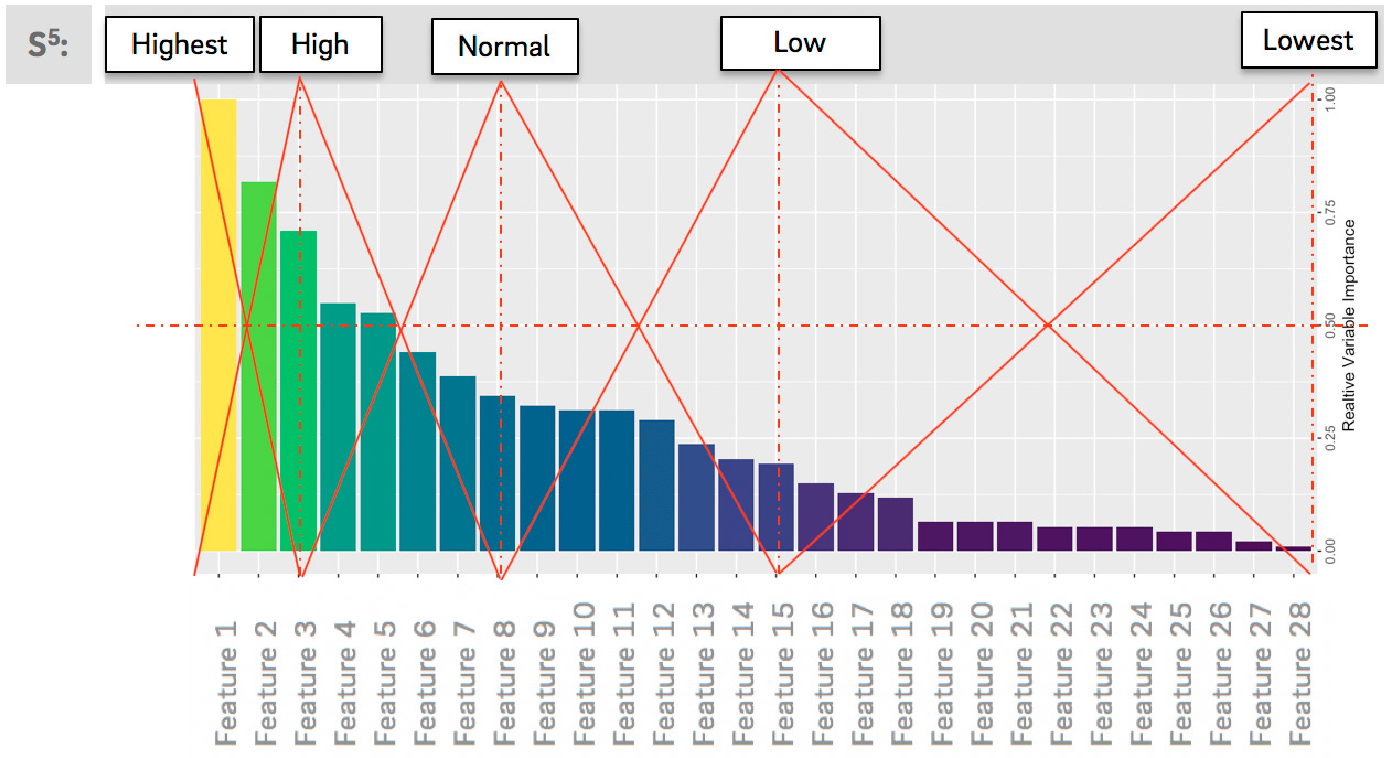 Figure 3: Mapping the quantitative LIME output to a qualitative 5-term linguistic scale (S5).
Critical Insight: Beyond "Post-hoc" Explanations
The industry importance of this work cannot be overstated. While most XAI is "post-hoc" (trying to explain a model after it's built), this framework moves toward "Intelligibility by Design." It acknowledges that human knowledge and machine patterns are two different "languages" and provides the necessary translation layer.
Limitations & Future Work
While the logic is sound, the framework's effectiveness depends heavily on the initial choice of linguistic variables and membership functions. The authors suggest that the next step is to integrate this "fuzziness" directly into the explainers themselves (e.g., creating a "Fuzzy-SHAP").
Conclusion
By treating AI interpretability as a linguistic translation problem rather than a mathematical visualization problem, Bernabé-Moreno and Wildberger provide a roadmap for making AI truly collaborative. For AI to be adopted in high-stakes corporate environments, it must learn to speak the language of the experts it intends to assist.