
Mining Fuzzy Rules: Turning Donor Data into Actionable Marketing Intelligence
Mining fuzzy rules in a donor database for direct marketing by a charitable organization
This paper presents a novel fuzzy data mining approach for direct marketing within a charitable organization's donor database. The method extracts human-understandable fuzzy association rules using linguistic terms and an objective interestingness measure based on residual analysis, achieving a classification accuracy of 63.57% for donor response prediction.
TL;DR
Non-profit organizations often struggle to predict which donors will respond to direct mail campaigns. This paper introduces a fuzzy data mining technique that converts raw demographic and donation history into linguistic rules (e.g., "If Donation Frequency is High, then Response is Yes"). By replacing arbitrary thresholds with objective statistical "Residual Analysis," the authors achieved a 63.57% prediction accuracy and uncovered counter-intuitive marketing insights that simple intuition might miss.
Problem & Motivation: The "Threshold" Trap
Traditional data mining for association rules (like the classic "Beer and Diapers" example) relies heavily on two metrics: Support and Confidence. However, these suffer from two fatal flaws in professional settings:
- Arbitrary Thresholds: How do you know if 1% support is "enough"? Setting it too high misses niche insights; setting it too low creates "data noise."
- Crisp Boundaries: If you define "High Income" as 79,999 is suddenly in a different category. This "cliff effect" ignores the nuances of human behavior.
The authors argue that for direct marketing to be effective, the results must be interpretable by domain experts who think in linguistic terms, not binary intervals.
Methodology: The Core Logic
The proposed framework transforms the mining process into a four-stage pipeline:
1. Linguistic Fuzzification
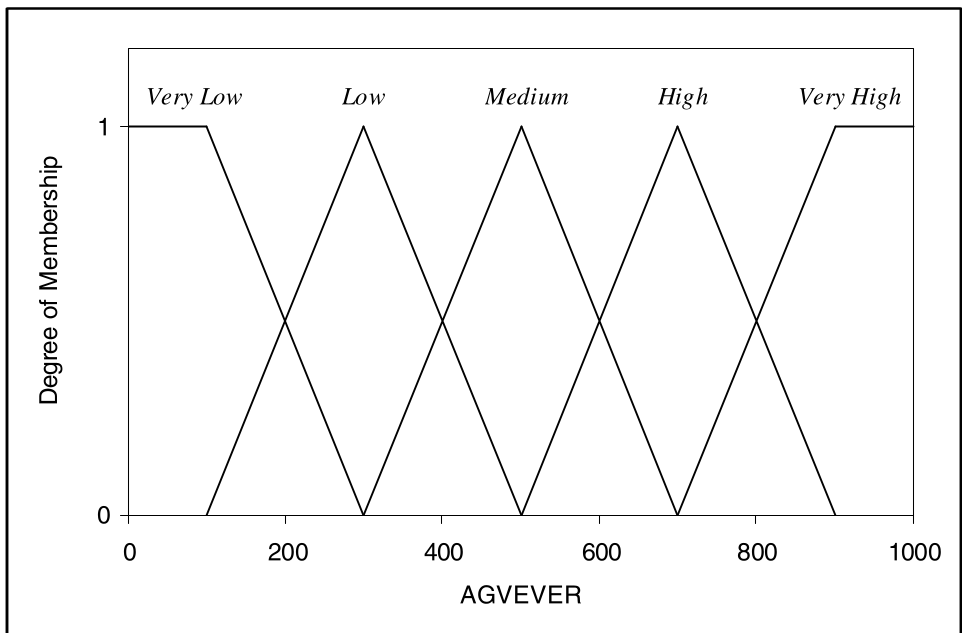
Instead of crisp bins, attributes are mapped to fuzzy sets. For instance, the "Average Monthly Donation" (AVGEVER) is divided into overlapping linguistic terms. This allows a single data point to belong partially to "Low" and "Medium" simultaneously, providing resilience against noise.
2. Identifying "Interest" via Residual Analysis
Rather than asking the user for a "Minimum Support," the algorithm calculates an Adjusted Residual. It compares the observed frequency of a rule to its expected frequency if the variables were independent. If the discrepancy is statistically significant (specifically, an adjusted residual > 1.96), the rule is deemed "interesting."
3. Measuring Uncertainty (Weight of Evidence)
The model uses an information-theoretic measure called Weight of Evidence (WoE). This provides a mathematical value to how much "evidence" a certain condition (e.g., Education Level) provides for an outcome (e.g., Making a Donation).
Experimental Results & Insights
The model was trained on 70% of a donor database (45,606 tuples) and tested on the remaining 30%.
Key Metrics:
- Rules Discovered: 31,865
- Classification Accuracy: 63.57%
- Complexity: Handles 93 attributes (49 categorical, 44 quantitative).
Proving the "Human-in-the-loop" Value
The real triumph of the paper isn't just the accuracy, but the strategy formulation. The algorithm discovered "Rule 2":
- Rule: If a donor Enrolled in an event but Did Not Attend They are highly likely to respond to mail.
- Weight of Evidence: 7.67 (Extremely strong).
- Confidence: 96.41%.
This specific insight allowed the organization to target a "warm" but overlooked segment—those who showed interest but were prevented from attending events—optimizing limited marketing resources.
Critical Analysis & Conclusion
Takeaway
The paper demonstrates that Interpretability is a Feature, not a Constraint. By using fuzzy logic, the authors created a bridge between "black-box" statistical mining and the "white-box" intuition of marketing experts.
Limitations
- Computational Overhead: Generating over 30,000 rules requires significant processing as the "order" of the rules (number of conditions in the antecedent) increases.
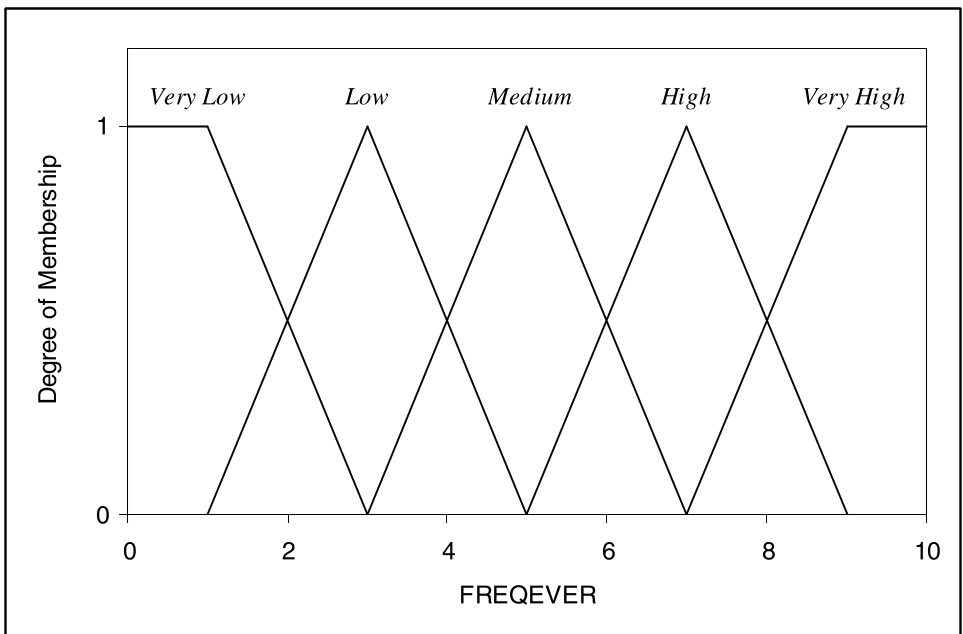
- Static Membership Functions: The linguistic terms (Figure 2 & 3) were defined by experts. If the underlying donor demographics shift, these sets might require manual recalibration.
Future Outlook
This work lays the groundwork for automated fuzzy modeling, where the shapes of the fuzzy membership functions could be optimized via genetic algorithms or neural networks, further reducing the need for human intervention while maintaining the linguistic "explanation" that businesses crave.