
The Calculus of a "Good Deal": How Yelp Ratings and Crowding Shape Groupon Decisions
Game-Theoretic Cross Social Media Analytic: How Yelp Ratings Affect Deal Selection on Groupon?
The paper proposes a data-driven game-theoretic framework using a Dynamic Chinese Restaurant Game (D-CRG) model to analyze how customers select deals on Groupon based on Yelp ratings. It integrates social learning and network externality to predict rational consumer behavior in cross-platform e-commerce ecosystems.
TL;DR
Is a 5-star restaurant deal always a steal? Not if 5,000 other people buy it and the service collapses. This paper introduces a sophisticated game-theoretic framework that models how rational customers use Yelp reviews to estimate quality while predicting the "crowding effect" (network externality) on Groupon. By treating deal selection as a Dynamic Chinese Restaurant Game (D-CRG), the authors prove that humans are surprisingly rational—and that we could be even better with AI-driven assistance.
Problem & Motivation: The Hidden Cost of Popularity
In e-commerce, we rarely know the true quality of a service. We rely on Social Learning—peeking at what others think (Yelp) or what others do (Groupon sales).
However, there is a catch: Network Externality.
- Positive: A deal with many buyers looks "popular" and "safe."
- Negative: A small local bistro sold 2,000 coupons. When you show up, the kitchen is overwhelmed, and your "5-star" meal becomes a 2-star nightmare.
Earlier models assumed externality was either always bad or always good. This paper argues it is quality-dependent: high-rated vendors suffer more from over-selling than mid-tier ones.
Methodology: The Dynamic Restaurant Game
The authors model this using a Multi-dimensional Markov Decision Process (M-MDP). In this "game," customers aren't just looking at the current price; they are predicting the future state of the deal.
The Core Framework
- Stochastic Arrivals: Deals and reviews don't appear all at once; they flow into the system over time.
- Bayesian Belief Updates: Customers use the stream of Yelp reviews to sharpen their estimation of a deal's true quality ().
- Strategy Profile: A rational agent chooses a deal that maximizes the expected utility, considering that their own purchase—and subsequent purchases by others—will change the final experience.
 Figure 1: The cross-platform feedback loop between Yelp ratings and Groupon purchase decisions.
The researchers developed a Value-Iteration Algorithm to find the Nash Equilibrium—the state where no customer can increase their utility by changing their choice, assuming everyone else is also being selfishly rational.
Experimental Evidence: Are We Rational?
The authors tracked 6,509 Groupon deals in Washington D.C. over 19 months. They found distinct patterns in the arrival of "Restaurant" deals and how sales volume correlated with subsequent Yelp review shifts.
Key Findings:
- Quality Thresholds: For 3-star vendors, more sales actually improved perceived valuation (positive externality). For 5-star vendors, the valuation dropped as sales increased (negative externality).
- Winning Strategy: The proposed "Fully-Rational" model predicted the best-selling deals with higher accuracy than simple "Minimum Price" or "Maximum Rating" strategies.
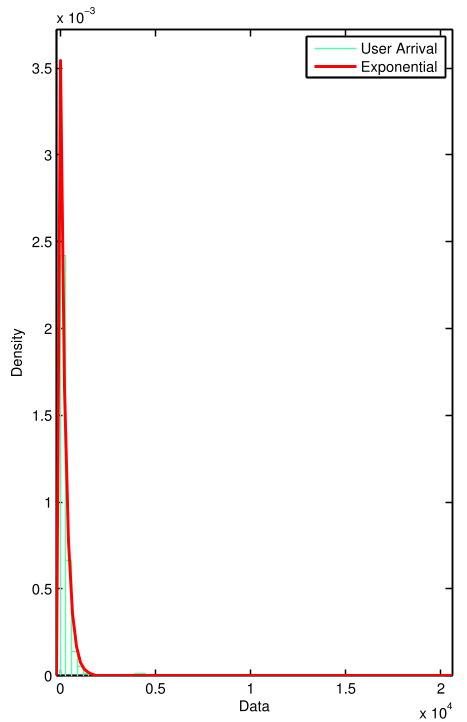 Figure 2: Analysis of deal arrival batches and user purchase timing, confirming the stochastic nature of the marketplace.
| Strategy | Prediction Accuracy |
|---|---|
| Random | 27.77% |
| Maximum Rating | 27.89% |
| Minimum Price | 31.47% |
| Proposed (Fully Rational) | 32.73% |
Deep Insight: Beyond Myopic Thinking
The most profound takeaway is the comparison between Myopic and Fully Rational behavior. A myopic customer buys based on what the deal looks like right now. A fully rational customer (modeled here) anticipates that a high-quality deal might become overcrowded.
The data suggests that while we are better than "random," we still act somewhat myopically. The accuracy of the "Fully Rational" strategy indicates there is a "Rationality Gap"—space where an AI assistant could tell a user: "Don't buy this 5-star deal; it's already sold too many units and the quality will likely crash by the time you visit."
Conclusion & Future Outlook
This work moves beyond theoretical game theory by grounding it in massive cross-platform datasets. It proves that the "network effect" is a double-edged sword that depends heavily on the initial quality of the vendor.
Future Work: The authors note that the model currently misses deals without Yelp records. Integrating broader signals (Twitter sentiment, Google Maps traffic) could create a truly universal engine for predicting e-commerce success and consumer happiness.
Takeaway for Platforms: Groupon and similar sites could actually improve long-term user retention by limiting sales for high-quality vendors to prevent reputation damage—a counter-intuitive move that game theory proves is better for everyone.