
Gamification of EI: Transforming Child Psychology through Play and Machine Learning
The Use of Gamification in Evaluating Children’s Emotional Intelligence
The paper introduces a gamified mini-game designed to assess Children's Emotional Intelligence (EI) by digitizing the MSCEIT (Mayer-Salovey-Caruso Emotional Intelligence Test). The system integrates gameplay mechanics and Machine Learning to transform traditional, tedious questionnaires into an engaging diagnostic tool.
TL;DR
Assessing a child's Emotional Intelligence (EI) has historically relied on dry, clinical questionnaires that fail to engage young minds. This paper proposes a transition to Serious Games—digitizing the validated MSCEIT framework into an interactive mini-game. By combining game mechanics with Supervised Machine Learning, the authors create a tool that is not only fun but also capable of automated, high-precision psychological profiling.
Background: The Stakes of Emotional Intelligence
Emotional Intelligence is more than just "being nice"; it is the cognitive ability to monitor, discriminate, and use emotional information to guide behavior. For children, high EI is a primary predictor of academic success, social leadership, and mental health resilience. However, the gold-standard test—MSCEIT—is often too "heavy" for children, leading to data that reflects boredom rather than actual ability.
Motivation: Why Games?
The authors identify three critical flaws in current methods:
- Stress Factor: Clinical environments can trigger anxiety, skewing a child's "natural" emotional response.
- Accessibility: Parents often lack the means to conduct frequent screenings at home.
- Static Data: Paper tests only capture the final answer, ignoring how a child reached that conclusion (e.g., hesitation or reaction time).
By applying Gamification, the researchers leverage "Inductive Bias" in game design—using scores, levels, and avatars—to foster intrinsic motivation.
Methodology: From Clinical Tasks to Mini-Games
The project focused on two primary pillars of the MSCEIT framework:
- Faces Task: Measuring the ability to perceive emotions in others.
- Facilitation Task: Understanding how emotions facilitate specific cognitive activities (e.g., how "joy" relates to "playing in the park").
The Architecture of Engagement
The team developed a Unity-based system consisting of four development phases:
- Conceptualization: Translating psychological tasks into "Missions."
- Architecture: Implementing a specialized Logging System to capture interaction metadata (response latency, skips).
- Refinement: Collaborative iteration between psychologists and game developers.
- ML Integration: Using Supervised Learning to categorize results automatically.
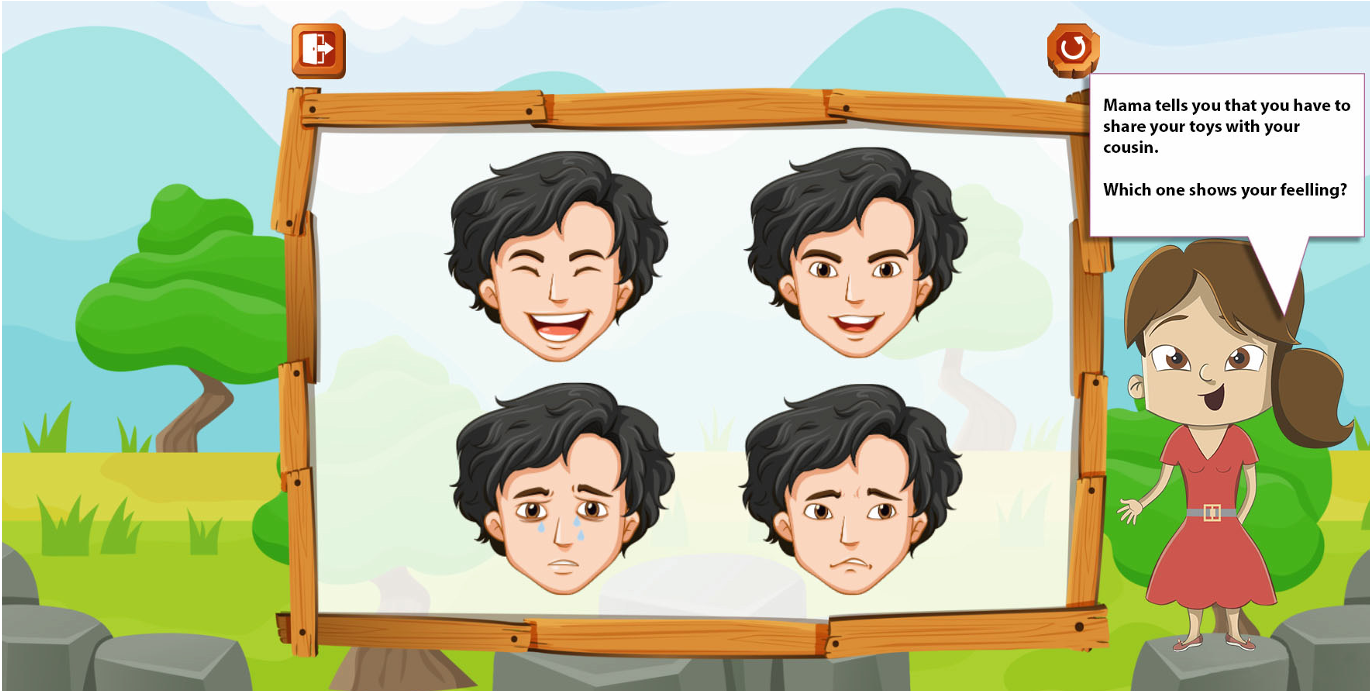 The visual interface uses simple character-driven choices to reduce cognitive load while maintaining assessment rigor.
Experiments and Results
The study highlights the power of Social Graphics and Leaderboards. By showing children how their peers responded (e.g., "44% of players chose the laughing face"), the game maintains a competitive drive that keeps children focused throughout the assessment.
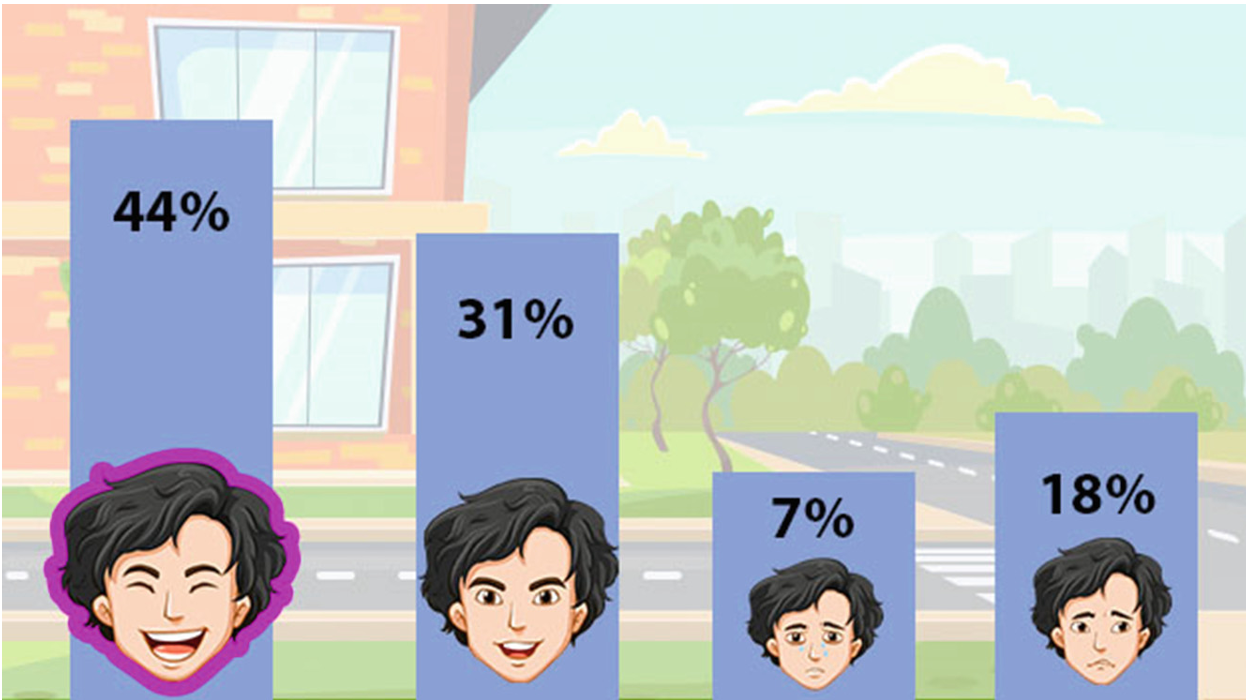 Leaderboards act as a motivational element, encouraging children to complete the "tasks" as if they were levels in a standard game.
Key performance metrics include:
- Data Granularity: Unlike paper tests, the system tracks "Reaction Time Latency," a critical cognitive marker.
- Automation: Machine Learning models are trained to mimic expert psychologist scoring, allowing for instant feedback.
Critical Insight & Future Outlook
The brilliance of this work lies in its objective approach to "Soft Skills." By treating EI assessment as a data-collection mission within a game, the authors remove the observer effect.
Limitations: While promising, the current version only covers two of the four MSCEIT branches. Deepening the game to include "Emotional Regulation" (Branch 4) will require more complex narrative-driven gameplay.
Conclusion: This research paves the way for a future where "playing a game" on a tablet can provide parents and educators with a deep, scientifically-validated map of a child's emotional landscape, enabling earlier intervention and better-tailored support.