
C-MMD: Reimagining Social Networks for Dementia through Adaptive Gamification
Gamification in Social Networking: A Platform for People Living with Dementia and their Caregivers
The paper presents CAREGIVERPRO-MMD (C-MMD), a specialized gamified social networking platform designed for People Living with Dementia (PLWD) and their caregivers. It integrates adaptive user modeling and a custom-built gamification engine to improve treatment adherence, social engagement, and cognitive training while providing visual analytics for medical professionals.
TL;DR
Dementia care is often characterized by isolation and declining adherence to non-pharmaceutical interventions. The CAREGIVERPRO-MMD (C-MMD) platform addresses this by layering a sophisticated gamification engine over a social networking core. By leveraging concepts like the Zone of Proximal Development (ZPD) and adaptive user modeling, it creates a "non-punitive" environment where patients and caregivers are incentivized to engage in social interaction and cognitive therapy.
Problem & Motivation
Most health-related ICT (Information and Communication Technology) tools fail because they are "boring" or "scary." For People Living with Dementia (PLWD), the barrier is twofold:
- Cognitive Barriers: Memory loss and communication difficulties make standard interfaces hard to navigate.
- Motivational Decay: Adherence to treatment plans naturally decreases over time in elderly populations.
Existing eHealth platforms (like PredictND or ICT4Life) often rely on "hard-sensing" layers (cameras, wearables) and focus on data collection rather than user motivation. The authors of C-MMD saw an opportunity to use Gamification to transform "clinical requirements" into "social achievements."
Methodology: The Core Architecture
The C-MMD platform isn't just a skin over a database; it is a four-layer architecture (Infrastructure, Knowledge, Interoperability, and Application) powered by a custom-made Gamification Engine.
1. The Scaffolding & ZPD Strategy
The most profound technical insight here is the application of Vygotsky’s Zone of Proximal Development (ZPD). The system uses "scaffolding" to help unexperienced players. As a user matures, the difficulty of achieving goals (e.g., earning badges for cognitive games) increases—but this happens transparently. For the user, the perceived difficulty remains constant, preventing the frustration that often leads to platform abandonment.
2. Adaptive User Modeling
Unlike static profiles, C-MMD uses an Adaptive User/Player Model. It combines:
- Demographics & Medical Data: Severity of symptoms (mild vs. moderate).
- Gamification Performance: How the user reacts to rewards.
- Self-Reported Interests: To trigger personalized notifications.
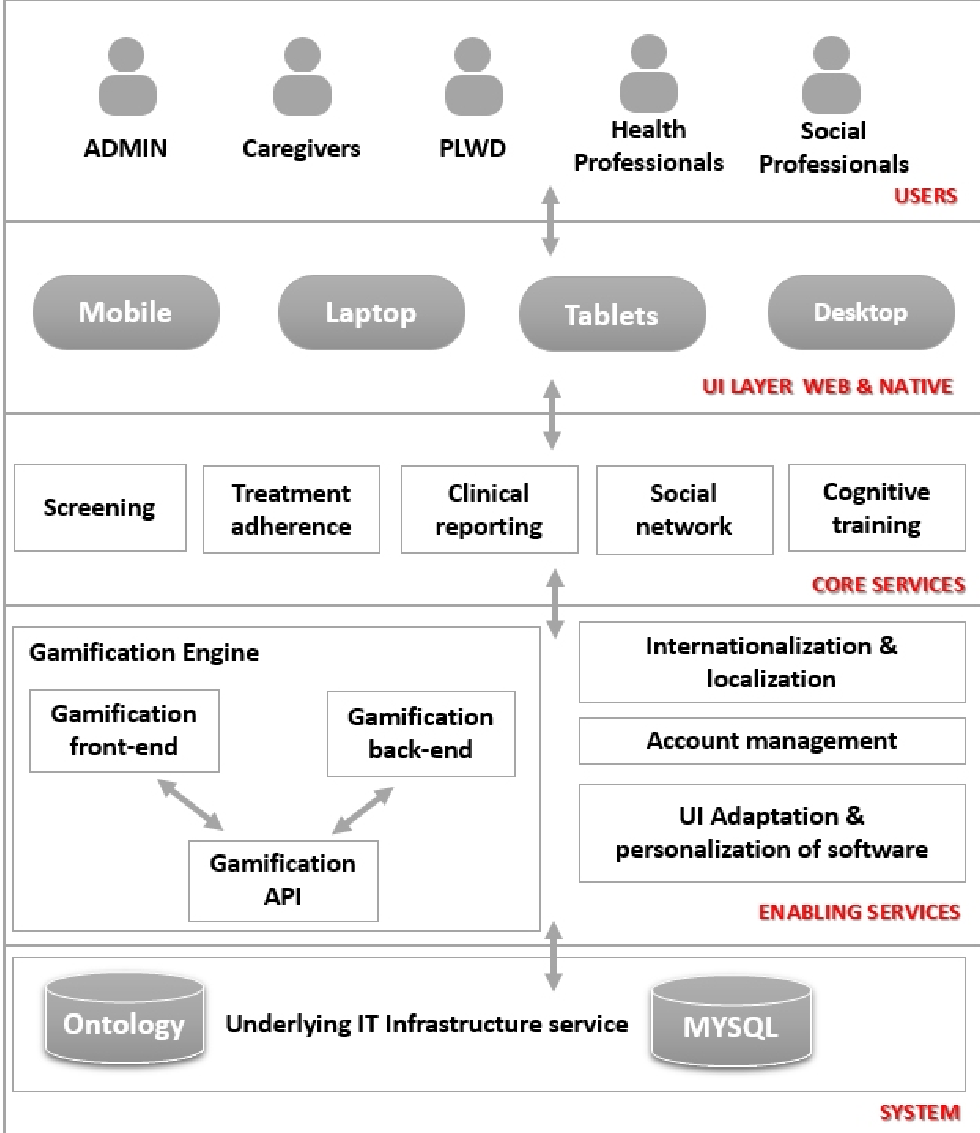 Figure 1: The four-layer architecture of the C-MMD platform, showcasing the integration between the Gamification Engine and the Social Networking layer.
Experiments & Key Features
The platform runs two primary gamification proposals in parallel:
- The "Social Collaboration" Game: Rewards users for posting, making friends, and participating in forums. It turns "social presence" into a status symbol (points/badges) within the community.
- The "Treatment Adherence" Game: Connects rewards to the completion of neuropsychological tests and cognitive training (Serious Games).
Visual Analytics for Professionals
While patients see a "Gamification Wall," medical professionals are provided with a high-level Visual Analytics Dashboard. This tool utilizes heatmaps and radar-graphs to help doctors make data-driven decisions regarding a patient's cognitive progression and social engagement.
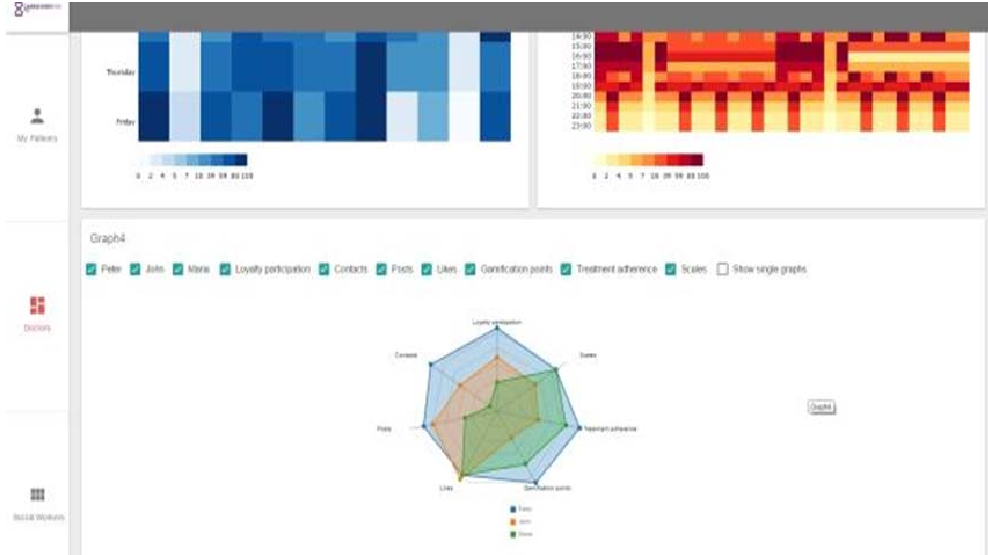 Figure 2: Professional reporting interface used by doctors to monitor treatment adherence and cognitive status.
Critical Analysis & Conclusion
Takeaway
The C-MMD platform proves that gamification in healthcare is not about making things "childish," but about intentional design for cognitive capacity. Its "non-negative" awarding system (where honors are never removed) is a vital design principle for vulnerable populations.
Limitations & Future Work
While the architecture is robust, the current model relies on "soft-sensing" (e-surveys). Integrating this with passive data (IoT) without increasing user anxiety remains a challenge. The next phase involves large-scale pilots across Europe (France, Italy, Spain, UK) to quantify the impact on "Quality of Life" metrics.
In conclusion, C-MMD shifts the focus from monitoring the patient to empowering the community member, using game mechanics as the bridge across the digital divide.