
OB CITY: Gamifying Behavioral Intervention to Tackle Childhood Obesity
14580_Gamification system to support family-based behavioral interventions for childhood obesity.
The paper introduces "OB CITY," a gamified e-health system designed to combat childhood obesity through family-based behavioral interventions. It features a dual-terminal architecture for parents and children, utilizing a virtual social network to transform health goals into engaging gameplay and scientific parental guidance.
TL;DR
Childhood obesity is a global public health crisis with long-term medical and economic repercussions. OB CITY is a novel technological solution that shifts intervention from the clinic to the home. By utilizing a dual-terminal gamification system, it empowers parents with scientific tools while motivating children to adopt healthy eating and exercise habits through a virtual social world.
Background & Positioning
Despite various school-based and community-based programs, the home environment remains the most critical yet underserved front in the fight against obesity. Previous ICT solutions focused on simple calorie tracking or short-lived mini-games. OB CITY positions itself as a long-term scheduling and behavior modification system that bridges the gap between professional medical advice and daily parental execution.
The Core Problem: The Gap in Home-Based Care
Most parents rely on general web searches (Wikipedia, Google) for health advice, which is often too complex to filter or implement. Furthermore, children lack the intrinsic motivation to follow "boring" health prescriptions. Existing apps fail to provide:
- Personalization: They do not adapt to a specific child's progress.
- Sustainability: They lack the social and psychological hooks required for permanent habit change.
- Parental Integration: They often exclude the caregiver, who is the primary influencer of a child's environment.
Methodology: The "Mayor and Citizen" Architecture
The genius of OB CITY lies in its "Two-Terminal" interaction model, which mirrors the real-world parent-child dynamic within a digital gamified layer.
1. The Children's End: "Ober" Life
Children enter a virtual city as "Obers." To build their city and care for their virtual pets, they must complete real-world tasks.
- Avatars & Pets: A child's avatar reflects their progress. Taking care of a pet serves as an indirect way to learn about nutrition and kinematics.
- Social Network: Integration with peers allows for competition and collaboration, leveraging peer pressure as a positive motivator for healthy living.
2. The Parents' End: The City "Mayor"
Parents do not play the game; they manage it. They receive professional prescriptions for diet and exercise and translate them into tasks for the child.
- Feedback Loop: The system monitors task completion and provides "intelligent feedback," suggesting adjustments to the behavior program based on the child's performance.
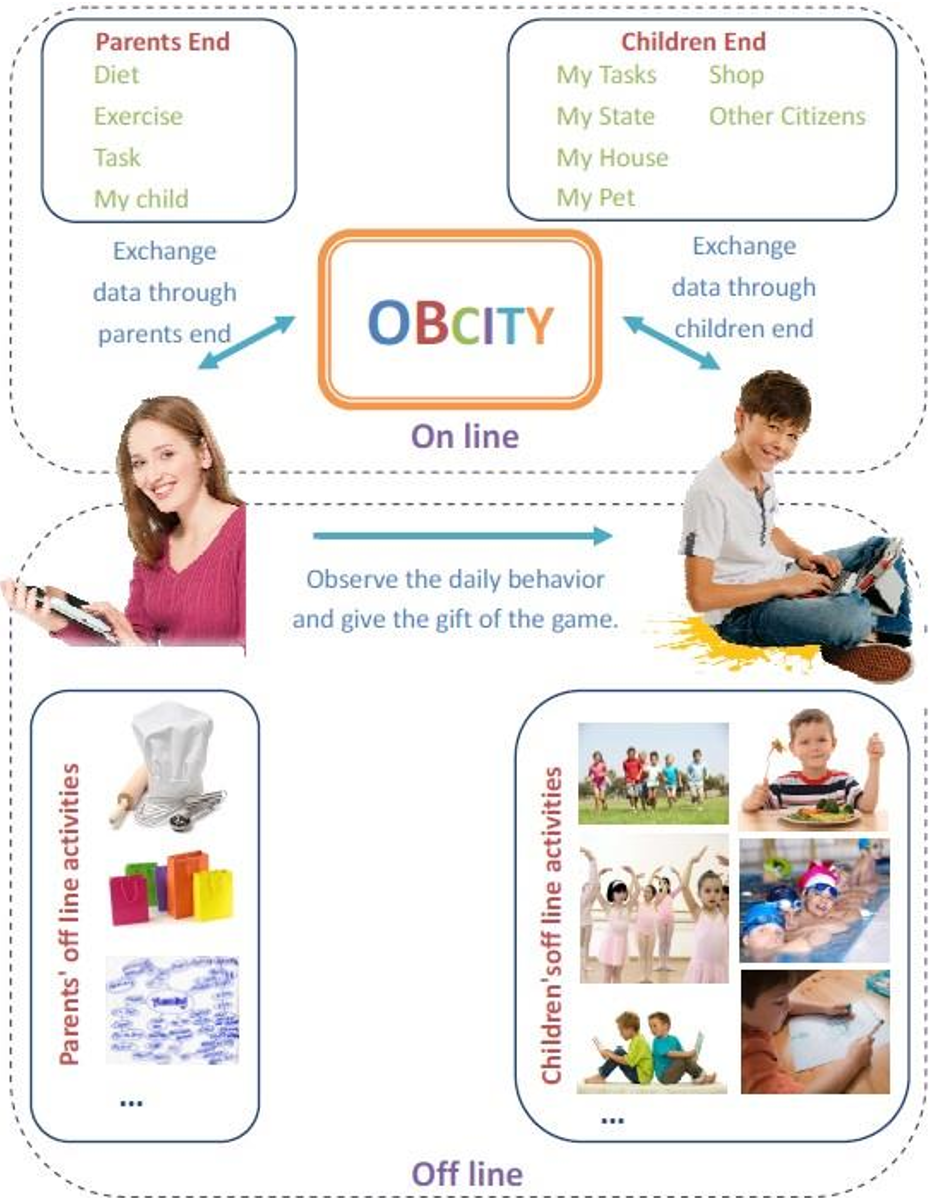 Figure 1: The structural interaction between Parent and Child terminals via the OB CITY server.
Key Modules and Behavioral Reinforcement
The system utilizes Positive and Negative Reinforcement through six core modules in the child’s terminal:
- My Tasks: Transitions from basic daily behaviors (vegetable intake) to specialized skill development.
- Shop & Rewards: Virtual coins earned from physical activity can be used for in-game decorations or exchanged for tangible real-world rewards (toys, trips).
- The "Mayor" Persona: By framing parental instructions through a virtual "Mayor" character, the system reduces parent-child friction, making task completion feel like a "mission" rather than a chore.
Critical Analysis & Future Outlook
While OB CITY is currently in its definition and mockup phase, its theoretical framework is robust. By targeting Behavior Modification—a proven psychological technique—rather than just information delivery, it addresses the root cause of obesity.
Potential Limitations:
- Data Integrity: The system relies on self-reporting or parental confirmation of tasks, which may introduce bias or inaccuracies.
- Digital Fatigue: Maintaining a child's interest in a virtual world over several months or years remains a significant design challenge.
Future Prospects: The authors suggest that this framework could be extended to other conditions, such as Autism or Diabetes, where consistent lifestyle habits are crucial for clinical outcomes. As the system moves toward user testing, the integration of wearable monitoring (IoT) could further automate data collection and enhance the "Monitoring" module's accuracy.
Conclusion
OB CITY represents a shift toward "Social-Health" gaming. By transforming the "work" of weight loss into the "play" of city-building, it offers a promising path toward sustainable BMI reduction and healthier future generations.