
The Psychology of the Switch: Why Bloggers Abandon Ship and the Hidden Role of Gender
Understanding the role of gender in bloggers' switching behavior
This study investigates the post-adoption switching behavior of bloggers using a research model that integrates satisfaction, sunk costs, and attractive alternatives. Based on a survey of 299 bloggers in Hong Kong, the paper identifies key determinants of switching intention and highlights the significant moderating role of gender in these decision-making processes.
Executive Summary
TL;DR: In the competitive landscape of blog service providers (BSPs), why do users leave? This study reveals that it isn't just about finding a "better" service; it's a tug-of-war between Satisfaction, Sunk Costs (invested effort), and the allure of Attractive Alternatives. Crucially, the "why" differs by gender: Women are driven by emotional satisfaction, while men are enticed by the instrumental utility of "better" options.
Positioning: This work is a seminal study in the post-adoption phase of social computing. It moves beyond simple "acceptance" to explain the "attrition" phase of the technology lifecycle using established Marketing and Social Role theories.
Problem & Motivation: The Retention Trap
Most tech research focuses on how to get users on a platform. However, for a platform's survival, continuance usage is the real gold mine. In the blogging world of the mid-to-late 2000s (and arguably today's social media), switching costs are low because services are often free.
The authors identified a gap: we don't fully understand the "Switching Intention" (INT). Does a user leave because they are unhappy with the current service (push), or because someone else offers a shiny new feature (pull)? And how does the "Sunk Cost" of thousands of posts and photos act as a digital anchor?
Methodology: The Research Framework
The authors proposed a model focusing on three pillars:
- Satisfaction (SAT): The affective state based on prior experience.
- Sunk Costs (SC): The irrecoverable time and effort invested.
- Attractive Alternatives (AA): The perceived quality of competitors.
They applied Social Role Theory (SRT) to hypothesize that gender would moderate these influences. Females (communal/emotional) would care more about satisfaction, while males (agentic/instrumental) would care more about the functional advantages of alternatives.
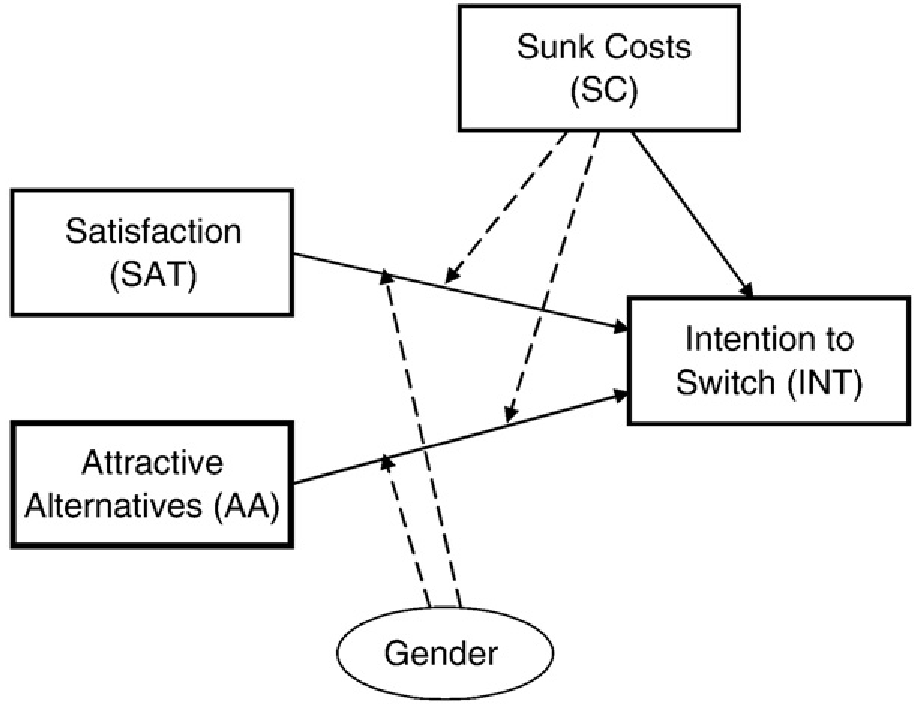 Figure 1: The Research Model illustrating the interplay between Satisfaction, Sunk Costs, and Gender.
Experiments & Results: Who Stays and Who Goes?
Using a sample of 299 bloggers and Partial Least Squares (PLS) analysis, the study confirmed several key technical insights:
1. The Power of Satisfaction and Pull of Alternatives
Both satisfaction and sunk costs significantly inhibited the intention to switch. Conversely, the presence of attractive alternatives was a strong predictor of "platform hopping."
2. The Gender Divide
The most striking finding was the moderation effect of gender.
- For Women: The link between satisfaction and switching was much stronger. If they aren't happy, they leave, regardless of how many "features" the current site has.
- For Men: The pull of better alternatives was the dominant factor. Men are more likely to move if they perceive a utilitarian advantage elsewhere.
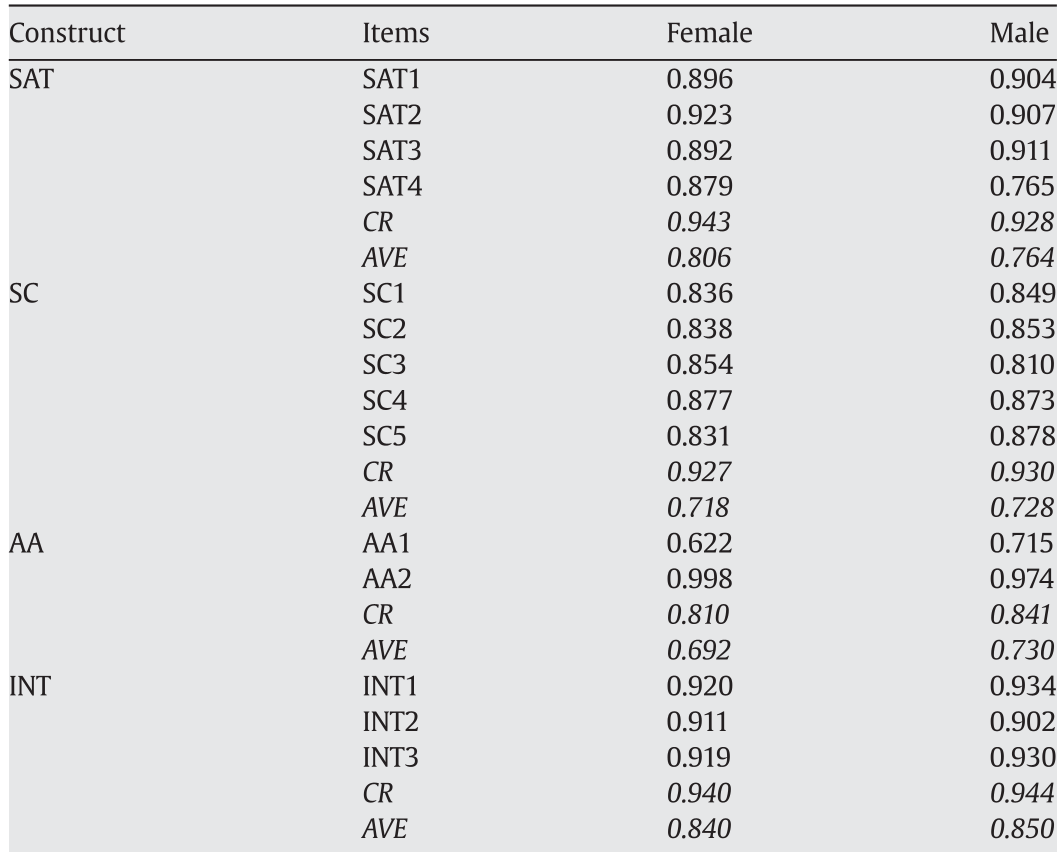 Table: Statistical reliability and validity of the constructs used in the study.
Interestingly, Sunk Costs did NOT moderate the impact of satisfaction. High investment doesn't make a user "look past" a bad experience; it only provides a direct, albeit separate, resistance to switching.
Critical Analysis & Conclusion
Takeaways for Practitioners
- For Female Retention: Focus on "Experience." Community features, emotional connection, and resolving complaints quickly are paramount.
- For Male Retention: Focus on "Utility." Ensure your platform's features (storage, layout, tools) are always competitive with the SOTA (State of the Art) to prevent them from being lured away.
Limitations
The study was conducted in the Hong Kong blogosphere. Cultural nuances in gender roles (Eastern vs. Western) might influence the results. Furthermore, the "Sunk Costs" of the 2000s (text/images) may differ from today's "Sunk Costs" (algorithmic data/social capital).
Looking Ahead
As we move into the era of Decentralized Social Media (Web3), the concept of "Sunk Costs" might vanish if users can "port" their data and followers. In such a world, Satisfaction and Alternatives will become the only battlefields left for platform owners.
Conclusion: Switching behavior is not just about a better product; it's about the emotional and instrumental history a user has with a platform. Gender acts as a filter through which these histories are weighed.