
Decoding Digital Identity: A Deep Dive into Feature Impact for Social Media Gender Classification
Gender Classification Models and Feature Impact for Social Media Author Profiling
The paper presents a comprehensive study on gender classification for social media author profiling, introducing a feature-combined model utilizing LightGBM. By integrating sociolinguistic, sentiment, and Latent Dirichlet Allocation (LDA) topic features, the authors achieve a state-of-the-art accuracy of 0.7735 on PAN datasets.
TL;DR
Researchers from the University of A Coruña have developed a refined gender classification framework that moves beyond "black-box" predictions. By combining sociolinguistic markers with topic modeling and the LightGBM algorithm, they achieved 77.35% accuracy on Twitter data. More importantly, they utilized SHAP values to decode the specific "linguistic DNA" that differentiates male and female digital footprints.
Background: Why Gender Profiling Matters
Author profiling isn't just about identifying who is behind a screen. It is a cornerstone of targeted marketing, forensic linguistics, and most crucially, early mental health intervention. Previous SOTA (State Of The Art) methods often suffered from "feature bloat," making them computationally expensive. This study aims to find the "sweet spot" between simplicity and performance.
The "Why": Motivation & Insight
The core intuition behind this work is that language is an extension of social identity. Men and women don't just use different words; they use different syntactic structures and digital symbols (emojis). The authors theorized that by grouping features into Sociolinguistic, Sentiment, and Topic-based clusters, they could create a model that is both efficient and highly interpretable.
Methodology: The Core Engine
The authors leveraged three primary feature groups:
- Sociolinguistics: Beyond simple counts, this includes "Readability" (Flesch-Kincaid), POS (Part-of-Speech) tagging, and specific emoji-usage ratios.
- Sentiment: Capturing the emotional tone (negative vs. positive) of the discourse.
- Topic Modeling: Using LDA (Latent Dirichlet Allocation) to extract 20 latent themes, providing a semantic context to the classification.
Model Architecture
The workflow follows a traditional pipeline but excels in its classifier selection: LightGBM. Unlike standard Decision Trees, LightGBM handles high-dimensional data efficiently, making it perfect for the sporadic nature of social media text.
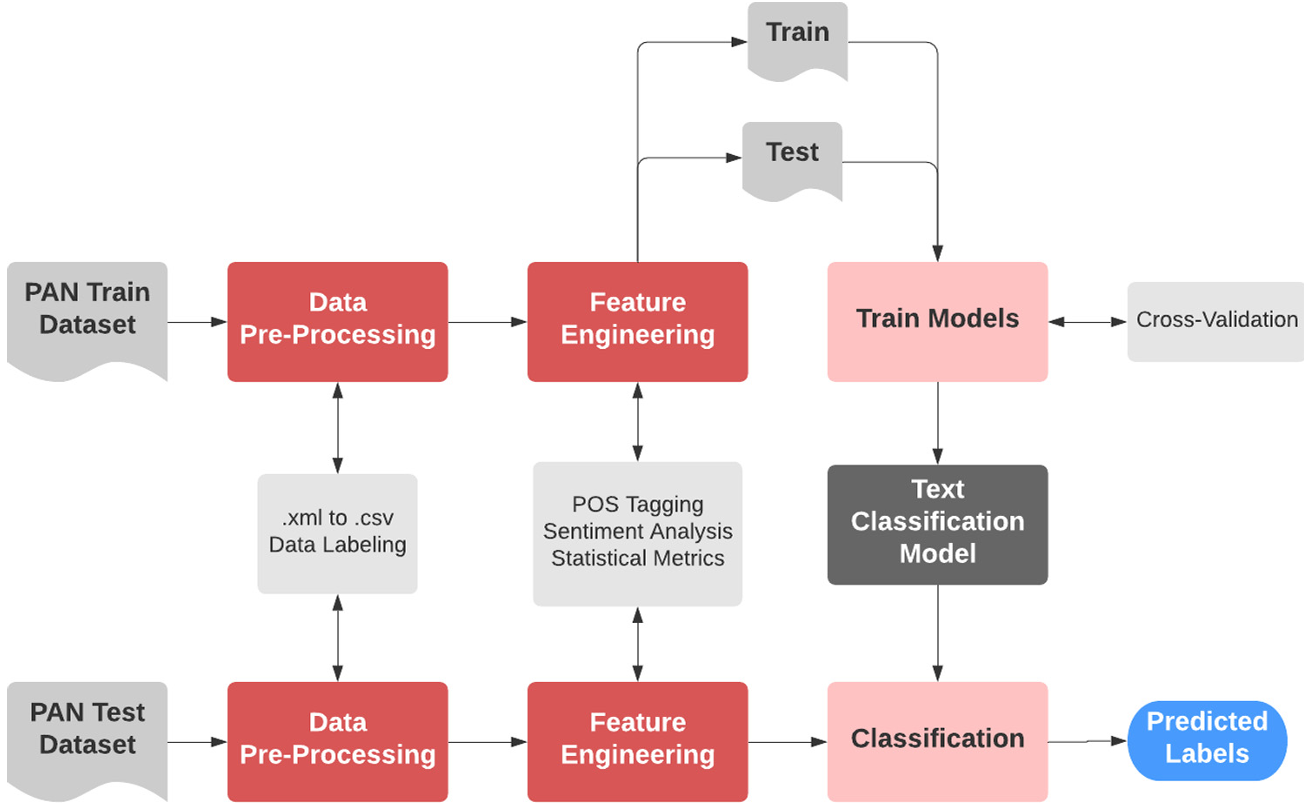 Figure 1: The experimental workflow from data preprocessing to final classification.
Analysis: Decoding the Gender "Linguistic DNA"
One of the most valuable outputs of this research is the SHAP Summary Plot. It visually explains why the model made a decision:
- Male Indicators: Heavy use of Articles (a, an, the), Hashtags, and specific "Smiley-face" emojis. Interestingly, males showed higher usage of "Topic 9" (sports-related: rugby, England, league).
- Female Indicators: High frequency of Love Emojis, Exclamation Marks, Pronouns, and Self-referentiality (I, me, my). Female profiles also showed higher "Cosine Similarity," suggesting a more consistent linguistic style across the group compared to males.
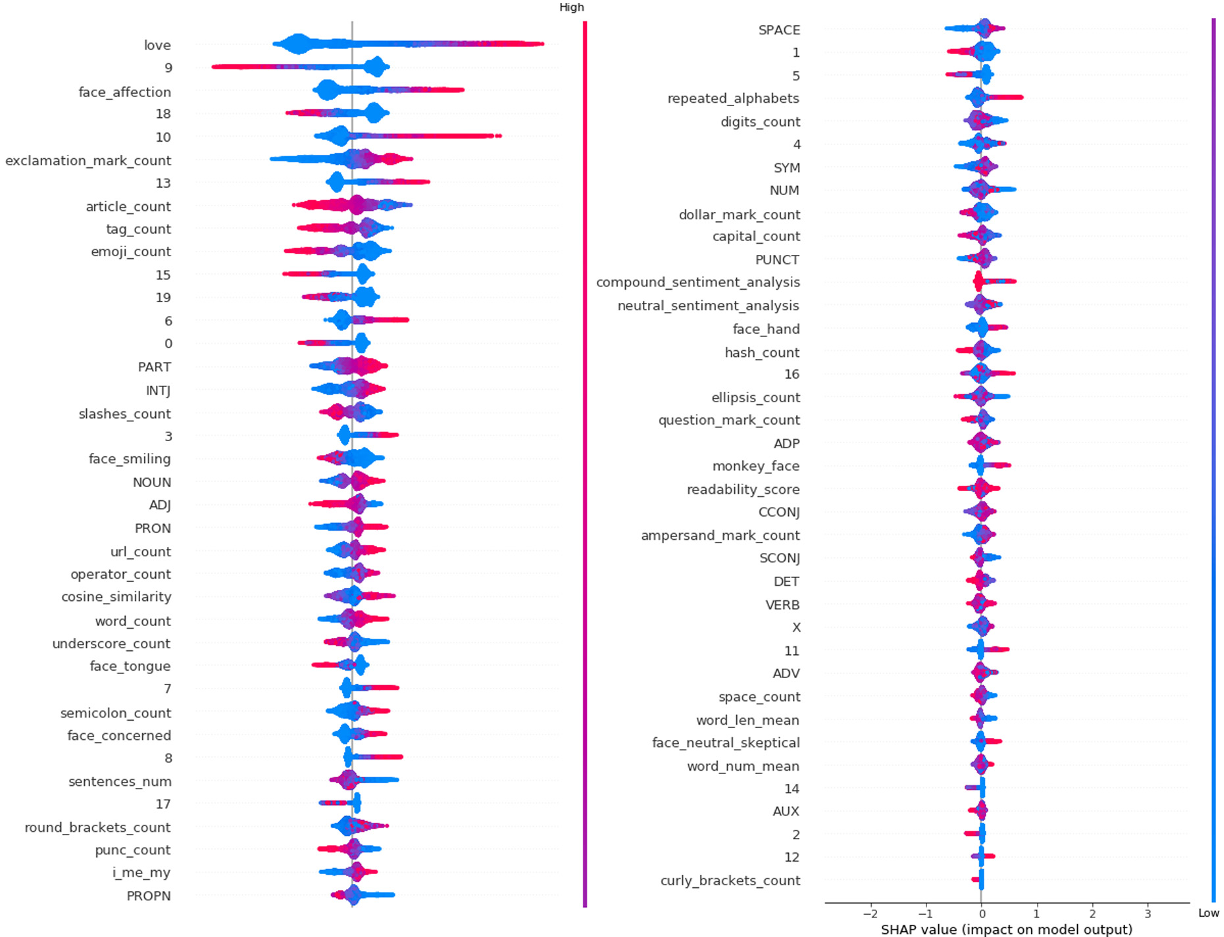 Figure 2: Global feature importance showing Love Emojis and Articles as top predictors.
Experiments & Results
The authors tested their model against the renowned PAN competition datasets (2019 and 2020 editions).
- Peak Accuracy: 0.7735 (LightGBM with all features).
- The "Efficiency" Discovery: Removing the bottom 20% of features only marginally reduced accuracy (to ~0.756), suggesting that many features used in older models were "noise."
- The 2020 Paradox: When adding 2020 data to 2019 models, accuracy dropped. This highlights a crucial insight: social media language evolves rapidly. A model trained on 2019 slang and emoji usage struggles with 2020 data.
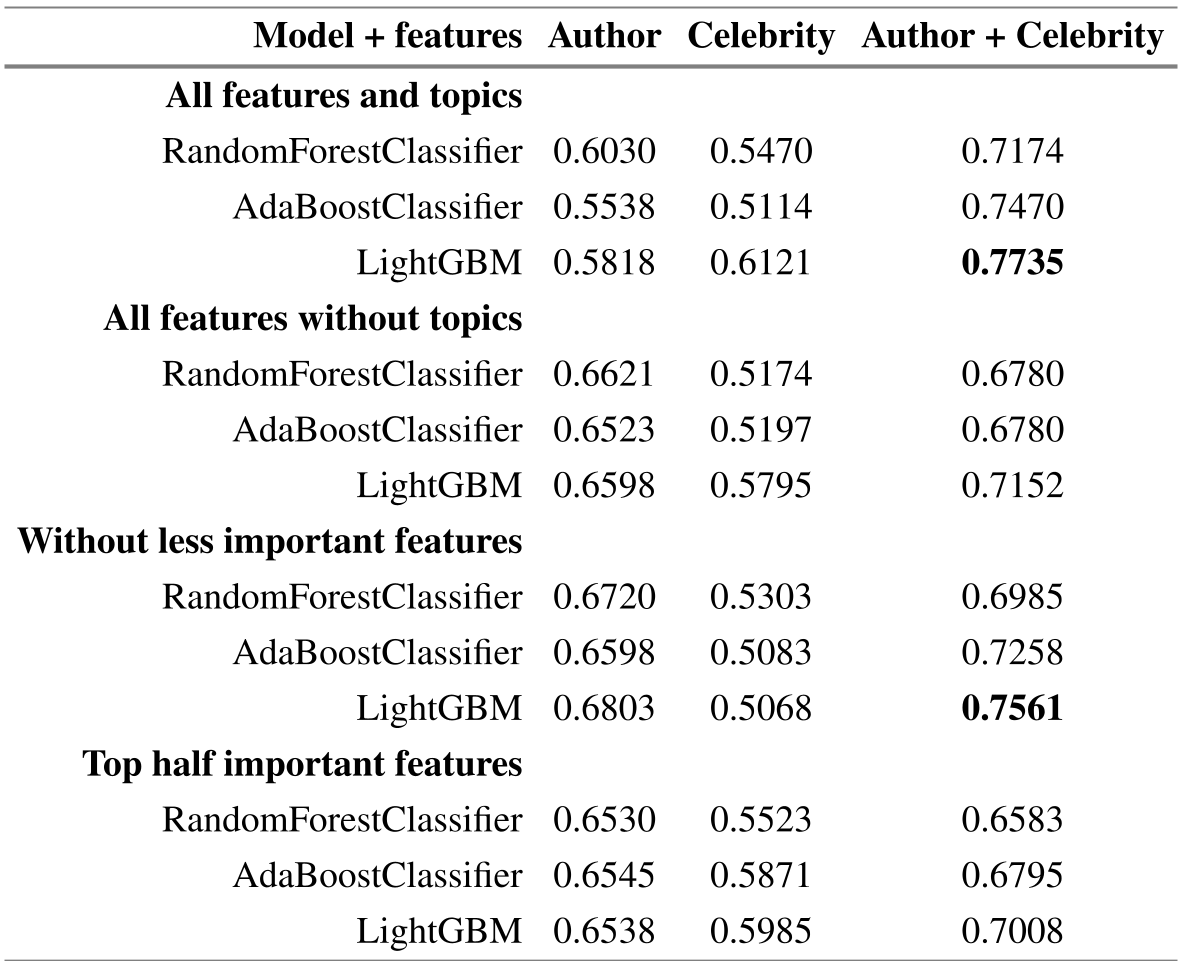 Table 1: Performance metrics across different feature configurations and algorithms.
Critical Analysis & Conclusion
Takeaways
The paper confirms that Psycho-linguistic features (like how much we talk about ourselves) are often more powerful than Topic-based features for gender identification. The research successfully provides a roadmap for building "efficient" classifiers that save execution time without sacrificing significant precision.
Limitations & Future Work
- Binary Constraint: The current model focuses on Male/Female. The authors acknowledge the need to move toward non-binary classification as datasets become available.
- Temporal Drift: As shown by the drop in 2020 performance, models require frequent retraining or "dynamic weights" to keep up with changing internet trends.
- Multilingualism: This study focused on English; extending these sociolinguistic markers to other languages remains a frontier for authors to explore.
Senior Editor’s Note: This paper provides a rare, transparent window into the features that AI actually uses to "profile" us. It serves as a stark reminder of how much our digital interactions reveal about our offline identity.