
Deep Gait: Improving Gender Detection via Smartphone Accelerometer and CNNs
Evrişimli Sinir Aglarını Kullanarak Akıllı Telefon Hareket Sensörleri ile Cinsiyet Tespiti Gender Detection with Smartphone Motion Sensors Using Convolutional Neural Networks
This study proposes a deep learning framework for gender detection using smartphone accelerometer data collected during gait and touch interactions. By employing a 1D-Convolutional Neural Network (CNN) architecture, the authors achieved a SOTA-level classification accuracy of 88.3%, significantly outperforming traditional machine learning baselines.
TL;DR
Researchers from Boğaziçi University have demonstrated that how you walk and type on your phone is a unique behavioral signature. By applying a Convolutional Neural Network (CNN) to raw accelerometer data, they achieved an 88.3% accuracy in identifying a user's gender, outperforming traditional machine learning models and offering a more private, "silent" biometric alternative to face or voice recognition.
Background & Motivation
Most gender detection systems rely on "explicit" biometrics—facial features or vocal pitch. However, these are highly susceptible to lighting conditions, ambient noise, and privacy objections.
The authors argue that behavioral biometrics (how we move) offer a robust alternative. The challenge lies in the "noise" of daily life; the way a person holds a phone while walking introduces complex, non-linear signals. Previous attempts using simple heuristics or basic Machine Learning (ML) often failed to capture the subtle nuances of gait, resulting in mediocre performance.
Methodology: From Raw Signals to Deep Insight
The study’s workflow is divided into three critical stages: Data Collection, Feature Processing, and Deep Learning Classification.
1. Data Collection with a Natural Twist
Unlike lab-based gait studies, the authors developed an Android app that forced users to interact with their screens (tapping moving circles) while walking. This captured a realistic blend of gait dynamics and hand-eye coordination, providing a richer signal than walking alone.
- Dataset: 120 users (60 male, 60 female)
- Age Range: 17–57 years (a significant improvement over youth-centric studies).
2. Signal Processing
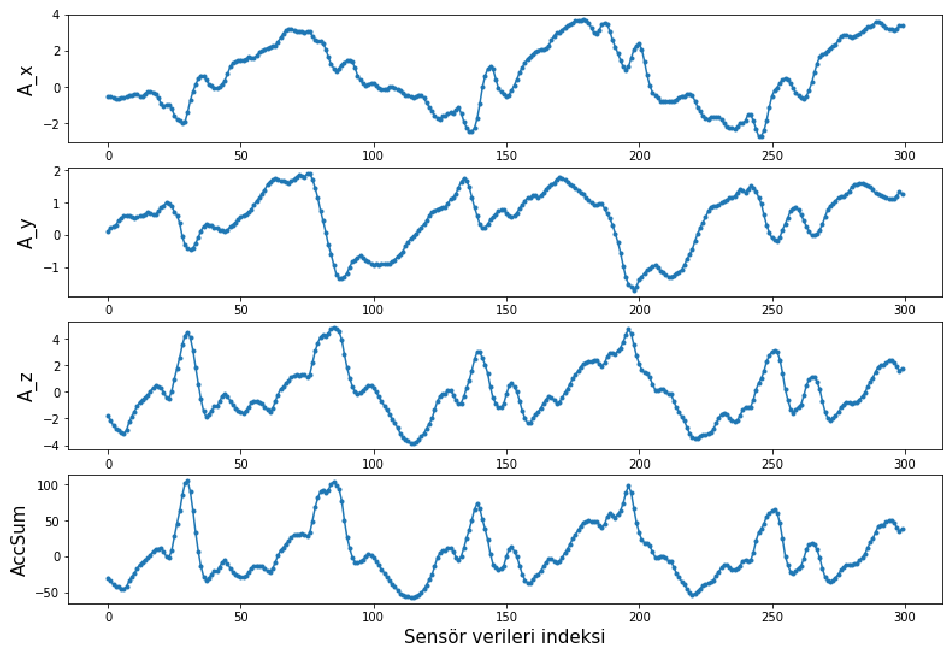
The core input is the 3-axis accelerometer (). To better capture the force applied to the device, they calculated the AccSum (), representing the total magnitude of motion.
3. The CNN Architecture
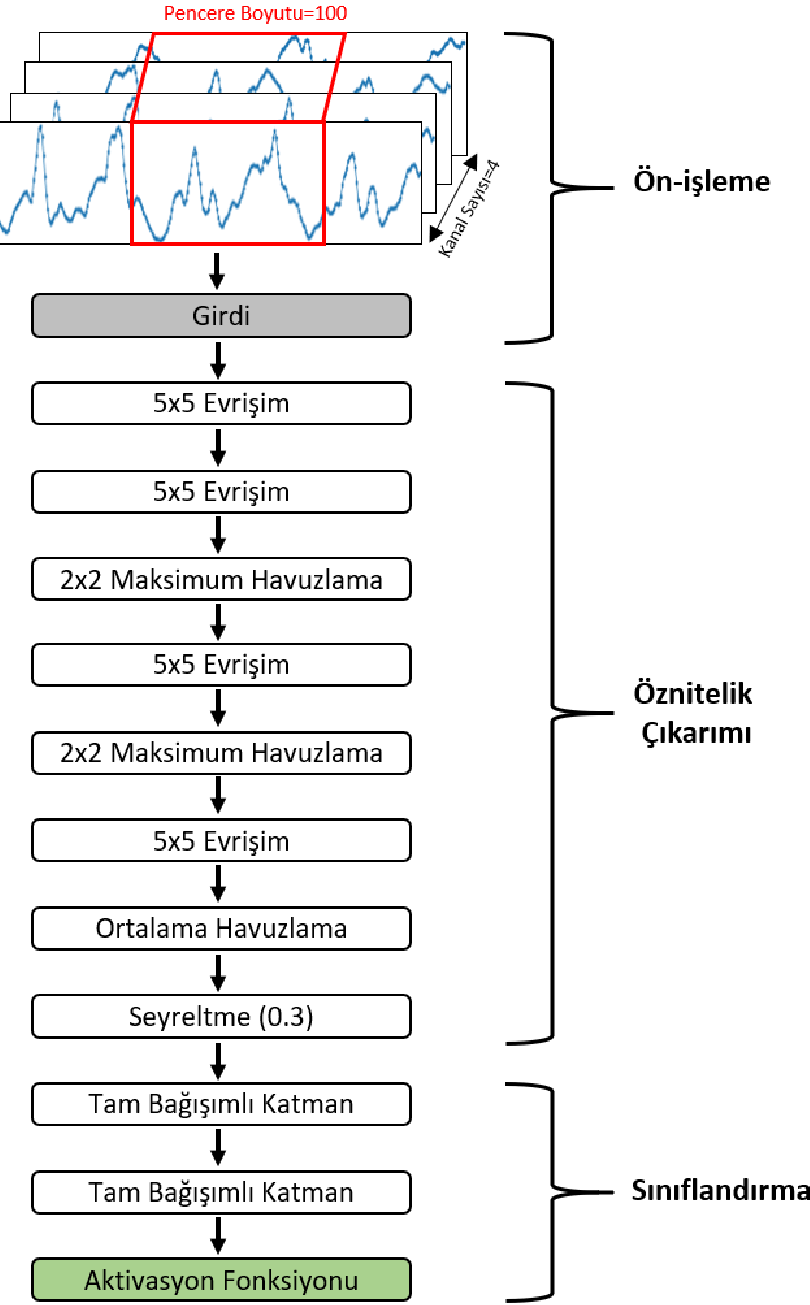
The beauty of the CNN approach is the elimination of "Feature Engineering." While the authors tested 10 statistical features (mean, skewness, kurtosis, etc.) for classical ML, the CNN was fed raw sensor windows.
- Conv Layers: Used to detect local patterns in the motion time-series.
- Dropout (0.3): Applied to prevent the model from memorizing specific users (overfitting).
- Softmax: Produces the final probability for "Male" vs. "Female."
Experimental Results
The authors conducted a head-to-head battle between the CNN and five classical algorithms: Support Vector Machines (SVM), Random Forest, Logistic Regression, k-NN, and Decision Trees.
Performance Comparison
| Method | Accuracy |
|---|---|
| CNN (Proposed) | 88.3% |
| Support Vector Machine (SVM) | 83.3% |
| Logistic Regression | 82.5% |
| Random Forest | 80.8% |
The CNN's ability to learn hierarchical representations of temporal data allowed it to capture "micro-jitters" in the gait that SVMs simply could not represent through static statistical averages.
Critical Analysis & Takeaways
The performance jump to 88.3% is significant for the field of mobile biometrics. It proves that the "Inductive Bias" of CNNs (locality and translation invariance) is highly effective for sensor-based time-series data, just as it is for images.
Limitations:
- The current model is activity-specific (walking while interacting). Performance might degrade if the user is sitting or running.
- The model was tested on high-end Samsung and LG devices; sensor calibration differences on "budget" sensors remain an open question.
Future Outlook: This research opens the door for Zero-friction Authentication. Imagine a banking app that doesn't just ask for a fingerprint but continuously verifies you are the owner based on how you carry the phone. As we move toward more personalized AI, such "invisible" sensors will play a pivotal role in creating context-aware technology.