
Gender HCI: How Data Mining Uncovered the "How" Behind Debugging Success
Gender Differences in End-User Debugging, Revisited: What the Miners Found
This paper explores gender differences in end-user debugging strategies by applying sequential pattern mining to interaction logs. Utilizing the SLPMiner algorithm, the researchers identified distinct behavioral patterns in a spreadsheet environment (WYSIWYT), revealing that male and female success is often predicated on fundamentally different feature usage trajectories.
TL;DR
Gender differences in computing are often discussed in terms of "access" or "interest," but this paper digs into the mechanics of problem-solving. By mining event logs from a spreadsheet debugging task, researchers found that males and females don't just succeed at different rates—they use entirely different sequences of actions to get there. Notably, "tinkering" helps some but sinks others, and self-efficacy (confidence) dictates how long a user will beat a dead horse before trying a new strategy.
The "Ill-Structured" Problem of Debugging
Most HCI research starts with a theory and tests a hypothesis. But as the authors argue, end-user programming is an "ill-structured" problem: there's no single right way to fix a bug, and the "best" solution depends on the user's priorities.
Manual observation is fallible. Humans might see what a user did (e.g., "they clicked the help button five times"), but they often miss the pattern (e.g., "they only clicked help after a failed edit and before toggling a dataflow arrow"). This paper shifts the methodology to Sequential Pattern Mining to let the data speak for itself.
Methodology: Mining the Micro-Behaviors
The study revisited data from 39 participants using the WYSIWYT (What You See Is What You Test) environment.
- Data Source: Interaction logs containing timestamps, tooltips, checkmarks (confirming values), and X-marks (flagging errors).
- The Process: The team Used SLPMiner to find frequent sequences (e.g.,
Arrow On -> Checkmark -> Edit Formula). - Abstraction: They broke logs into "debugging sessions"—the window of time leading up to a formula edit.
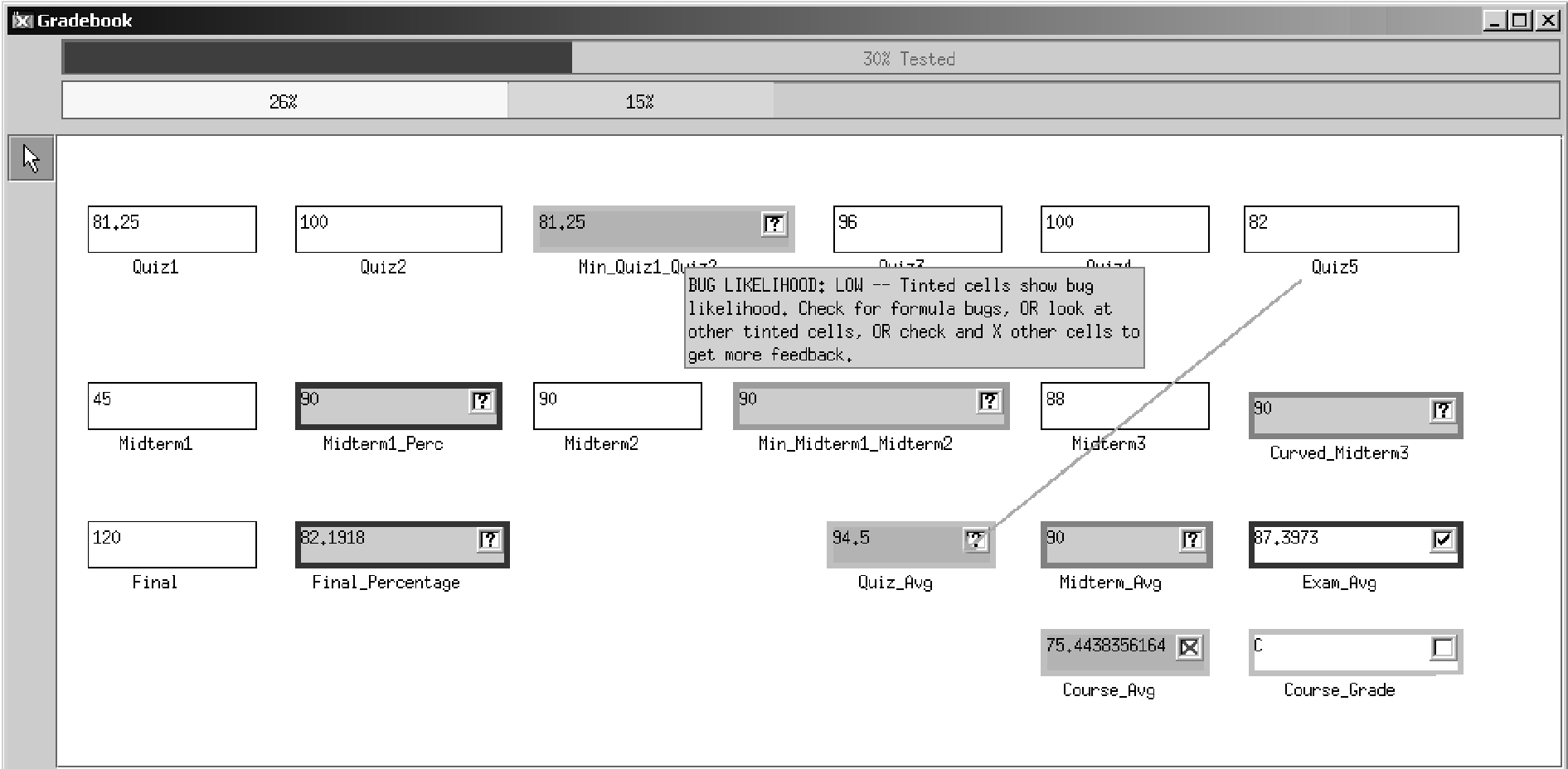 Figure 1: The WYSIWYT environment utilizes visual cues like red/blue borders and dataflow arrows to guide users.
Key Insight 1: Unsuccessful Males and "Tinkering Addiction"
One of the most striking findings was the behavior of unsuccessful males. In many tech circles, "tinkering" is praised as a way to learn. However, the data revealed a dark side.
Unsuccessful males used arrows more than twice as often as successful males (Median 25.5 vs 12). Their patterns often consisted of "Arrows Only" (e.g., Arrow Off, Arrow On), suggesting they were playing with the interface rather than using the tool to reason about the logic.
Hypothesis: For males, excessive tinkering with features becomes a distraction that prevents task completion.
Key Insight 2: The Self-Efficacy Gap in Females
Self-efficacy—one's belief in their ability to succeed—played a massive role for female participants, but interestingly, not for males.
In a "High-Support Environment," low self-efficacy females actually used more features. But the patterns showed they were stuck. They repeated the same unsuccessful strategies (using a pattern in 10-15% of sessions) while high-efficacy females were "quick to fail," abandoning non-working strategies after only 5% usage to try something else.
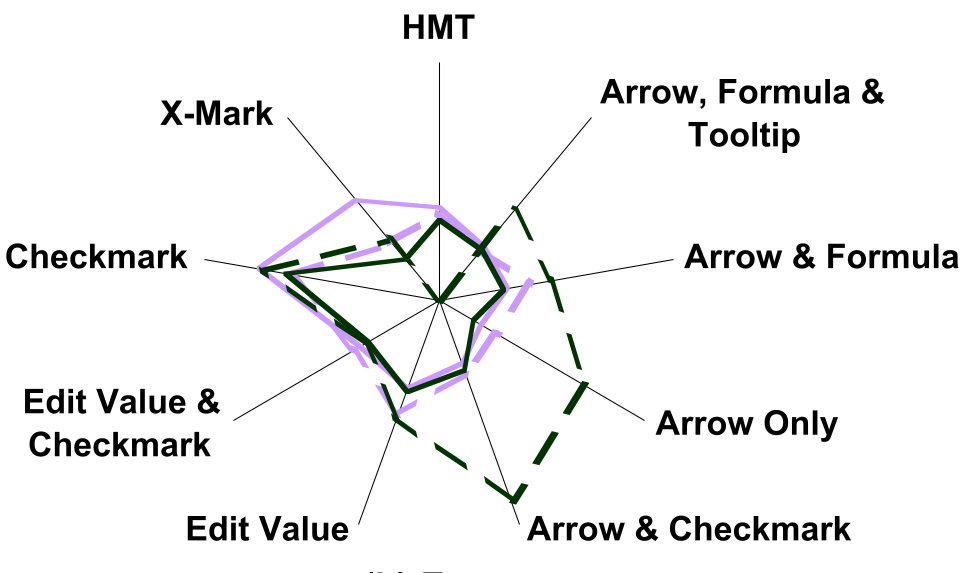 Figure 2: Radar chart showing how unsuccessful females and successful males often share similar testing-oriented profiles, yet achieve different results.
Critical Analysis & Lessons Learned
The authors conclude with a sobering reminder: Data mining is not a panacea.
- Workload: Interpreting 107 patterns into human behavior is labor-intensive.
- Bias: Humans still decide the "support threshold" and how to categorize patterns.
However, the value is undeniable. The discovery that "successful male strategies" are actually "unsuccessful female strategies" suggests that we cannot design one-size-fits-all software.
Future Outlook
This work sets the stage for Adaptive HCI. Imagine a debugger that detects "tinkering loops" in a male user and nudges them toward logic, or notices "strategy stagnation" in a female user and suggests a structural change in approach. To build equitable software, we must look beyond the click and into the sequence.
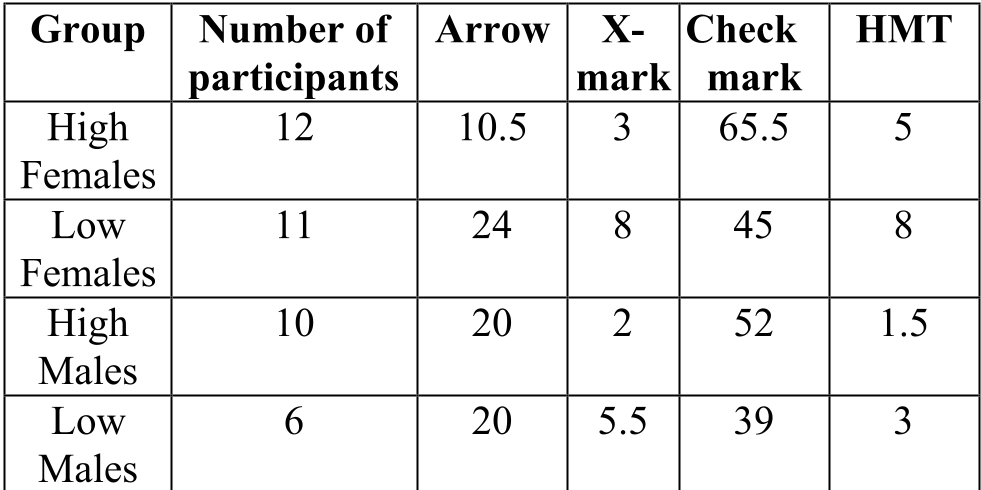 Table 1: Feature usage counts across gender and self-efficacy groups, highlighting that low self-efficacy females are high-volume, low-efficiency users.