
Debunking the Gender Myth: Why Genre and Culture Matter More Than Gender in Gaming Motivation
Gender and Genre Differences in Multiplayer Gaming Motivations
This study utilizes Self-Determination Theory (SDT) to analyze gaming motivations across two distinct multiplayer genres: Social Network Games (SNGs) and Massively Multiplayer Online (MMO) games. It challenges long-standing gender stereotypes by examining how intrinsic and extrinsic regulations drive play behavior in a sample of 1,018 US-based players.
TL;DR
A comprehensive study of over 1,000 players reveals that our traditional understanding of "why" people play games is outdated. While we often assume men play for achievement and women for social connection, the data shows the opposite: women often report higher achievement-oriented motivations than men, and social motivation levels are remarkably similar between genders. The real divide lies in the genre—MMO vs. SNG—rather than the player's gender.
The Dying Stereotype of the "Social" Female Gamer
For decades, the narrative in game studies (and marketing) has been consistent: men are competitive achievers, and women are social collaborators. This study, led by Donghee Yvette Wohn, argues that this perspective is a relic of the past. As gaming demographics shift—with women now making up nearly half of the market—the motivations for play are undergoing a massive "internalization" process.
The authors suggest that previous findings were likely a byproduct of an "experience gap" rather than an "innate gap." As women gain more years of gaming experience, their drive to master mechanics and collect achievements is surfacing more prominently.
Methodology: A Self-Determination Theory Approach
Instead of using arbitrary categories like "Killer" or "Explorer," the researchers used Self-Determination Theory (SDT). This views motivation as a spectrum:
- Intrinsic Hedonic: Playing because the movement/gameplay is fun.
- Intrinsic Accomplishment: The joy of self-improvement.
- External Regulation: Playing to get points, level up, or clear a quest.
- Identified Regulation: Playing for a long-term value, like building a relationship.
Genre Differences: MMO vs. SNG
The study highlights that Massively Multiplayer Online (MMO) games and Social Network Games (SNGs) are structurally different beasts.
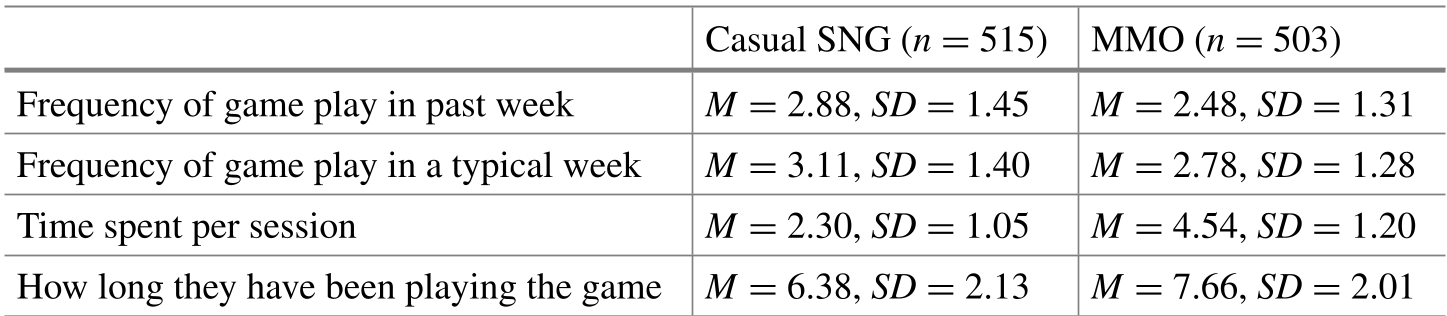
MMO players are "marathoners," playing for longer sessions (often 1-3 hours) and have been loyal to their games for years. SNG players are "sprinters," logging on frequently throughout the week but for very short bursts (often under 30 minutes).
The Surprising Results: Achievement is Female
When looking at External Game Regulation—the motivation driven by game mechanics, levels, and items—the results were striking.
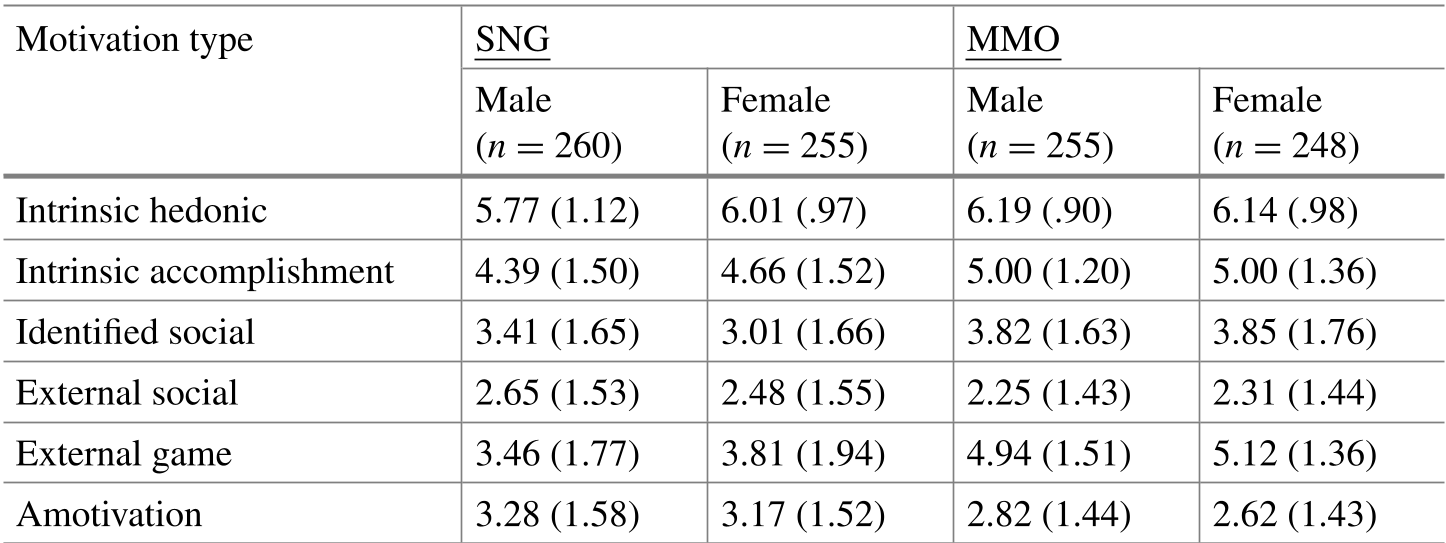
- Women in both genres reported higher levels of external achievement motivation than men.
- Social motivation (Identified Social) showed no main effect for gender, meaning men and women play for social reasons at nearly identical rates.
- External Social Motivation (social pressure) was actually higher in SNGs than MMOs, suggesting that "casual" games are sometimes more socially demanding than "hardcore" ones.
Critical Insight: Why are Women More Achievement-Oriented?
The authors provide two fascinating theories for these findings:
- The Experience Equalizer: As the gender gap in years of experience closes, the "Stereotype Threat" (the fear of confirming female gaming stereotypes) diminishes, allowing women to embrace achievement goals.
- Survival of the Achievement-Oriented: In potentially hostile social gaming environments, women may pivot away from social interaction toward mechanics-based achievement as a survival mechanism to enjoy the game without facing harassment.
Conclusion & Strategic Takeaways
This research is a wake-up call for both scholars and game designers.
- Stop Gender-Coding Mechanics: Designing "social" features specifically for women and "competitive" features for men is based on outdated science.
- Genre Affordances Matter: A player's motivation is heavily dictated by the tools the game provides. MMOs naturally foster intrinsic mastery, while SNGs rely more on frequent, external reinforcements.
- The Future is Fluid: We must stop generalizing gender effects and start looking at "gaming culture" and "mechanic affordances" as the primary drivers of player behavior.
Takeaway: In the modern era, a female World of Warcraft player is likely more motivated by the "grind" and the loot than her male counterpart. The "casual socialite" is a myth that the data simply no longer supports.