Gendered Double Embeddedness: Why Your Network Works Better in the State Sector
Gendered double embeddedness: Finding jobs through networks in the Chinese labor market
This study investigates the "gendered double embeddedness" of job searching in China, exploring how institutional contexts moderate the gender gap in network-based recruitment. Using 2008 Chinese General Social Survey (CGSS) data, it demonstrates that women face a significantly larger disadvantage in the market sector compared to the state sector when using social ties to secure employment.
TL;DR
It is a common sociological trope that "it’s not what you know, but who you know." However, this study by Tian and Liu reveals a harsher reality for the Chinese labor market: who you know matters differently depending on whether you are a man or a woman, and where you are applying. In the market sector, women are significantly less able to "activate" their social networks for job leads than men, a gap that largely vanishes within state-owned enterprises where gender equality is more institutionalized.
The Problem: The Myth of the "Neutral" Network
Most labor market research attributes women's disadvantages to the composition of their networks—arguing that women have fewer "high-powered" contacts. But Tian and Liu argue this is only half the story.
Even with the same network, women face a "Double Embeddedness" problem:
- Social Embeddedness: The literal connections (friends, family, colleagues).
- Institutional Embeddedness: The cultural "rules of the game" (gender status beliefs) that dictate whether a contact thinks you are worth a job referral.
The researchers set out to prove that in contexts where gender bias is "legitimate"—specifically China’s private market sector—networks actually become a mechanism for exclusion.
Methodology: Comparing Two Logics
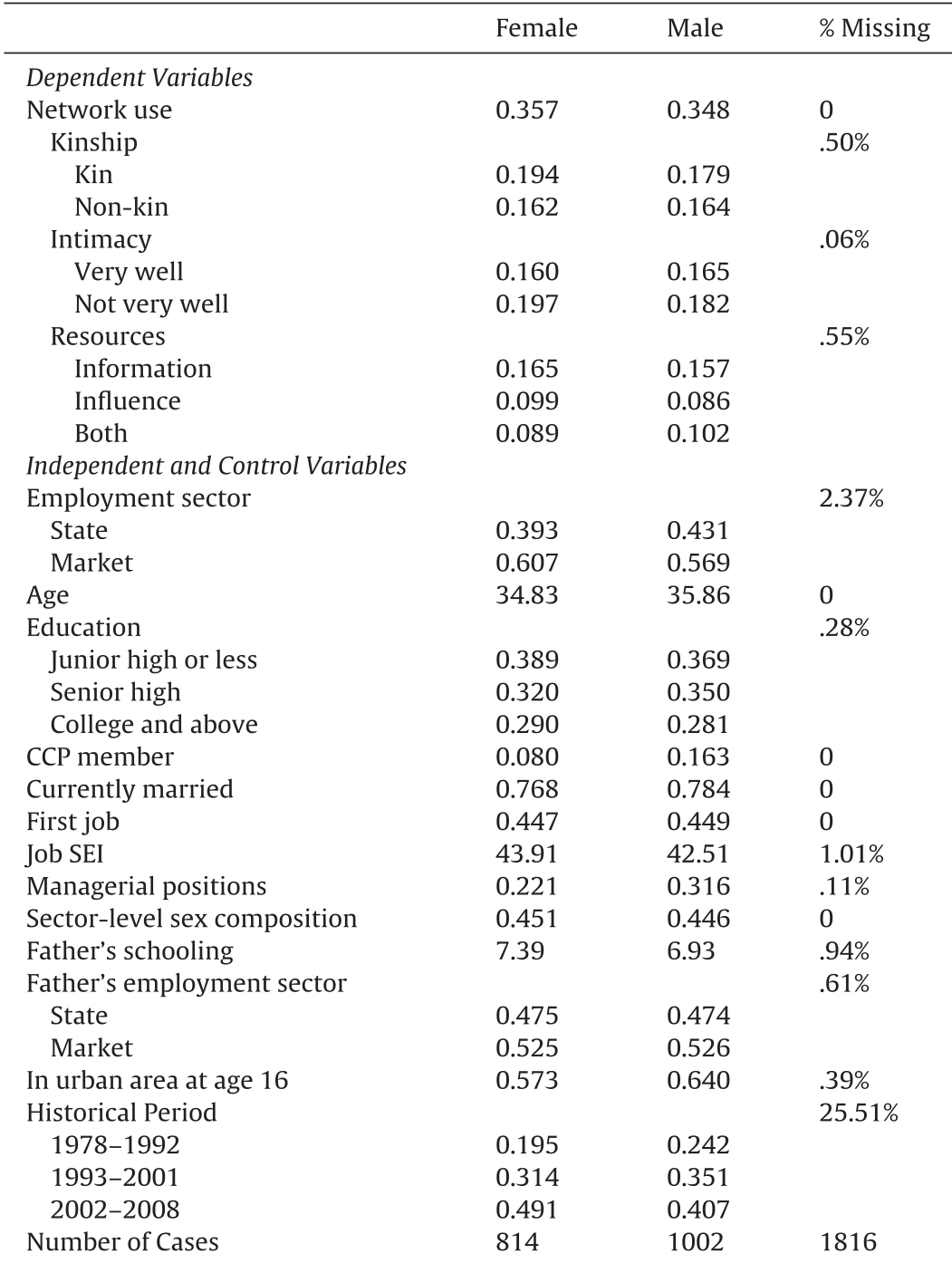
The authors utilized the 2008 Chinese General Social Survey (CGSS), focusing on 1,816 urban workers. They categorized the Chinese labor market into two distinct institutional "logics":
- The State Sector: Characterized by the legacy of Maoist "Holding up half the sky" policies. Here, affirmative action and state-enforced equality make gender bias less legitimate.
- The Market Sector: Private firms and joint ventures where managers often cite maternity costs as a reason to favor men. Here, gender status beliefs (men as "agentic" workers, women as "communal" caregivers) are more pervasive.
Key Findings: The "Activation" Gap
1. Market Disadvantage
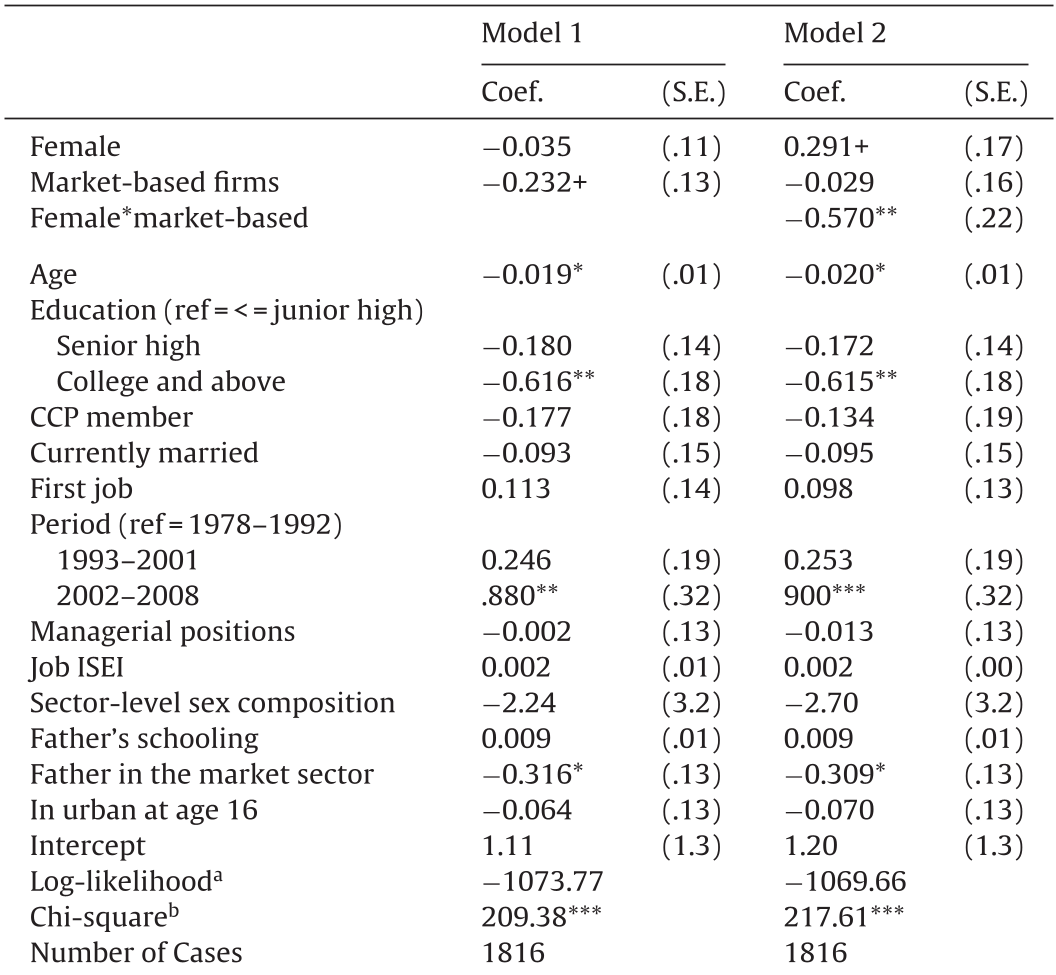
The data reveals a stark interaction effect. While there is no universal gender gap in network use across the whole country, the Market Sector acts as a filter. In private firms, women’s odds of finding a job via networks are significantly lower than men's. In contrast, in the state sector, women actually show a marginal (though not always significant) advantage in using networks.
2. Information vs. Influence
Interestingly, the gender gap is most pronounced when the network provides Information (hearing about a job opening). When it comes to Influence (using a contact to pull strings), the sector difference is less significant. This suggests that the "cultural filter" of gender bias happens at the earliest stages—contacts simply don't pass along job info to women in the market sector because they subconsciously devalue their work quality or "job fit."
3. Tie Strength Doesn't Save You
A common theory is that "Strong Ties" (family/close friends) help women overcome bias because they know the woman's true competence. This paper finds the opposite: the gender gap persists across both kin and non-kin ties in the market sector. Even close relatives seem to be influenced by the prevailing institutional logic of the market.
Critical Analysis: The Stalled Revolution
This paper offers a sobering insight into the "market transition" in China. While economic reform brought efficiency, it also weakened the state's ability to enforce gender equality. By moving job recruitment from the "bureaucratic desk" to the "informal dinner table" (Guanxi), the market sector has inadvertently allowed cultural gender biases to flourish.
Limitations
- Sample Timing: The data is from 2008. While conceptually robust, the rise of the "platform economy" and changes in China's three-child policy may have shifted these dynamics in the 2020s.
- Selection Bias: The study only looks at successful hires. We don't see the "failed" network attempts, which might show an even larger gap.
Conclusion
The "Gendered Double Embeddedness" framework proves that social capital is not a universal currency. Its value is "exchanged" at rates determined by the institutional environment. For women in the Chinese labor market, the market sector remains a space where social networks are a "leaky bucket," failing to translate social connections into career mobility at the same rate as they do for men.