
Beyond Binary Hits: Enhancing Protein SCL Prediction via GO Semantic Similarity
Extracting Features from Gene Ontology for the Identification of Protein Subcellular Location by Semantic Similarity Measurement
The paper introduces a novel feature extraction method for Protein Subcellular Location (SCL) prediction by measuring the semantic similarity of Gene Ontology (GO) terms. By mapping protein functions to a set of low-dimensional "markstone" terms, the method enhances prediction accuracy using Support Vector Machines (SVM).
TL;DR
Predicting where a protein resides in a cell—its Subcellular Localization (SCL)—is vital for drug discovery. While Gene Ontology (GO) has long provided background knowledge for this task, traditional methods use "wide and sparse" binary vectors. This paper introduces a "markstone" method that uses semantic similarity to compress GO information into a dense, low-dimensional vector, improving accuracy while slashing computational overhead.
The "Binary" Bottleneck
In the early 2000s, Researchers realized that a protein's function (what it does) is tightly coupled with its location (where it is). This led to methods that map proteins to GO terms. However, the standard approach was flawed:
- High Dimensionality: Vectors often spanned over 2,000 dimensions.
- Semantic Blindness: If two proteins were assigned to two different but closely related functional terms, a binary vector would treat them as completely different (distance = 1), ignoring the hierarchical relationship in the GO tree.
Methodology: The Power of Markstones
The authors propose a shift from "occurrence" to "meaning." Instead of a vector representing every possible GO term, they select a handful of highly predictive terms called Markstones (e.g., related to the Nucleus, Membrane, or Mitochondria).
1. Semantic Distance Measurement
The core innovation lies in the distance formula. Rather than a binary 0/1, the value in the feature vector represents the minimum semantic distance between a protein's actual GO terms and the Markstone.
The distance calculation utilizes the Milestone concept: Where is the depth of the node. This captures the intuition that nodes deeper in the hierarchy are more specific and thus "closer" to each other than general nodes at the top.
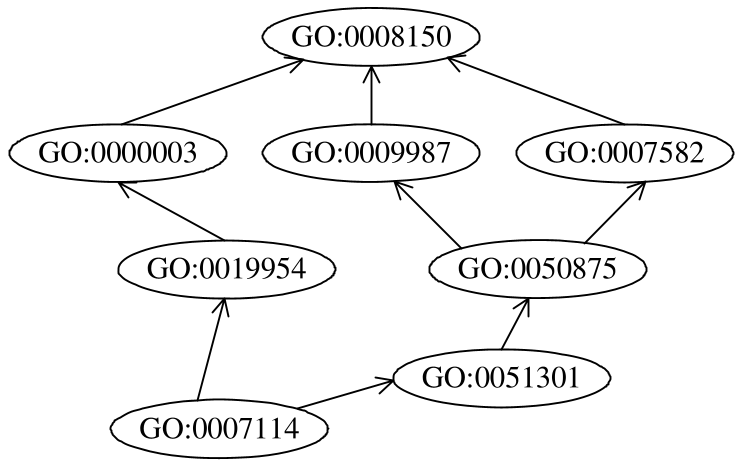 Figure 1: Illustration of why hierarchical distance (p2 to p3) is a better metric than simple binary matching.
2. Dimension Compression
By calculating distances to only 12 specific Markstones, the authors reduce the feature space significantly. This dense representation is then concatenated with standard Amino Acid Composition (AAC) features.
Experiments and Results
The authors tested their method against two baselines using a Gram-negative bacteria dataset from PSORTdb and a Support Vector Machine (SVM) classifier.
| Feature Set | Dimensionality | Avg. Accuracy (%) |
|---|---|---|
| AAC (Baseline) | 20 | 80.54 |
| AAC + Former GO (Sparse) | 247 | 81.51 |
| AAC + New GO (Semantic) | 32 | 83.85 |
The results demonstrate a clear "Less is More" effect. By using only 12 semantically rich dimensions instead of 227 sparse ones, the model achieved a ~2.3% improvement over the former hybrid method.
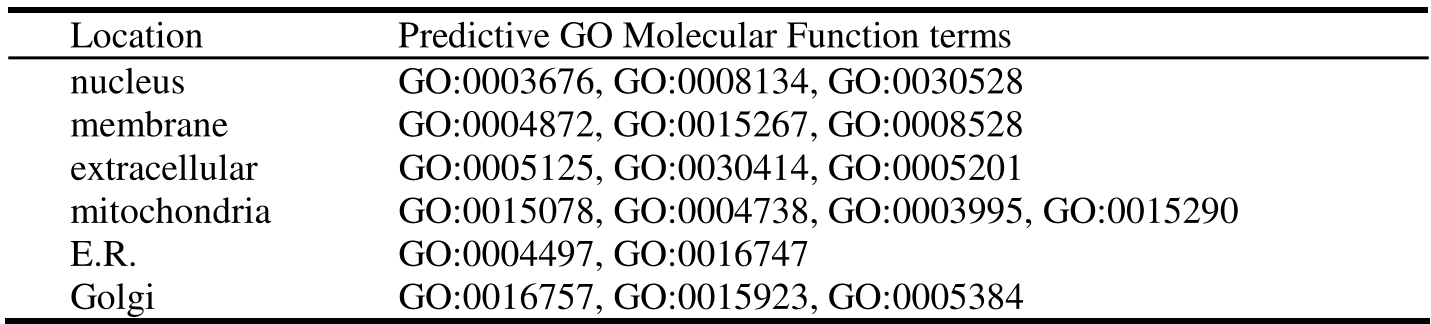 Table 1: The gold-standard "Markstones" used to anchor the semantic space.
Critical Insight
Why does this work? In machine learning, the Inductive Bias matters. By forcing the feature vector to respect the topology of the Gene Ontology, the authors are injecting biological domain knowledge directly into the distance metric. This prevents the SVM from having to "learn" the hierarchy from scratch, which is nearly impossible with small, sparse datasets.
Conclusion
This work highlights a transition in bioinformatics from raw data utilization to structured knowledge integration. While modern methods now use deep learning and embeddings (like ProtBert), the fundamental principle remains the same: the hierarchical context of biological function is as important as the sequence itself.
Future Directions:
- Testing on larger eukaryotic datasets.
- Applying the semantic markstone approach to other tasks like protein secondary structure prediction.
- Integrating alternative similarity measures (e.g., Information Content-based methods).