
OntoDT: Building a Semantic Foundation for Global Datatype Interoperability
Generic ontology of datatypes
This paper introduces OntoDT, a generic ontology designed for the formal representation of datatypes in scientific knowledge. Based on the ISO/IEC 11404 standard, it provides a machine-processable framework for defining datatype properties, taxonomies, and characterizing operations, achieving state-of-the-art interoperability for data mining and bioinformatics.
TL;DR
OntoDT is a comprehensive, open-source ontology designed to give "meaning" to datatypes. By formalizing entities like "integers," "records," and "sequences" based on international standards (ISO/IEC 11404), it enables different scientific software and dataset repositories to communicate seamlessly. It provides a rigorous taxonomy that moves beyond simple labels to define what operations (like addition or comparison) are logically valid for specific data.
Problem & Motivation: The "Tower of Babel" in Data Science
In scientific research, we often treat datatypes as self-evident. However, for a computer, the difference between a "Date," a "Timestamp," and a "Project Start" is often lost without explicit semantic mapping.
The authors identify two major pain points:
- Semantic Ambiguity: Existing standards like XSD (XML Schema Definition) are widely used but lack a formal logical model. This leads to users creating redundant custom types for the same underlying concepts.
- Workflow Fragmentation: In data mining, connecting a preprocessing tool to a learning algorithm is manual and error-prone because the "input/output" requirements are not machine-readable at a deep level.
The Insight: By building an ontology on top of the Information Artifact Ontology (IAO), we can represent datatypes not just as storage containers, but as "Information Content Entities" with specific mathematical qualities and valid operations.
Methodology: The Architecture of a Datatype
OntoDT isn't just a list; it’s a relational graph. The core methodology splits a datatype into four critical components:
- Value Space: What values are allowed? (e.g., all integers from to ).
- Characterizing Operations: What can you do with it? (e.g., a "monadic" operation like
Negateor a "dyadic" one likeAdd). - Datatype Properties (Qualities): Is it ordered? Is it numeric? Is it bounded?
- Datatype Generators: How do we build complex types (like Arrays or Records) from primitive ones?
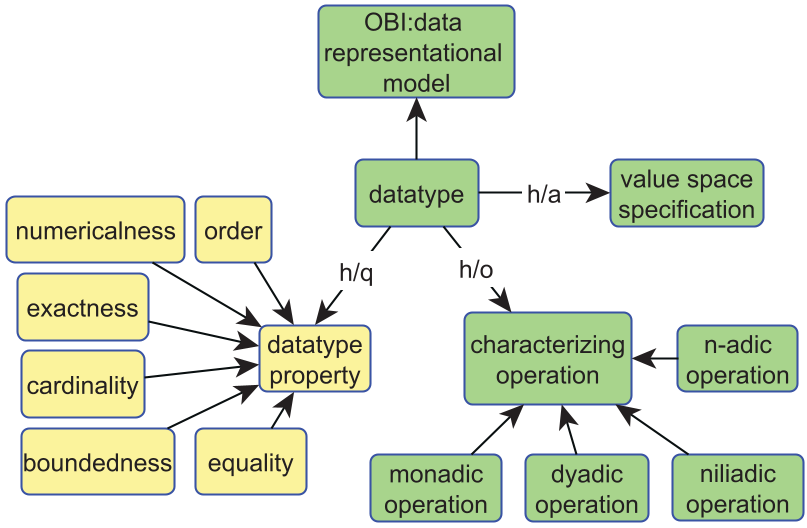 Figure 1: The structural representation of a Datatype class in OntoDT, highlighting the relations between value spaces, operations, and qualities.
One of the most powerful features is the Generator system. For example, a "Positive Integer" isn't a new primitive; it's an "Extended Datatype" created by applying a range generator to the base integer datatype.
The Datatype Taxonomy
The paper proposes a dual-branch taxonomy that organizes data into:
- Primitive Datatypes: Atomic entities like
boolean,integer, ordate-and-time. - Generated Datatypes: Complex structures built via generators, subdivided into
Aggregate(e.g., Sets, Records) andNon-aggregate(e.g., Pointers).
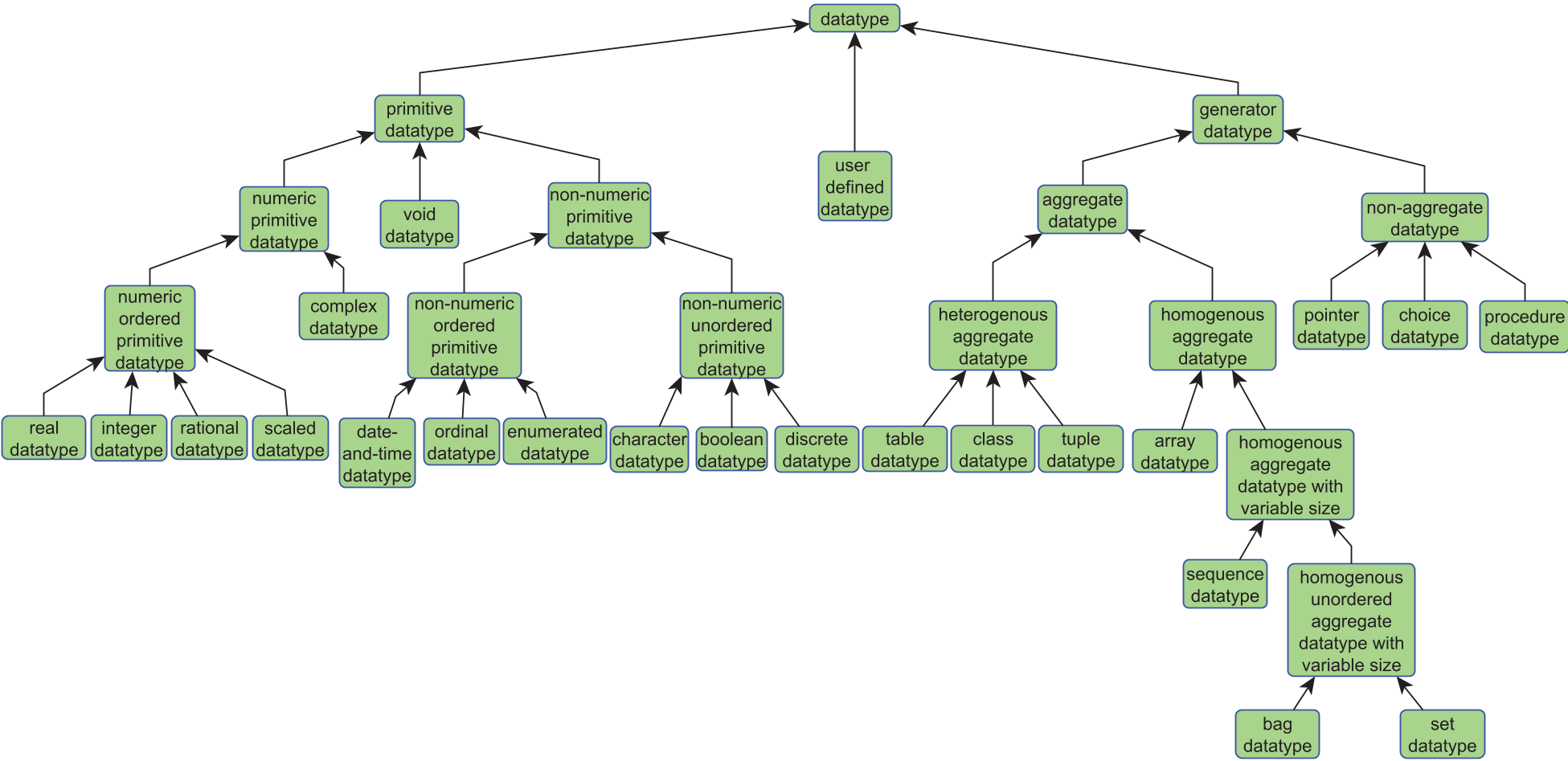 Figure 2: The hierarchical classification of datatypes within OntoDT.
Experiments & Real-World Use Cases
The authors didn't just build a theory; they validated it across three domains:
1. Data Mining (OntoDM-core)
By mapping datasets to OntoDT types, the authors created a Taxonomy of Datasets. This allows a system to automatically determine if an algorithm (e.g., Random Forest) is compatible with a specific dataset (e.g., Multi-label Classification) based on the target datatype's qualities.
2. Dataset Repositories (UCI)
The team annotated 193 datasets from the UCI Machine Learning Repository. They demonstrated that by using a reasoner (HermiT), they could perform complex semantic searches, such as: "Find all datasets where the target output is a homogenous aggregate with key-based access."
3. Bioinformatics (BioXSD)
Biological data is notoriously complex. OntoDT was used to refine BioXSD, linking nucleotide sequences directly to the ChEBI chemical ontology, ensuring that "data about DNA" is logically tied to the "chemical reality of DNA."
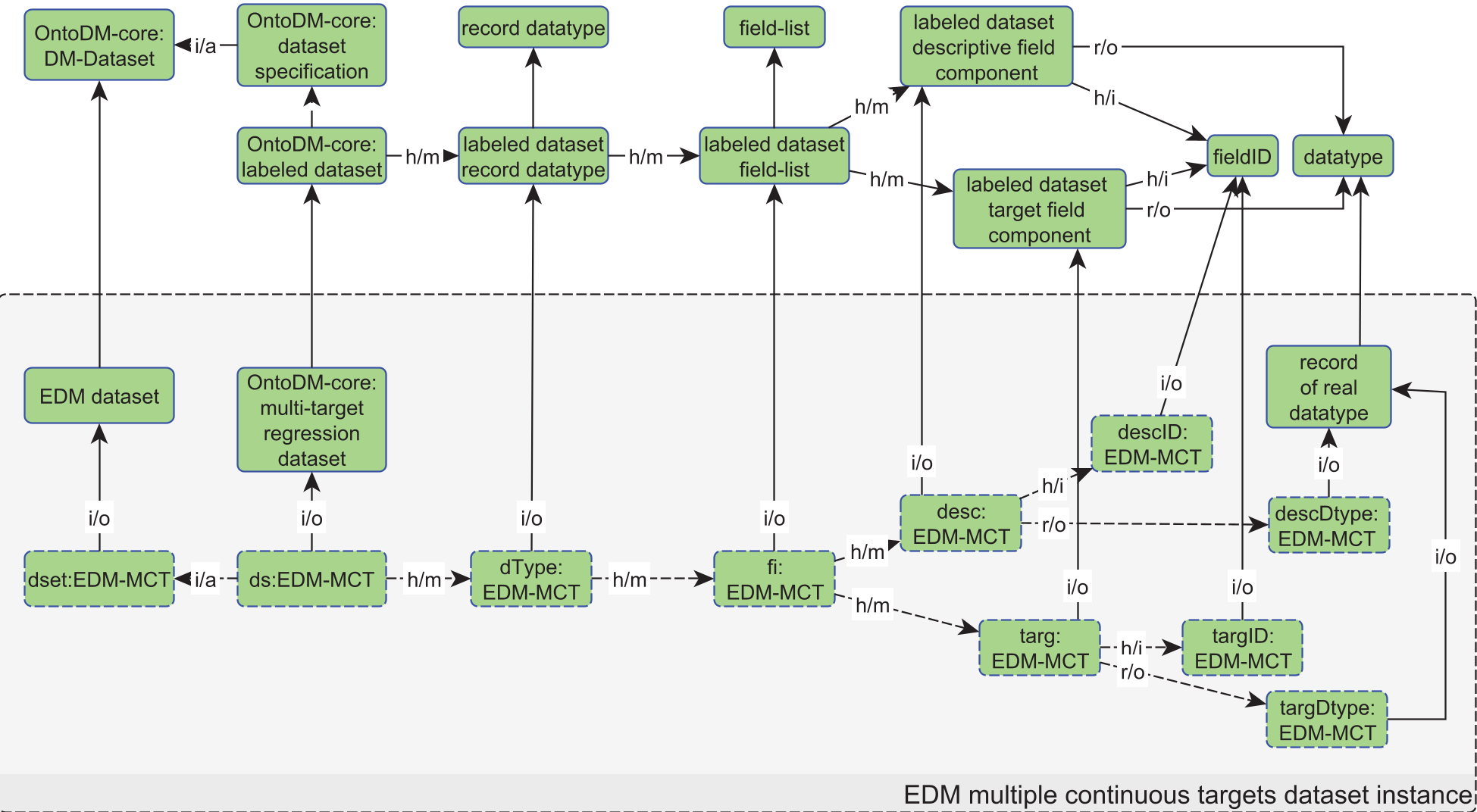 Figure 3: Extending OntoDT to represent domain-specific bio-sequence records.
Critical Insight & Conclusion
OntoDT represents a "mid-level" breakthrough. While upper-level ontologies are too abstract and domain ontologies are too specific, OntoDT provides the shared language of computation.
Takeaway: For the future of AI and automated science, we need more than just "Big Data"; we need "Smart Data" that carries its own structural logic. OntoDT is a significant step toward a world where software can automatically configure itself to process any scientific dataset it encounters.
Limitations: The current version focuses heavily on traditional programming types. Future iterations will need to incorporate high-dimensional types like Tensors, Audio, and Video stream dynamics to remain relevant in the age of Deep Learning.