
GA-Clustering: Enhancing Structural k-Anonymity via Evolutionary Optimization
A clustering approach for structural k-anonymity in social networks using genetic algorithm
This paper introduces a structural k-anonymity approach for social networks using a Genetic Algorithm (GA) to cluster nodes into supernodes. The method utilizes edge generalization and aims to maximize Normalized Structural Information Loss (NSIL) to protect against structural re-identification attacks.
TL;DR
In the era of massive social data sharing, protecting individual identities from structural re-identification is a critical NP-hard challenge. This paper presents a Genetic Algorithm (GA) based clustering approach that outperforms traditional greedy methods. By grouping nodes into supernodes and using edge generalization, the system maximizes "Normalized Structural Information Loss" (NSIL), ensuring that each node's structural signature is indistinguishable from at least others.
Background & Positioning
As social networks become ubiquitous, the raw release of graph data poses severe privacy risks. Even without personal identifiers, the unique "fingerprint" of a node's connections (its degree or neighborhood structure) can be exploited by attackers. This work positions itself as an optimization-centric improvement over the SaNGreeA algorithm, moving from a deterministic greedy search to a guided random search approach using GA.
The Problem: The High Cost of Structural Privacy
The core difficulty in social network anonymization is the trade-off between Privacy and Utility.
- Structural Attacks: Adversaries use "vertex refinement queries" to pinpoint individuals based on their local topology.
- Optimization Complexity: Finding the optimal partition of nodes into clusters of size while minimizing information loss is NP-hard.
- Greedy Limitations: Heuristic-based algorithms (like SaNGreeA) often get trapped in local minima, resulting in sub-optimal anonymization patterns that might either over-mask the data or leave it vulnerable.
Methodology: The Genetic Approach
The authors redefine the clustering problem as an evolutionary search.
1. Chromosome Representation
An individual solution is represented as an matrix , where rows are nodes and columns are supernodes. This matrix must satisfy two constraints:
- Each node belongs to exactly one supernode.
- Each supernode must contain at least nodes.
2. Fitness Function (NSIL)
The quality of a solution is measured by Normalized Structural Information Loss (NSIL). This quantifies the uncertainty an attacker faces when trying to reconstruct the original graph from the anonymized version. A higher NSIL indicates better privacy.
3. Evolutionary Operators
- Selection: Stochastic selection of fitter individuals to form a mating pool.
- Crossover: Swapping segments of the matrix between two parents to produce children.
- Mutation: Swapping two random nodes between different clusters to maintain genetic diversity and prevent premature convergence.
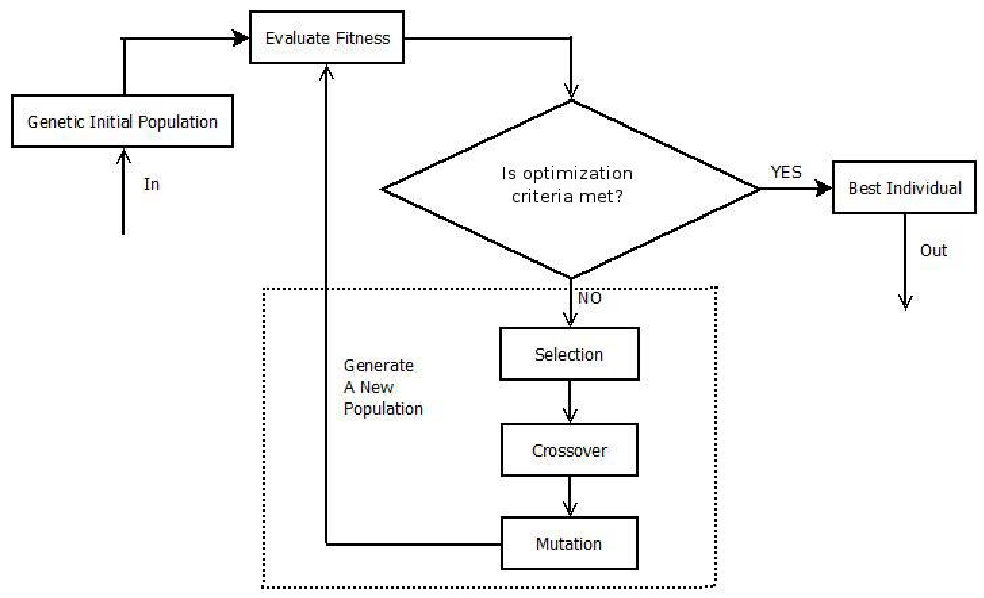 Figure 1: The proposed Genetic Algorithm workflow, highlighting the iterative refinement of anonymity solutions.
Experimental Validation
The authors tested their GA against the SaNGreeA algorithm using real-world social datasets (Gagnon & Macrae Prison and Kapferer Tailor Shop).
Key Insights from Results:
- Superior Optimization: In both real-world datasets, GA achieved a higher NSIL than SaNGreeA across all values of (2 to 9).
- Convergence: On the Prison dataset (), the global optimum was reached near the 30th generation, validating the efficiency of the search.
- Scalability Trend: Experiments on random graphs showed that as graph size increases, the NSIL tends to decrease for a fixed , suggesting that larger graphs naturally require more careful cluster management.
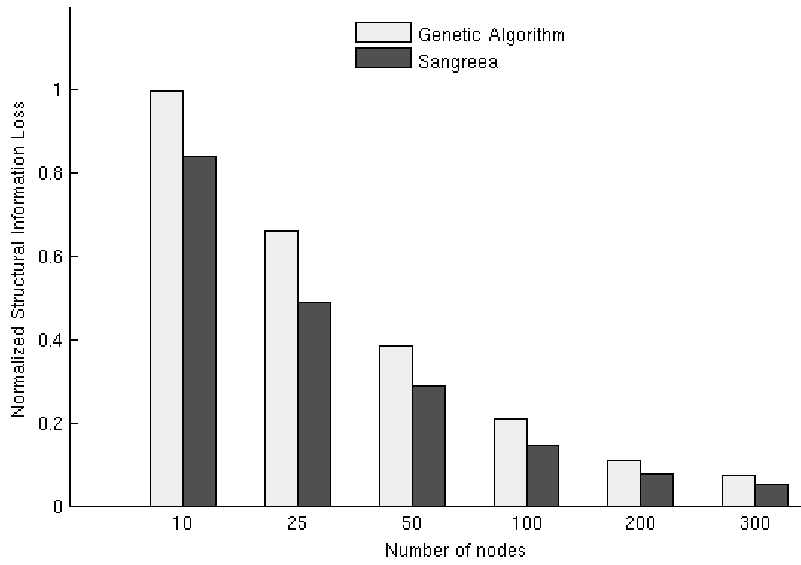 Figure 2: Plot showing the convergence of fitness values (NSIL) over generations, illustrating the high exploitation capability of GA.
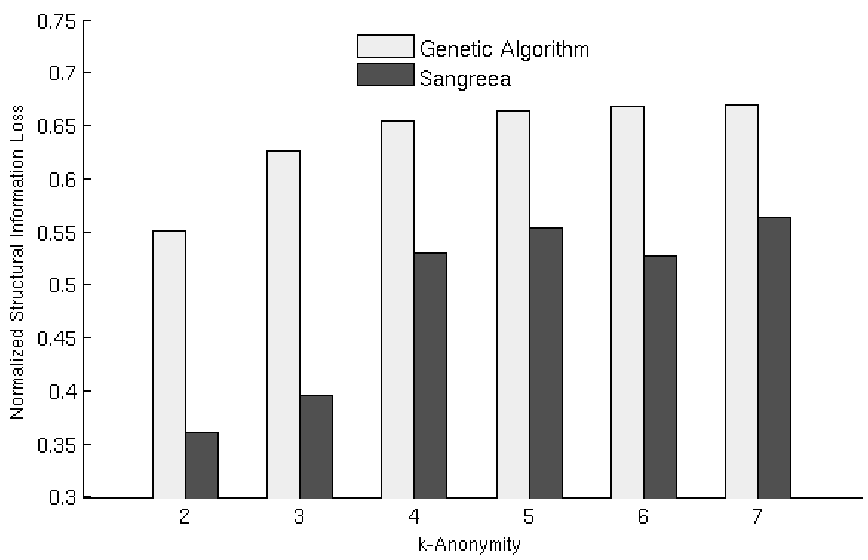 Figure 3: Comparative analysis on the Tailor Shop dataset showing GA's consistent lead over the greedy baseline.
Critical Analysis & Conclusion
Takeaway
The shift from greedy heuristics to evolutionary optimization marks a significant step in structural privacy. By allowing for "mutations" and "recombinations," the algorithm explores global properties of the social graph that local greedy steps might miss.
Limitations & Future Work
- Computational Complexity: While quality is high, GAs are more resource-intensive than simple heuristics.
- Attribute Blindness: The current model focuses purely on structure. Real-world social networks include rich node attributes (age, location, etc.), which could also be used for re-identification.
- Future Directions: The authors suggest integrating other metaheuristics like Simulated Annealing or Variable Neighbourhood Search to further enhance convergence speed and solution quality.
Ultimately, this work proves that "guided randomness" is a powerful tool for obscuring the complex patterns that define our social identities within data graphs.